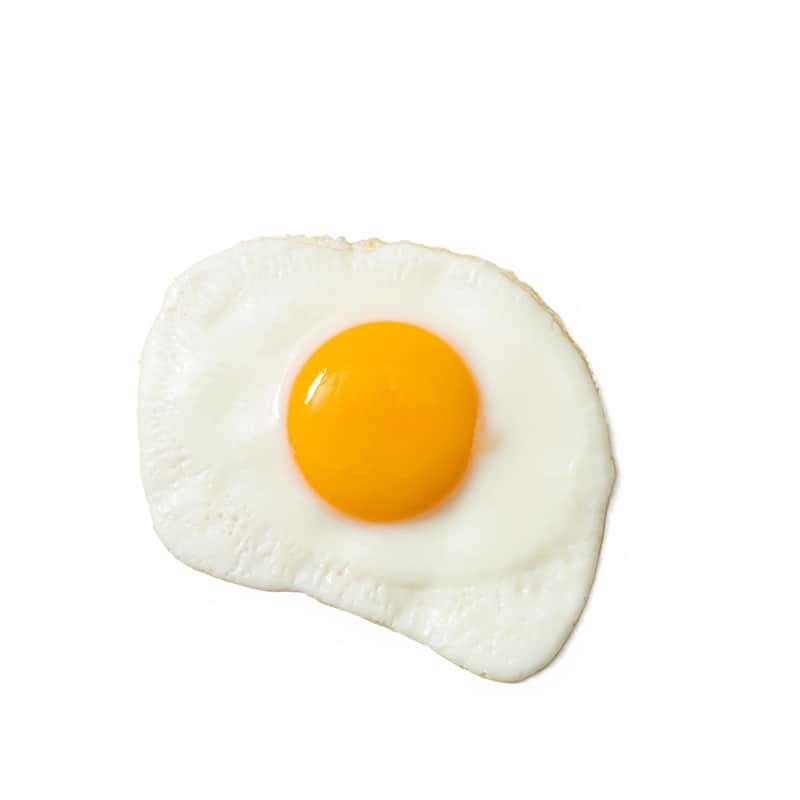
Egg Anatomy

There's more to an egg than meets the eye, but what’s actually going on inside that shell? The following are the major components of an egg and their properties and functions.
Shell

The shell keeps the contents protected and in place while keeping bacteria out. Never use an egg with a cracked or split shell.
Air Cell

This air pocket results from contraction as the interior of the egg cools after it's laid. The space increases in size as moisture inside the egg evaporates, so the larger the air pocket the older the egg.
Chalazae

These whitish cords, located at each pole, keep the yolk centered—they’re very evident when you attempt to separate an egg. The more prominent the chalazae, the fresher the egg.
Smooth-textured egg dishes, such as custards and puddings, should be strained so that the chalazae do not mar their texture.
White

The white, also called albumin, is composed of water and protein, and is divided into thick and thin layers. The thick layer is closest to the yolk, and this division is very evident in fresh eggs. In our egg poaching technique, seen in the video lesson in this class, the goal of the colander is to remove the thin white while retaining the thick. A slight cloudiness in the white indicates freshness.
Vitelline

This thin membrane contains and protects the yolk. It weakens as the egg ages, causing the yolk to break more easily. If you’ve ever been separating an egg and the yolk starts to ooze out, this is due to the vitelline breaking.
Yolk

Most of the egg's vitamins and minerals, as well as all the fat and half the protein, are found in the yolk. It also contains lecithin, a powerful emulsifier—it’s the emulsifying agent that makes it possible to make mayonnaise and hollandaise sauce.