

Recipe By America's Test Kitchen
Published on September 5, 2024
Whether you call them palmiers (à la francaise), elephant ears, butterflies, pig's ears, Prussians, or angel wings, they are all the same: flat, heart-shaped sheets of coiled puff pastry coated thickly with a crunchy glaze.
Time
10 hr 40 minYield
Makes 24 palmiersWhy This Recipe Works
The best of these are crisp and lightly caramelized, tasting of nothing but pure butter, browned wheat, and golden sugar. Forming the cookies isn't hard, but making the puff pastry does take some time: An elastic dough is wrapped tightly around a thin sheet of butter and folded time and time again, which exponentially develops alternating layers of dough and butter. When baked, the moisture in the butter converts into steam, causing the layers of dough to puff and separate into flaky sheets. That said, as long as you chill the dough between turns and follow the directions, the long process isn't difficult. Our puff pastry is particularly forgiving because we add a drop of lemon juice to it; the acid inhibits excess gluten development, keeping the dough tender during rolling. Rolling out the puff pastry in sugar before forming the palmiers ensures that each layer gets a sweet, caramelized touch. In the end, the lengthy process (much of which is hands off) is worth it.
Ingredients
Dough
Butter Square
Sugar Coating
Instructions
Cook along with these step-by-step instructions


- Process flour, sugar, and salt in food processor until combined, about 5 seconds. With processor running, add lemon juice, followed by ¾ cup ice water, in slow, steady stream. Add remaining ¼ cup water as needed, 1 tablespoon at a time, until dough comes together and no floury bits remain.
- Transfer dough to sheet of plastic wrap. Form dough into 6-inch square, wrap square tightly in plastic, and refrigerate for 1 hour.
- Lay butter sticks side by side on sheet of parchment paper. Sprinkle flour over butter and cover with second sheet of parchment. Using rolling pin, gently pound butter until softened and flour is fully incorporated, then roll into 8-inch square. Wrap butter square in plastic and refrigerate until chilled, about 1 hour.
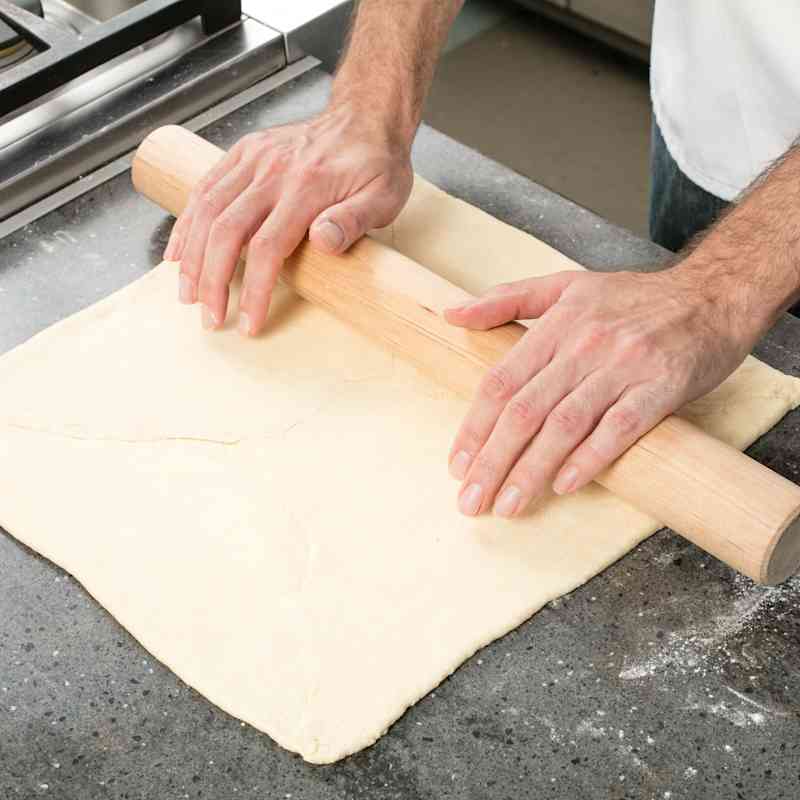
- Roll chilled dough into 11-inch square on lightly floured counter. Place chilled butter square diagonally in center of dough. Fold corners of dough up over butter square so that corners meet in middle and pinch dough seams to seal.
- Using rolling pin, gently tap dough, starting from center and working outward, until square becomes larger and butter begins to soften. Gently roll dough into 14-inch square, dusting with extra flour as needed to prevent sticking. Fold dough into thirds like business letter, then fold rectangle into thirds to form square. Wrap dough in plastic and refrigerate for 2 hours.
- Repeat step 5 twice and let dough rest in refrigerator for 2 more hours. (Dough can be wrapped in plastic and refrigerated for up to 2 days or frozen for up to 1 month. Let dough thaw completely in refrigerator, about 12 hours, before using.)
- Sprinkle ½ cup sugar over counter and lay puff-pastry dough on top of sugar. Roll dough into 24 by 12-inch rectangle, about ¼ inch thick, dusting with remaining ½ cup sugar as needed to prevent sticking.
- Roll short sides of dough toward center, so they meet in middle. Wrap dough log in plastic, transfer to baking sheet, and freeze until firm, about 20 minutes.
- Adjust oven rack to middle position and heat oven to 375 degrees. Line second baking sheet with parchment paper.
- Slice half of dough log into ½-inch-thick cookies with long, thin-bladed slicing knife and space them 1 inch apart on prepared sheet; wrap remaining unsliced dough and keep frozen until ready to bake. Bake until palmiers begin to brown and firm up, 15 to 20 minutes.
- Flip palmiers, rotate sheet, and continue to bake until golden and crisp, 5 to 10 minutes longer. Immediately transfer palmiers to wire rack. Repeat with remaining dough. Let palmiers cool completely before serving. (Palmiers can be stored at room temperature for up to 3 days.)
DOUGH
BUTTER SQUARE
SUGAR COATING
Ask ATK
Have a Question?
We’d love to hear from you! Drop us a message anytime and we’ll get back to you. We’re here to help!




7 Comments