America's Test Kitchen LogoCook's Country LogoCook's Illustrated LogoAmerica's Test Kitchen LogoCook's Country LogoCook's Illustrated Logo
Recipe
1 hr 15 min

Mat Kimchi (Cut Napa Cabbage Kimchi)

Loading...
Mat Kimchi (Cut Napa Cabbage Kimchi)
Author: Sarah Ahn

Recipe By Sarah Ahn

Published on August 4, 2025

This Korean, age-old tradition of preserving napa cabbage with salt, gochugaru, and garlic is ready to eat as soon as the next day.

Time

1 hr 15 min

Yield

Makes about 16 cups

Why This Recipe Works

Kimchi, one of Korea's most iconic foods, is a broad term for hundreds of types of lacto-fermented vegetables that are eaten at most Korean meals. They’re typically served as banchan and are also the basis for countless Korean dishes such as kimchi jjigae (kimchi stew), kimchi bokkeumbap (kimchi fried rice), and kimchi jeon (kimchi pancakes). Mat kimchi comes together quickly and easily and offers a bright, fresh flavor profile. You can enjoy it as soon as the next day, making it a great “go-to” kimchi for everyday meals. Umma likes to use Fresno chiles in her mat kimchi to impart a refreshing flavor, making each bite feel revitalizing. It’s her game-changing ingredient that makes her mat kimchi recipe unique!

Ingredients

3 cups water
1 yellow onion (283 grams), coarsely chopped, divided
½ ounce (14 grams) dried large anchovies, gutted and heads removed
½ ounce (14 grams) dashima (dried kelp), rinsed and broken into 2-inch pieces
¼ ounce (7 grams) dried large-eyed herring
6 pounds (2.7 kilograms) napa cabbage
¾ cup (216 grams) fine salt
3 tablespoons all-purpose flour
½ cup fresh Asian pear juice
5 tablespoons (94 grams) saeujeot (salted shrimp)
4 Fresno chiles (100 grams), stemmed and finely chopped
3 ounces (85 grams) green or red mustard greens, stemmed and coarsely chopped
5 green onions (75 grams), sliced 3⁄4 inch thick
¾ cup (84 grams) gochugaru
7 tablespoons (102 grams) minced garlic
3 tablespoons maesil cheong (plum extract syrup)
2 tablespoons fish sauce
1½ teaspoons sugar
1½ teaspoons grated fresh ginger

Instructions

Cook along with these step-by-step instructions

step 1 imagestep 2 imagestep 3 imagestep 4 image
  1. Bring the water, half of the yellow onion, the anchovies, dashima, and herring to a boil in a small saucepan. Reduce the heat to a vigorous simmer and cook for 10 minutes. Strain the broth immediately through a fine-mesh strainer into a liquid measuring cup. Set aside 1 cup to cool completely. Discard the solids and the remaining broth (or reserve the broth for another use).
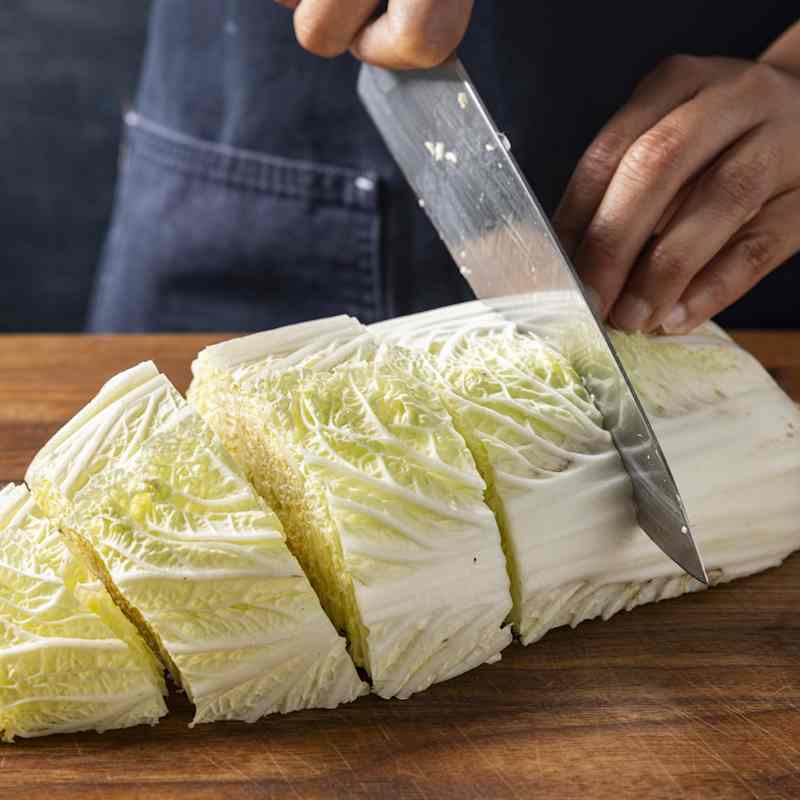
  2. Peel away the outermost layer of leaves from each cabbage head and set aside. Starting halfway down the side of each head, cut the cabbage in half lengthwise through the core. Using your hands, pull the split section of the core apart to fully separate the cabbage into halves. Place each half cut side down on a cutting board and cut crosswise into 11⁄2-inch-thick slices. Discard the core. Cut the larger pieces that contain mostly the white rib in half crosswise.
  3. Submerge the cut cabbage and reserved outer layers in a large bowl or basin of water, separating the layers, then transfer to a large colander. (This is not to clean the cabbage, but rather to coat all the pieces with water so the salt sticks.) Discard the water.
  4. Place a large handful of cut cabbage in the now-empty bowl to create a layer and sprinkle generously with some of the salt. Add the remaining cabbage and reserved outer leaves to the bowl in batches, sprinkling each batch with the remaining salt. Toss the cabbage to thoroughly distribute the salt, then spread it into an even layer. Cover and let sit for 1 hour, tossing the cabbage halfway through salting (set a timer so you don’t forget!).
  5. Meanwhile, transfer the reserved 1 cup broth to the now-empty saucepan. Whisk the flour into the broth until well combined, then bring to a boil, whisking constantly. Reduce the heat to a simmer and cook, whisking constantly, until thickened, about 1 minute. Remove from the heat and let cool completely.
  6. Process the pear juice, saeujeot, and remaining yellow onion in a blender until smooth, about 20 seconds; set aside.
  7. Transfer the cut cabbage and leaves to the colander; discard the liquid left in the bowl and rinse away any remaining salt from the bowl. Remove the cabbage from the colander and, working in batches, submerge the cabbage in cold water in the bowl, agitate gently to remove excess salt and dirt, and transfer back to the colander. Discard the water. Repeat rinsing the cabbage once more with fresh water. Let drain for 30 minutes. Wash and dry the bowl.
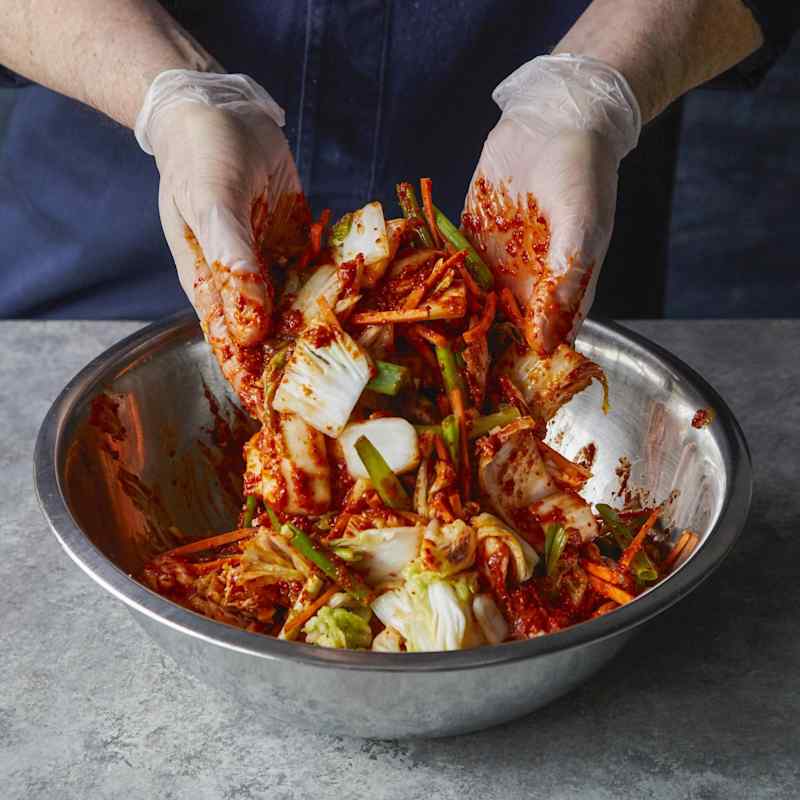
  8. Using your gloved hands, gently mix the cabbage, cooled flour paste, pear juice mixture, Fresno chiles, mustard greens, green onions, gochugaru, garlic, maesil cheong, fish sauce, sugar, and ginger in the bowl until well combined. Pull out and reserve the outer cabbage leaves. Transfer the cut cabbage mixture to a 4-quart storage container and gently press into an even layer. Arrange the outer cabbage leaves evenly on top. Cover the container and place in a 50- to 70-degree location away from direct sunlight. Let the cabbage sit until liquid begins to pool around the edges of the container, up to 24 hours. (This will be temperature- dependent, so we suggest you start checking after 3 hours, especially if your location is on the warmer end of the range.) Serve. (Refrigerate for up to 2 months; the flavor will continue to develop over time.)
    Recipe Tip
    You’ll need a large bowl or basin (at least 6 quarts) to comfortably salt and toss the cabbage, as well as a 4-quart storage container with a tight-fitting lid.

Ask ATK

Have a Question?

We’d love to hear from you! Drop us a message anytime and we’ll get back to you. We’re here to help!

Recipe FAQs

My Rating

Up Next

SCIENCE: Fermentation and its Role in Kimchi
Tip5 min read

SCIENCE: Fermentation and its Role in Kimchi

Mat Kimchi (Cut Napa Cabbage Kimchi)

Recipe By Sarah Ahn & Nam Soon Ahn

Published on August 4, 2025

Time

1 hr 15 min

Yield

Makes about 16 cups

Mat Kimchi (Cut Napa Cabbage Kimchi)

Ingredients

3 cups water1 yellow onion (283 grams), coarsely chopped, divided½ ounce (14 grams) dried large anchovies, gutted and heads removed½ ounce (14 grams) dashima (dried kelp), rinsed and broken into 2-inch pieces¼ ounce (7 grams) dried large-eyed herring6 pounds (2.7 kilograms) napa cabbage¾ cup (216 grams) fine salt3 tablespoons all-purpose flour½ cup fresh Asian pear juice5 tablespoons (94 grams) saeujeot (salted shrimp)4 Fresno chiles (100 grams), stemmed and finely chopped3 ounces (85 grams) green or red mustard greens, stemmed and coarsely chopped5 green onions (75 grams), sliced 3⁄4 inch thick¾ cup (84 grams) gochugaru7 tablespoons (102 grams) minced garlic3 tablespoons maesil cheong (plum extract syrup)2 tablespoons fish sauce1½ teaspoons sugar1½ teaspoons grated fresh ginger

Instructions

  1. Bring the water, half of the yellow onion, the anchovies, dashima, and herring to a boil in a small saucepan. Reduce the heat to a vigorous simmer and cook for 10 minutes. Strain the broth immediately through a fine-mesh strainer into a liquid measuring cup. Set aside 1 cup to cool completely. Discard the solids and the remaining broth (or reserve the broth for another use).
  2. Peel away the outermost layer of leaves from each cabbage head and set aside. Starting halfway down the side of each head, cut the cabbage in half lengthwise through the core. Using your hands, pull the split section of the core apart to fully separate the cabbage into halves. Place each half cut side down on a cutting board and cut crosswise into 11⁄2-inch-thick slices. Discard the core. Cut the larger pieces that contain mostly the white rib in half crosswise.
  3. Submerge the cut cabbage and reserved outer layers in a large bowl or basin of water, separating the layers, then transfer to a large colander. (This is not to clean the cabbage, but rather to coat all the pieces with water so the salt sticks.) Discard the water.
  4. Place a large handful of cut cabbage in the now-empty bowl to create a layer and sprinkle generously with some of the salt. Add the remaining cabbage and reserved outer leaves to the bowl in batches, sprinkling each batch with the remaining salt. Toss the cabbage to thoroughly distribute the salt, then spread it into an even layer. Cover and let sit for 1 hour, tossing the cabbage halfway through salting (set a timer so you don’t forget!).
  5. Meanwhile, transfer the reserved 1 cup broth to the now-empty saucepan. Whisk the flour into the broth until well combined, then bring to a boil, whisking constantly. Reduce the heat to a simmer and cook, whisking constantly, until thickened, about 1 minute. Remove from the heat and let cool completely.
  6. Process the pear juice, saeujeot, and remaining yellow onion in a blender until smooth, about 20 seconds; set aside.
  7. Transfer the cut cabbage and leaves to the colander; discard the liquid left in the bowl and rinse away any remaining salt from the bowl. Remove the cabbage from the colander and, working in batches, submerge the cabbage in cold water in the bowl, agitate gently to remove excess salt and dirt, and transfer back to the colander. Discard the water. Repeat rinsing the cabbage once more with fresh water. Let drain for 30 minutes. Wash and dry the bowl.
  8. Using your gloved hands, gently mix the cabbage, cooled flour paste, pear juice mixture, Fresno chiles, mustard greens, green onions, gochugaru, garlic, maesil cheong, fish sauce, sugar, and ginger in the bowl until well combined. Pull out and reserve the outer cabbage leaves. Transfer the cut cabbage mixture to a 4-quart storage container and gently press into an even layer. Arrange the outer cabbage leaves evenly on top. Cover the container and place in a 50- to 70-degree location away from direct sunlight. Let the cabbage sit until liquid begins to pool around the edges of the container, up to 24 hours. (This will be temperature- dependent, so we suggest you start checking after 3 hours, especially if your location is on the warmer end of the range.) Serve. (Refrigerate for up to 2 months; the flavor will continue to develop over time.)
    Recipe Tip
    You’ll need a large bowl or basin (at least 6 quarts) to comfortably salt and toss the cabbage, as well as a 4-quart storage container with a tight-fitting lid.
This is a members' feature.