

Recipe By America's Test Kitchen
Published on August 8, 2024
Duck breasts have the rich, meaty flavor and texture of beef, but the flesh is as lean as chicken breasts. The French have an affinity for the cut and are expert at its preparation. Fortunately, we found that with a couple of simple core techniques, there is really nothing difficult at all about cooking duck breasts.
Time
1 hr 15 minYield
Serves 4Why This Recipe Works
We found that the skin on our duck breasts had to first be scored in a crosshatch pattern before cooking to obtain a nicely crispy skin for our pan-seared duck breasts recipe. When the breasts were properly crosshatched we experimented with various burner settings and cooking times until we got it just right: We preheated the dry skillet (no fat was needed since the duck itself releases so much) over medium heat for three minutes, added the duck breasts skin side down, and turned down the heat to medium-low. We allowed the duck breasts in our pan-seared duck breasts recipe to cook skin side down for most of the way, about 25 minutes, flipping them to cook only a few minutes on the flesh side. This way, the skin was thin, crisp, and browned and the meat was tender, moist, and medium-rare.
Ingredients
Equipment

Instructions
Cook along with these step-by-step instructions


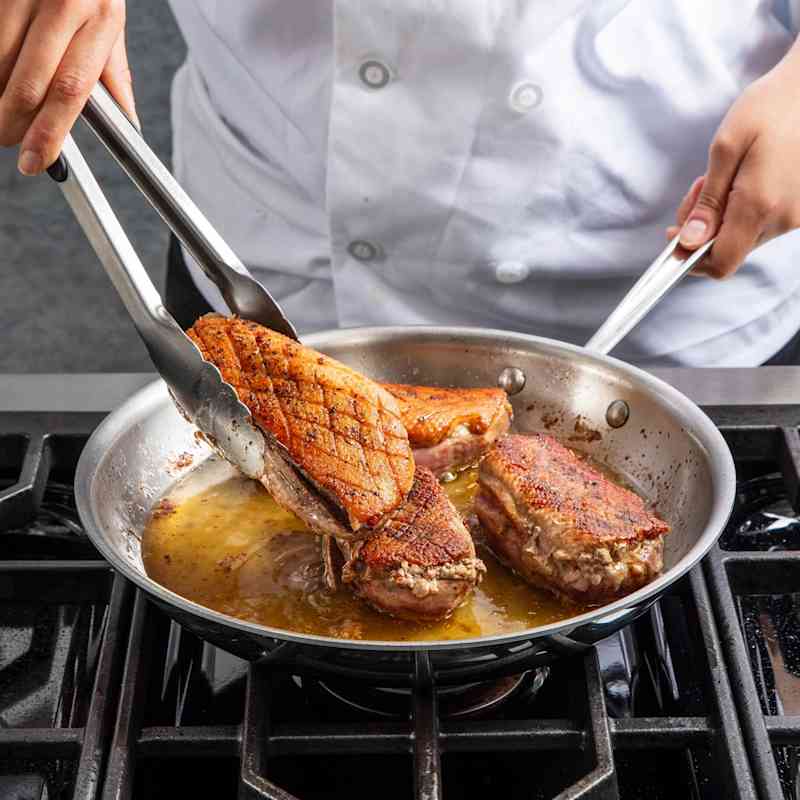

- Pat the duck breasts dry with paper towels and season with salt and pepper. Heat a 12-inch conventional or nonstick skillet over medium heat until hot, about 3 minutes. Add the duck breasts, skin side down, lower the heat to medium-low, and cook until the fat begins to render, about 5 minutes. Continue to cook, adjusting the heat as needed for the fat to maintain a constant but gentle simmer, until most of the fat has rendered and the skin is deep golden and crisp, 20 to 25 minutes longer.
- Flip the duck breasts over and continue to cook until the center of the breasts are medium-rare and measure 125 degrees on an instant-read thermometer, 2 to 5 minutes. Transfer the duck to a carving board, tent loosely with foil, and let rest while making the sauce (the duck temperature will rise to 130 degrees before serving).
- Pour off all but 1 tablespoon of the fat left in the skillet. Add the shallots and cook over medium-high heat until softened, 2 to 3 minutes. Add the wine and cherries and cook until the liquid has reduced to a syrupy consistency, about 4 minutes. Add the chicken broth and cook until the sauce has thickened and measures about 1 cup, about 5 minutes. Whisk butter into the sauce, then remove pan from heat and stir in the lemon juice. Season with salt and pepper to taste; transfer the sauce to a bowl or gravy boat. Slice the duck breasts thin and serve, passing the sauce separately or pouring it over the duck.
Ask ATK
Have a Question?
We’d love to hear from you! Drop us a message anytime and we’ll get back to you. We’re here to help!



38 Comments