Sous Vide Poached Salmon
By America's Test KitchenPublished on June 25, 2018
Time
Sous vide: 30 to 45 minutes; active cooking time: 15 minutes, plus at least 30 minutes salting time
Yield
Serves 4
Sous Vide Temperature
125°F/52°C (farmed) or 120°F/49°C (wild)

Ingredients
Before You Begin
It's important to set the water bath to 120°F/49°C if using wild salmon. With naturally firmer flesh and less fat to provide lubrication, wild salmon can taste dry if cooked at the same temperature as fattier farmed salmon. When the wild varieties are cooked at a slightly lower temperature, their muscle fibers contract less and therefore retain more moisture. If using skin-on fillets, the skin can be easily peeled off after cooking. Serve with Grapefruit and Basil Relish, Tangerine and Ginger Relish, or Avocado-Orange Salsa, if desired. For more about sous vide cooking, refer to our sous vide guide.
Instructions
- Combine salt and sugar in small bowl. Sprinkle salmon evenly on all sides with salt mixture and place on wire rack set in rimmed baking sheet. Refrigerate for at least 30 minutes or up to 45 minutes.
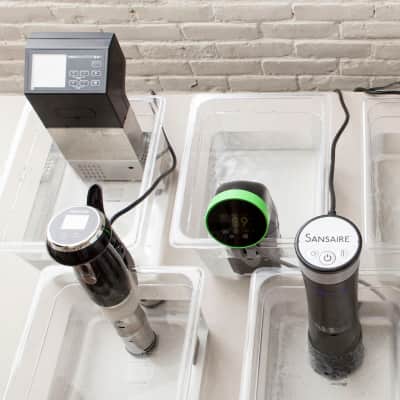
- Using sous vide circulator, bring water to 125°F/52°C (if using farmed salmon) or 120°F/49°C (if using wild salmon) in 7-quart container.
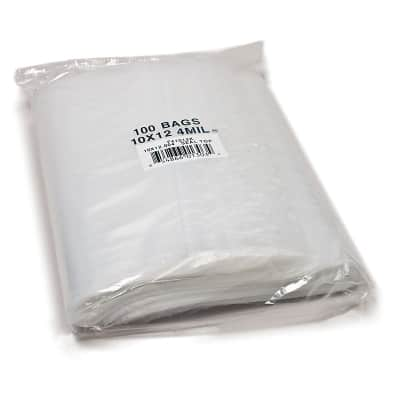
- Pat salmon dry with paper towels and brush with oil on all sides. Individually wrap each fillet with plastic wrap, and then place in single layer in 1-gallon zipper-lock freezer bag. Seal bag, pressing out as much air as possible. Gently lower bag into prepared water bath until fillets are fully submerged, and then clip top corner of bag to side of water bath container, allowing remaining air bubbles to rise to top of bag. Reopen 1 corner of zipper, release remaining air bubbles, and reseal bag. Cover and cook for at least 30 minutes or up to 45 minutes.
- Gently transfer salmon to cutting board and discard plastic. Pat fillets dry with paper towels. Serve.


Time
Sous vide: 30 to 45 minutes; active cooking time: 15 minutes, plus at least 30 minutes salting timeYield
Serves 4Sous Vide Temperature
125°F/52°C (farmed) or 120°F/49°C (wild)Ingredients
Ingredients
Ingredients
Why This Recipe Works
We cooked salmon to just the right temperature—125°F/52°C for farmed, 120°F/49°C for wild—giving us a tender and silky fish, every time. Before cooking the fillets, we sprinkled them with a dry brine, a mixture of salt and sugar that thoroughly seasoned the salmon and also dissolved some of the proteins in the fish, forming a gel that could hold on to more moisture.


33 Comments