Sous Vide No-Fuss Polenta
By America's Test KitchenPublished on March 21, 2019
Time
Sous vide: 1½ to 3 hours; active cooking time: 20 minutes
Yield
Serves 6
Sous Vide Temperature
185°F/85°C
Ingredients
Before You Begin
Be sure to double bag the polenta to protect against seam failure. Polenta has a tendency to float when placed in a sous vide water bath, which can lead to uneven cooking. Use weights to make sure the polenta is fully immersed during cooking. Do not substitute instant or quick-cooking cornmeal here. For more about sous vide cooking, refer to our sous vide guide.
Instructions
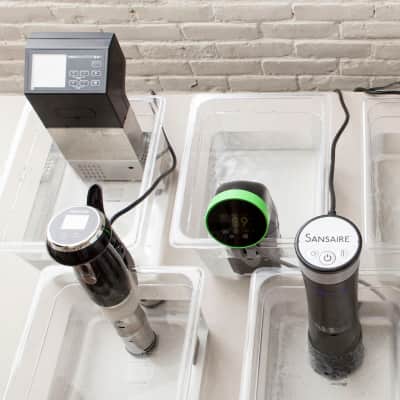
- Using sous vide circulator, bring water to 185°F/85°C in 7-quart container.
- Place water, cornmeal, butter, and ¾ teaspoon salt in 1-gallon zipper-lock freezer bag. Seal bag, pressing out as much air as possible. Place bag in second 1-gallon zipper-lock freezer bag and seal. Gently lower bag into prepared water bath, weight bag until polenta is fully submerged, and then clip top corner of bag to side of water bath container, allowing remaining air bubbles to rise to top of bag. Reopen 1 corner of zipper, release remaining air bubbles, and reseal bag. Cover and cook for at least 1½ hours or up to 3 hours.
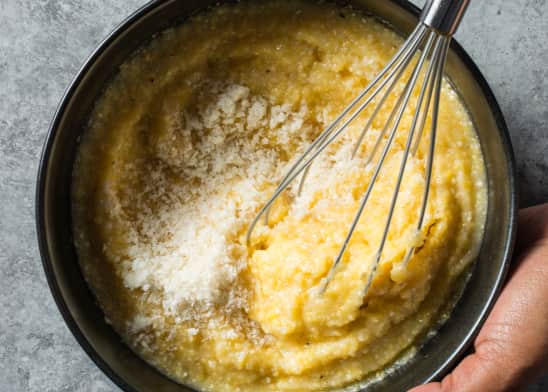
- Transfer polenta to serving bowl and whisk vigorously to break apart any lumps. Whisk in Parmesan and season with salt and pepper to taste. Serve.
- Cooked polenta can be chilled rapidly in ice bath and then refrigerated for up to 3 days. To serve, heat polenta in microwave for 2 minutes, stirring halfway. Proceed with step 3.
to make ahead


Time
Sous vide: 1½ to 3 hours; active cooking time: 20 minutesYield
Serves 6Sous Vide Temperature
185°F/85°CIngredients
Ingredients
Ingredients
Why This Recipe Works
Making polenta the old-fashioned way is a commitment. To do it right, you need to watch those grits on the stove for up to 60 minutes, stirring or whisking and judging the consistency until it's just right. But if watching a pot for an hour isn't really your thing, then sous vide offers an easy, reliable way out. This recipe couldn't be simpler: Put water, cornmeal, and butter into a bag and cook it. We found that the gentle, consistent heat of the water bath cooked the polenta evenly—with no scorching at all. Because there's no evaporation, we didn't have to guess at the correct ratio of water to cornmeal, or give instructions dependent on the size of your pot—here, it's the same, every time. A simple whisk at the end brings everything together. Throw in some Parm and a healthy amount of salt and pepper, and you've got the easiest, most hands-off polenta recipe your nonna could only have dreamed about.




57 Comments