Slow-Roasted Salmon with Dill and Garlic
By Alli BerkeyPublished on August 4, 2019
Time
1½ hours
Yield
Serves 6
Ingredients
Before You Begin
You can substitute granulated sugar for the brown sugar, if desired. If a 2½-pound salmon fillet is unavailable, you can use six 6- to 8-ounce skinless salmon fillets instead. In step 1, sprinkle both sides of the fillets evenly with the sugar mixture and arrange them side by side in the baking dish so they are touching. The cooking time remains the same. We prefer farm-raised salmon here; if using wild salmon, reduce the cooking time to 45 to 50 minutes, or until the salmon registers 120 degrees. If you're using table salt, use ¾ teaspoon (½ teaspoon in step 1 and ¼ teaspoon in step 3). We developed this recipe using a glass baking dish. If you use a ceramic baking dish or metal pan, check the temperature of the salmon 10 minutes early. The thickness of the salmon will affect baking time, so try to purchase salmon that's 1½ inches thick.
Instructions
- Adjust oven rack to middle position and heat oven to 250 degrees. Combine sugar, 1 teaspoon salt, mustard, and granulated garlic in small bowl. Sprinkle salmon all over with sugar mixture.
- Place salmon, flesh side up, in 13 by 9-inch baking dish. Roast until center is still translucent when checked with tip of paring knife and thickest part registers 125 degrees (for medium-rare), 55 to 60 minutes.
- Meanwhile, combine oil, dill, lemon zest and juice, and remaining ½ teaspoon salt in bowl.
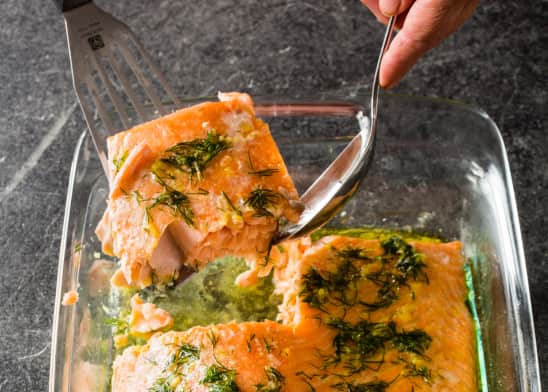
- Remove dish from oven and immediately pour oil mixture evenly over salmon. Let rest for 5 minutes. Using spatula and spoon, portion salmon and sauce onto serving platter. Stir together any juices left in dish and spoon over salmon. Serve.


Time
1½ hoursYield
Serves 6Ingredients
Test Kitchen Techniques
Ingredients
Test Kitchen Techniques
Ingredients
Test Kitchen Techniques
Why This Recipe Works
UPDATE: This recipe has been slightly reformulated to be more foolproof since its initial publication. The revision you see here was published in June of 2021. Though slow roasting is an uncommon method for cooking fish, here it gave us ultratender, buttery salmon. First we sprinkled the fish with a mixture of brown sugar, salt, dry mustard, and granulated garlic to evoke the flavors of cured salmon. A very low 250-degree oven kept the fish from overcooking and minimized any carryover cooking once it was out of the oven. We then poured a light, bright mixture of extra-virgin olive oil, lemon zest, lemon juice, and fresh dill over the succulent fish.





59 Comments