North Carolina Barbecue Pork
By Morgan BollingPublished on April 28, 2020
Time
7¼ hours, plus 19½ hours salting and resting
Yield
Serves 8 to 10
Ingredients
Before You Begin
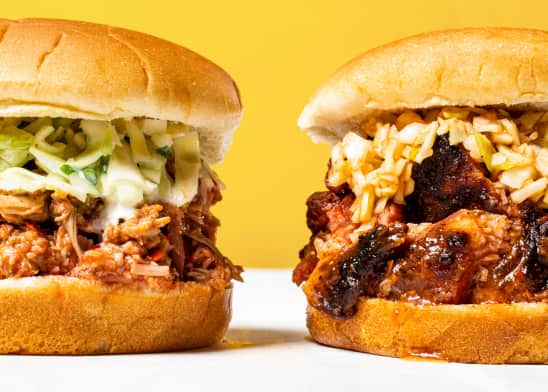
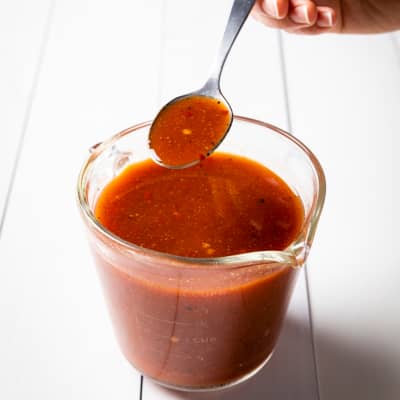
This recipe requires 1 (13 by 9-inch) disposable aluminum pan and 4 (3-inch) wood chunks. We developed this recipe using a 22‑inch Weber kettle grill. Pork butt roast is often labeled Boston butt in the supermarket. Plan ahead: The pork butt must be seasoned at least 18 hours before it is cooked. This recipe calls for one of two prepared barbecue sauces: Our Lexington-Style Barbecue Sauce is tangy and salty and our Eastern North Carolina-Style Barbecue Sauce is tangy and spicy. We like to top the sandwiches with Carolina Red Slaw and Spicy Barbecue Slaw.
Instructions
- Combine 3 tablespoons kosher salt and 1½ tablespoons pepper in bowl. Place 1 (6-pound) bone-in pork butt roast, with ¼-inch fat cap, on large sheet of plastic wrap and sprinkle all over with salt mixture. Wrap tightly with plastic and refrigerate for 18 to 24 hours.
- Open bottom grill vent completely. Set up charcoal snake: Arrange 60 briquettes, 2 briquettes wide, around perimeter of grill, overlapping slightly so briquettes are touching, leaving 6-inch gap between ends of snake. Place second layer of 60 briquettes, also 2 briquettes wide, on top of first. (Completed snake should be 2 briquettes wide by 2 briquettes high.)
- Starting 4 inches from 1 end of snake, evenly space wood chunks on top of snake. Place disposable pan in center of grill so short end of pan runs parallel to gap in snake. Fill pan with 4 cups water.
- Light chimney starter filled with 15 briquettes. When coals are partially covered with ash, pour over 1 end of snake. Make sure lit coals touch only 1 end of snake. Use tongs if necessary to move any coals that touch other end of snake.
- Set cooking grate in place. Clean and oil cooking grate. Unwrap pork and position fat side down over water pan. Insert temperature probe into thickest part of pork. Cover grill, positioning lid vent over gap in snake, and open lid vent completely. Cook, without opening grill, until pork registers 170 degrees, 4 to 5 hours.
- Place 2 large sheets of aluminum foil on rimmed baking sheet. Remove probe from pork. Using oven mitts, lift pork and transfer to center of 1 sheet of foil, fat side down. Wrap tightly with first sheet of foil, minimizing air pockets between foil and pork. Wrap with second sheet of foil. (Use additional foil, if necessary, to completely wrap pork.) Foil wrap should be airtight. Make small mark on foil with marker to keep track of fat side.
- Remove cooking grate. Starting at still-unlit end of snake, pour 2 quarts unlit briquettes about one‑third of way around perimeter of grill over gap in snake and spent coals. Replace cooking grate. Return wrapped pork to grill over water pan, fat side down. Reinsert probe into thickest part of pork. Cover grill and continue to cook until pork registers 200 degrees, 1 to 1½ hours longer.
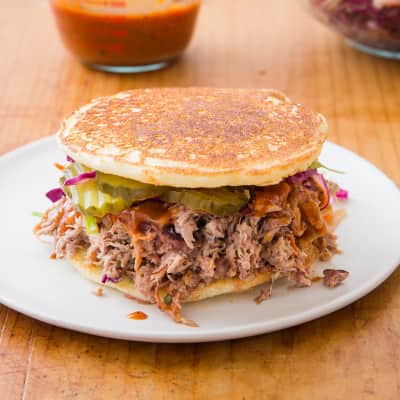
- Remove probe. Transfer pork to carving board, fat side up, and let rest in foil for 1½ hours. Remove bone from pork. For Lexington style, chop pork with cleaver into 1-inch pieces. For eastern North Carolina style, chop pork into ¼-inch pieces. Toss with ⅔ cup sauce. Serve, passing remaining sauce separately.

Time
7¼ hours, plus 19½ hours salting and restingYield
Serves 8 to 10Ingredients
Test Kitchen Techniques
Ingredients
Test Kitchen Techniques
Ingredients
Test Kitchen Techniques
Why This Recipe Works
When you’re talking barbecue in North Carolina, you’re talking pork. To create a North Carolina–inspired barbecue pork recipe on a charcoal grill, we used a grill setup called a charcoal snake. This C-shaped array of smoldering briquettes provided low, slow, indirect heat to the center of the grill for upwards of 5 hours, so we needed to refuel only once during the long cooking time. Wrapping the bone-in pork butt in foil when it reached 170 degrees gave the meat plenty of time to absorb smoke flavor and get a crusty bark without its exterior getting too bitter. There are two distinct styles of barbecue pork in North Carolina; as a nod to each, we offered two different chopping and saucing options.




82 Comments