Blood Orange Marmalade
By Nicole KonstantinakosPublished on July 12, 2020
Time
1¾ hours, plus 7 hours cooling and 12 hours setting
Yield
Serves 64 (makes four 1-cup jars)

Ingredients
Before You Begin
Blood oranges are available from November to May. In their absence, navel, Valencia, or Seville oranges can be used as a substitute although the sweetness will vary.
Instructions
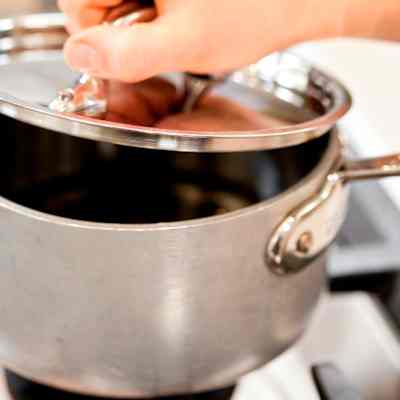
- Bring water, oranges, and lemon to boil in large saucepan over high heat. Reduce heat to low and cover pot with heavy-duty aluminum foil and lid. Simmer gently until fruit is easily pierced with skewer, about 1½ hours. Off heat, let mixture cool, covered, 5 to 24 hours.
- Set canning rack in large pot, place four 1-cup jars in rack, and add water to cover by 1 inch. Bring to simmer over medium-high heat, then turn off heat and cover to keep hot.
- Place 2 small plates in freezer to chill. Transfer oranges and lemon to cutting board; cut fruits into quarters. Using spoon, scrape pulp (along with most of pith) from peels; reserve peels. Return pulp to pot with liquid, mash lightly with potato masher, bring to simmer over medium heat, and cook for 10 minutes. Meanwhile, slice peels into thin strips, then cut crosswise into ¼-inch pieces.
- Strain liquid through fine-mesh strainer into Dutch oven, pressing firmly on solids; discard solids. Stir in chopped peels and sugar. Bring to vigorous boil over medium-high heat, stirring and adjusting heat as needed, until thickened and registers 220 to 222 degrees, 15 to 25 minutes. (Temperature will be lower at higher elevations; see Temp the Jam for more information.) Remove pot from heat.
- To test consistency, place 1 teaspoon marmalade on chilled plate and freeze for 2 minutes. Gently push cooled marmalade with your finger; marmalade should wrinkle around edges when set. If runny, return pot to heat and simmer for 1 to 3 minutes longer before retesting. Skim any foam from surface of marmalade using large spoon.
- Place dish towel flat on counter. Using jar lifter, remove jars from pot, draining water back into pot. Place jars upside down on towel and let dry for 1 minute. Using funnel and ladle, portion hot marmalade into hot jars, leaving ¼ inch headspace. Slide wooden skewer along inside edge of jar and drag upward to remove air bubbles.
- For short-term storage: Let marmalade cool to room temperature, cover, and refrigerate until marmalade is set, 12 to 24 hours. (Marmalade can be refrigerated for up to 3 months).For long-term storage: While jars are hot, wipe rims clean, add lids, and screw on rings until fingertip-tight; do not overtighten. Return pot of water with canning rack to boil. Lower jars into water, cover, bring water back to boil, then start timer. Cooking time will depend on your altitude: Boil 10 minutes for up to 1,000 feet, 15 minutes for 1,001 to 3,000 feet, 20 minutes for 3,001 to 6,000 feet, or 25 minutes for 6,001 to 8,000 feet. Turn off heat and let jars sit in pot for 5 minutes. Remove jars from pot and let cool for 24 hours. Remove rings, check seals, and clean rims. (Sealed jars can be stored for up to 1 year.)


Time
1¾ hours, plus 7 hours cooling and 12 hours settingYield
Serves 64 (makes four 1-cup jars)Ingredients
Test Kitchen Techniques
Ingredients
Test Kitchen Techniques
Ingredients
Test Kitchen Techniques
Why This Recipe Works
We tested several methods of preparing the fruit, and we found that the simplest method—simmering the fruit whole in a tightly covered pot before chopping the peels and mashing the pulp—yielded the best results. We tightly sealed our covered pot with aluminum foil to prevent any of the liquid from evaporating as it simmered. We added a whole lemon for its bright flavor and natural pectin, plus just the right amount of sugar to balance the fruits' tartness. To achieve the proper consistency, we found that our marmalade—made without commercial pectin—needed to cook to a slightly higher temperature (220 to 222 degrees) than our jams made without commercial pectin (which achieve a jam-like texture at 217 to 220 degrees). It was only within this higher temperature range that our marmalade passed the “wrinkle test,” indicating that the liquid in which our candied fruit rind was suspended had gelled into marmalade.


48 Comments