Skillet Pork Lo Mein for Two
By America's Test KitchenPublished on August 18, 2020
Time
1¼ hours
Yield
Serves 2
Ingredients
5 teaspoons soy sauce, plus extra for seasoning1 tablespoon oyster sauce 1 tablespoon hoisin sauce 1 teaspoon toasted sesame oil 8 ounces boneless country-style pork ribs, trimmed and sliced thin crosswise5 teaspoons vegetable oil 2 tablespoons Chinese rice wine or dry sherry 4 ounces shiitake mushrooms, stemmed, halved if large4 scallions, white parts sliced thin, green parts cut into 1-inch pieces1 garlic cloves, minced1 teaspoon grated fresh ginger 2½ cups water 6 ounces dried linguine ½ small head napa cabbage, cored and shredded (4 cups)1 teaspoon Asian chili-garlic sauce
Before You Begin
When adding the pasta in step 4, stir gently to avoid breaking the noodles; after a minute or two they will soften enough to be stirred more easily. To make the pork easier to slice, freeze it for 15 minutes.
Instructions
- Whisk soy sauce, oyster sauce, hoisin, and sesame oil together in medium bowl. Measure 1 tablespoon soy sauce mixture into separate bowl; set aside. Stir pork into remaining soy sauce mixture. Cover and refrigerate pork for at least 15 minutes or up to 1 hour.
- Heat 2 teaspoons vegetable oil in 12-inch nonstick skillet over high heat until just smoking. Add pork, breaking up any clumps, and cook, without stirring, until beginning to brown, about 1 minute. Stir pork and continue to cook until nearly cooked through, 1 to 2 minutes longer. Stir in wine and cook until almost completely evaporated, about 1 minute; transfer to clean bowl.
- Add remaining 1 tablespoon vegetable oil to now-empty skillet and heat over high heat until just smoking. Add mushrooms and cook until light golden brown, about 5 minutes.
- Stir in scallion whites, garlic, and ginger and cook until fragrant, about 30 seconds. Stir in water and pasta, bring to vigorous si mmer, and cook, stirring often, until pasta is tender, 12 to 16 minutes. Stir in cabbage and continue to cook until cabbage is wilted and sauce is thickened, about 2 minutes longer.
- Reduce heat to low and stir in reserved soy sauce mixture, pork, scallion greens, and chili-garlic sauce. Cook, tossing pasta gently, until well coated with sauce, about 2 minutes. Season with soy sauce to taste. Serve.


Time
1¼ hoursYield
Serves 2Ingredients
Ingredients
Ingredients
Why This Recipe Works
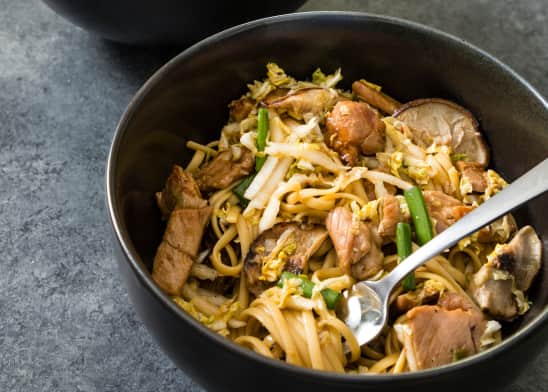
Meaty, flavorful country-style ribs were an ideal small-scale stand-in for the usual large cut of pork. Since we wanted our lo mein to be a one-skillet affair, we opted for dried linguine over fresh Chinese noodles, which require a large amount of water to cook properly. Napa cabbage, scallions, and shiitake mushrooms provided crunch, color, and heft, and a mixture of sesame oil and soy, oyster, and hoisin sauces provided plenty of umami flavor.



This is a members' feature.
21 Comments