America's Test Kitchen LogoCook's Country LogoCook's Illustrated LogoAmerica's Test Kitchen LogoCook's Country LogoCook's Illustrated Logo

Furikake Japanese Milk Bread

By Sarah Ewald

Published on January 27, 2022

Time

1½ hours, plus 4¾ hours resting, rising, and cooling

Yield

Makes 1 loaf
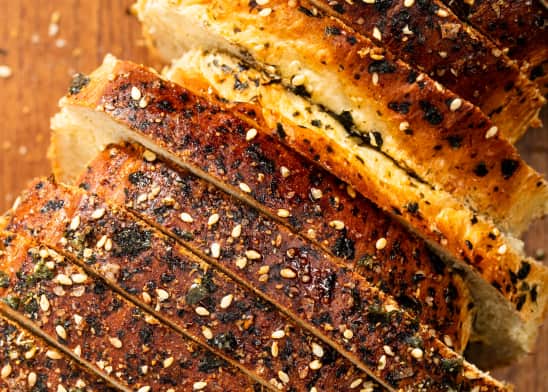
Furikake Japanese Milk Bread

Ingredients

3 tablespoons plus 2 cups bread flour (11 ounces/312 grams), divided½ cup water, room temperature½ cup whole milk, chilled1 large egg 1½ teaspoons instant or rapid-rise yeast 6 tablespoons furikake, divided2 tablespoons sugar 1½ teaspoons table salt 3 tablespoons unsalted butter, softened 1 large egg beaten with 1 teaspoon water1 tablespoon toasted sesame oil

Before You Begin

We like our Furikake, but you can use store-bought, if you prefer. Just be aware that formulations can vary dramatically from brand to brand. To go all in on the nori flavor, we recommend serving slices of this bread with Nori Butter. The test kitchen's preferred loaf pan measures 8½ by 4½ inches; if you use a 9 by 5-inch loaf pan, increase the shaped rising time by 20 to 30 minutes and start checking for doneness 10 minutes earlier than advised in the recipe.

Instructions

  1. Whisk 3 tablespoons flour and room-temperature water in bowl until no lumps remain. Microwave, whisking every 20 seconds, until mixture thickens to stiff, smooth, pudding-like consistency that forms mound when dropped from end of whisk into bowl, 40 to 80 seconds.
  2. Whisk milk, egg, and flour paste together in bowl of stand mixer until smooth. Add yeast and remaining 2 cups flour. Using dough hook on low speed, mix until cohesive dough starts to form and no dry flour remains, about 2 minutes, scraping down bowl as needed. Cover bowl tightly with plastic wrap and let dough rest for 15 minutes.
  3. Add 3 tablespoons furikake, sugar, and salt to dough and mix on low speed, about 5 minutes. With mixer running, add butter, 1 tablespoon at a time, allowing each piece to incorporate before adding next, about 3 minutes total, scraping down bowl and dough hook as needed. Increase speed to medium and knead until dough is smooth and elastic and clears sides of bowl but sticks to bottom, 7 to 9 minutes.
  4. Transfer dough to lightly floured counter and knead by hand to form smooth, round ball, about 30 seconds. Place dough seam side down in lightly greased large bowl; cover tightly with plastic; and let rise until doubled in size, 1 to 1½ hours.
  5. Spray 8½ by 4½-inch loaf pan with vegetable oil spray. Add 2 tablespoons furikake to prepared pan and shake until bottom and sides of pan are evenly coated. Press down on dough to deflate. Turn out dough onto lightly floured counter (side of dough that was against bowl should now be facing up). Gently press and roll into 24 by 4-inch rectangle, with short side parallel to counter edge. Using pizza cutter or chef's knife, cut rectangle lengthwise into 2 equal strips.
  6. Roll 1 strip of dough into snug cylinder; pinch seam closed; and place seam side down in prepared pan, with spiral against long side of pan. Repeat with remaining strip of dough, placing it adjacent to other in pan.
  7. Cover loosely with greased plastic and let rise until loaf is level with lip of pan and dough springs back minimally when poked gently with your knuckle, 30 minutes to 1 hour.
  8. Adjust oven rack to lowest position and heat oven to 375 degrees. Gently brush loaf with egg wash and sprinkle with remaining 1 tablespoon furikake. Bake until loaf is deep golden brown and registers 205 to 210 degrees, 30 to 35 minutes, rotating pan halfway through baking. Let loaf cool in pan on wire rack for 15 minutes. Remove loaf from pan and transfer to wire rack. Brush top and sides with oil. Let cool completely, about 3 hours, before serving.
Furikake Japanese Milk Bread
Photography by Daniel J. van Ackere. Styling by Chantal Lambeth.

Furikake Japanese Milk Bread

Headshot of Sarah Ewald
By Sarah Ewald
Save

Time

1½ hours, plus 4¾ hours resting, rising, and cooling

Yield

Makes 1 loaf

Ingredients

3 tablespoons plus 2 cups bread flour (11 ounces/312 grams), divided
½ cup water, room temperature
½ cup whole milk, chilled
1 large egg
1½ teaspoons instant or rapid-rise yeast
6 tablespoons furikake, divided
2 tablespoons sugar
1½ teaspoons table salt
3 tablespoons unsalted butter, softened
1 large egg beaten with 1 teaspoon water
1 tablespoon toasted sesame oil

Test Kitchen Techniques

Ingredients

3 tablespoons plus 2 cups bread flour (11 ounces/312 grams), divided
½ cup water, room temperature
½ cup whole milk, chilled
1 large egg
1½ teaspoons instant or rapid-rise yeast
6 tablespoons furikake, divided
2 tablespoons sugar
1½ teaspoons table salt
3 tablespoons unsalted butter, softened
1 large egg beaten with 1 teaspoon water
1 tablespoon toasted sesame oil

Test Kitchen Techniques

Ingredients

3 tablespoons plus 2 cups bread flour (11 ounces/312 grams), divided
½ cup water, room temperature
½ cup whole milk, chilled
1 large egg
1½ teaspoons instant or rapid-rise yeast
6 tablespoons furikake, divided
2 tablespoons sugar
1½ teaspoons table salt
3 tablespoons unsalted butter, softened
1 large egg beaten with 1 teaspoon water
1 tablespoon toasted sesame oil

Test Kitchen Techniques

Why This Recipe Works

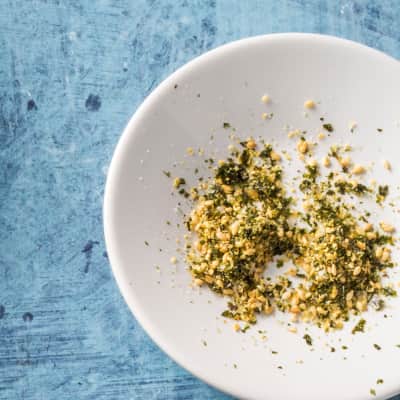
The uniquely shaped dough for Japanese milk bread (also called Hokkaido milk bread) is rolled thin and formed into tight spirals, which allows the loaf to bake up into feathery strands. Shaping the dough into two spirals before arranging them in the pan builds an orderly structure, creating this bread's gossamer-thin layers. The Japanese dough-mixing technique (now popular throughout Asia) called tangzhong works well to make a moist but not sticky dough: A simple cooked flour-water paste binds up water in the dough, resulting in a delicate and fluffy crumb in the baked loaf. While Japanese milk bread is wonderful as is, our rendition ups the flavor ante by adding furikake. This spice blend of nori, sesame seeds, bonito flakes, salt, and sugar is at once briny, earthy, nutty, and sweet. You'll add furikake to not only the dough but also the outer crust: Sprinkling the interior of the loaf pan as well as the top of the bread results in a beautiful crust that packs an umami punch and a pleasingly delicate crunch. A final brush of sesame oil on the warm baked loaf gives the bread a rich finish.

Before You Begin

We like our Furikake, but you can use store-bought, if you prefer. Just be aware that formulations can vary dramatically from brand to brand. To go all in on the nori flavor, we recommend serving slices of this bread with Nori Butter. The test kitchen's preferred loaf pan measures 8½ by 4½ inches; if you use a 9 by 5-inch loaf pan, increase the shaped rising time by 20 to 30 minutes and start checking for doneness 10 minutes earlier than advised in the recipe.

Instructions

  1. Whisk 3 tablespoons flour and room-temperature water in bowl until no lumps remain. Microwave, whisking every 20 seconds, until mixture thickens to stiff, smooth, pudding-like consistency that forms mound when dropped from end of whisk into bowl, 40 to 80 seconds.
  2. Whisk milk, egg, and flour paste together in bowl of stand mixer until smooth. Add yeast and remaining 2 cups flour. Using dough hook on low speed, mix until cohesive dough starts to form and no dry flour remains, about 2 minutes, scraping down bowl as needed. Cover bowl tightly with plastic wrap and let dough rest for 15 minutes.
  3. Add 3 tablespoons furikake, sugar, and salt to dough and mix on low speed, about 5 minutes. With mixer running, add butter, 1 tablespoon at a time, allowing each piece to incorporate before adding next, about 3 minutes total, scraping down bowl and dough hook as needed. Increase speed to medium and knead until dough is smooth and elastic and clears sides of bowl but sticks to bottom, 7 to 9 minutes.
  4. Transfer dough to lightly floured counter and knead by hand to form smooth, round ball, about 30 seconds. Place dough seam side down in lightly greased large bowl; cover tightly with plastic; and let rise until doubled in size, 1 to 1½ hours.
  5. Spray 8½ by 4½-inch loaf pan with vegetable oil spray. Add 2 tablespoons furikake to prepared pan and shake until bottom and sides of pan are evenly coated. Press down on dough to deflate. Turn out dough onto lightly floured counter (side of dough that was against bowl should now be facing up). Gently press and roll into 24 by 4-inch rectangle, with short side parallel to counter edge. Using pizza cutter or chef's knife, cut rectangle lengthwise into 2 equal strips.
  6. Roll 1 strip of dough into snug cylinder; pinch seam closed; and place seam side down in prepared pan, with spiral against long side of pan. Repeat with remaining strip of dough, placing it adjacent to other in pan.
  7. Cover loosely with greased plastic and let rise until loaf is level with lip of pan and dough springs back minimally when poked gently with your knuckle, 30 minutes to 1 hour.
  8. Adjust oven rack to lowest position and heat oven to 375 degrees. Gently brush loaf with egg wash and sprinkle with remaining 1 tablespoon furikake. Bake until loaf is deep golden brown and registers 205 to 210 degrees, 30 to 35 minutes, rotating pan halfway through baking. Let loaf cool in pan on wire rack for 15 minutes. Remove loaf from pan and transfer to wire rack. Brush top and sides with oil. Let cool completely, about 3 hours, before serving.


Gift This Recipe

Enjoyed this dish? Let others know by sharing it as a gift recipe.

This is a members' feature.