America's Test Kitchen LogoCook's Country LogoCook's Illustrated LogoAmerica's Test Kitchen LogoCook's Country LogoCook's Illustrated Logo

Galbitang 갈비탕 (Beef Rib Soup)

By Sarah Ahn & Nam Soon Ahn

Published on March 28, 2025

Time

3½ hours, plus 3 hours soaking and brining

Yield

Serves 4 to 6
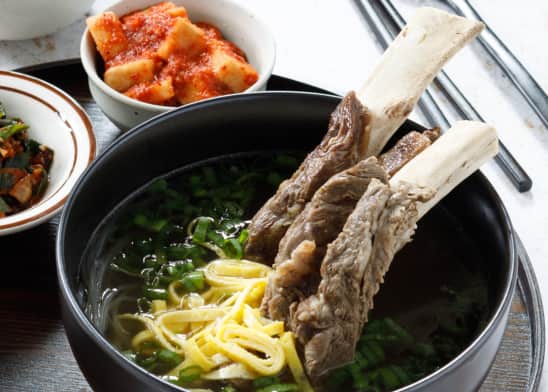
Galbitang 갈비탕 (Beef Rib Soup)

Ingredients

2 ounces (57 grams) dangmyeon (Korean glass noodles)1 tablespoon sugar 4 pounds (1.8 kilograms) beef back ribs, trimmed and membranes removed (see page 43)1½ pounds (680 grams) Korean radish, cut into rough 1-inch pieces½ yellow onion (142 grams), chopped coarse1 daepa (jumbo green onion; 130 grams), roots left intact, chopped coarse4 ounces (115 grams) garlic cloves, peeled⅓ cup (40 grams) coarsely chopped peeled ginger ¼ cup fish sauce 1 tablespoon black peppercorns 3 bay leaves 2 teaspoons neutral cooking oil, divided2 eggs, divided¼ cup soy sauce 4 teaspoons distilled white vinegar Wasabi paste 1½ teaspoons fine salt 1½ teaspoons Dasida beef stock powder (optional)12 green onions (180 grams), sliced thinBlack pepper

Before You Begin

The best ribs to buy for this soup are back ribs 5 to 7 inches long with ½ inch to 1 inch meat on them. You must submerge the meat in water for 30 minutes to get rid of the myoglobin, and the meat must be thoroughly rinsed after blanching, or else the broth won’t taste right. The Dasida powder is optional, but we highly recommend it for restaurant-quality flavor.

Instructions

  1. Cover dangmyeon with 1 inch water in large bowl and let soak at room temperature for at least 3 hours or overnight. Drain noodles and rinse thoroughly; set aside.
  2. Meanwhile, dissolve sugar in 3 quarts water in large stockpot. Add ribs and refrigerate for 30 minutes. Transfer ribs to bowl and discard water; clean pot thoroughly.
  3. Bring 4 quarts water to boil in pot. Add ribs, return to boil, and blanch for 10 minutes. Transfer ribs to colander and discard water; rinse pot thoroughly. Under cold running water, rinse each rib thoroughly, removing coagulated particles at end of each rib (we like to use designated toothbrush to scrub them). After all ribs have been rinsed, give each rib another quick rinse; set aside.
  4. Bring 6½ quarts water to boil in pot. Add ribs, radish, yellow onion, daepa, garlic, ginger, fish sauce, peppercorns, and bay leaves. Return to boil and cook until ribs are tender and meat is nearly falling off bone, 1 to 1½ hours.
  5. Using tongs, transfer ribs to bowl. Strain broth through fine-mesh strainer into separate large bowl; discard solids. Transfer 12 cups broth to now-empty pot; save remaining broth for another use. Let broth settle for 5 minutes, then skim off excess fat from surface using wide, shallow spoon or ladle. (Ribs and broth can be refrigerated separately for up to 4 days or frozen for up to 1 month; if frozen, thaw completely before proceeding.)
  6. Heat 1 teaspoon neutral cooking oil in 10-inch nonstick skillet over medium heat. Add 1 beaten egg, tilting pan gently to evenly coat bottom of skillet with egg. Cook until egg is set but not browned, 1 to 1½ minutes. Gently slide spatula underneath edge of egg, grasp edge with fingertips, and flip egg. Cook until second side is set but not browned, about 15 seconds. Repeat to make second egg. Slide each egg onto cutting board and roll gently into tight log. Using sharp knife, thinly slice each egg log crosswise. Unfurl ribbons and set aside.
  7. Combine soy sauce and vinegar in medium bowl, then divide among individual small serving bowls; place small portion of wasabi paste in each bowl. Bring broth to boil over medium-high heat. Stir in salt and Dasida powder, if using, and season with extra salt to taste.
  8. Add ribs to broth and bring to brief boil to warm through. Divide ribs among serving bowls and top with dangmyeon and green onions. Ladle broth over ribs, then top with egg ribbons and sprinkle with pepper to taste. Serve with soy-vinegar sauce for dipping.
Galbitang 갈비탕 (Beef Rib Soup)
Styling by Christine Tobin.

Galbitang 갈비탕 (Beef Rib Soup)

Save

Time

3½ hours, plus 3 hours soaking and brining

Yield

Serves 4 to 6

Ingredients

2 ounces (57 grams) dangmyeon (Korean glass noodles)
1 tablespoon sugar
4 pounds (1.8 kilograms) beef back ribs, trimmed and membranes removed (see page 43)
1½ pounds (680 grams) Korean radish, cut into rough 1-inch pieces
½ yellow onion (142 grams), chopped coarse
1 daepa (jumbo green onion; 130 grams), roots left intact, chopped coarse
4 ounces (115 grams) garlic cloves, peeled
⅓ cup (40 grams) coarsely chopped peeled ginger
¼ cup fish sauce
1 tablespoon black peppercorns
3 bay leaves
2 teaspoons neutral cooking oil, divided
2 eggs, divided
¼ cup soy sauce
4 teaspoons distilled white vinegar
Wasabi paste
1½ teaspoons fine salt
1½ teaspoons Dasida beef stock powder (optional)
12 green onions (180 grams), sliced thin
Black pepper

Test Kitchen Techniques

Ingredients

2 ounces (57 grams) dangmyeon (Korean glass noodles)
1 tablespoon sugar
4 pounds (1.8 kilograms) beef back ribs, trimmed and membranes removed (see page 43)
1½ pounds (680 grams) Korean radish, cut into rough 1-inch pieces
½ yellow onion (142 grams), chopped coarse
1 daepa (jumbo green onion; 130 grams), roots left intact, chopped coarse
4 ounces (115 grams) garlic cloves, peeled
⅓ cup (40 grams) coarsely chopped peeled ginger
¼ cup fish sauce
1 tablespoon black peppercorns
3 bay leaves
2 teaspoons neutral cooking oil, divided
2 eggs, divided
¼ cup soy sauce
4 teaspoons distilled white vinegar
Wasabi paste
1½ teaspoons fine salt
1½ teaspoons Dasida beef stock powder (optional)
12 green onions (180 grams), sliced thin
Black pepper

Test Kitchen Techniques

Ingredients

2 ounces (57 grams) dangmyeon (Korean glass noodles)
1 tablespoon sugar
4 pounds (1.8 kilograms) beef back ribs, trimmed and membranes removed (see page 43)
1½ pounds (680 grams) Korean radish, cut into rough 1-inch pieces
½ yellow onion (142 grams), chopped coarse
1 daepa (jumbo green onion; 130 grams), roots left intact, chopped coarse
4 ounces (115 grams) garlic cloves, peeled
⅓ cup (40 grams) coarsely chopped peeled ginger
¼ cup fish sauce
1 tablespoon black peppercorns
3 bay leaves
2 teaspoons neutral cooking oil, divided
2 eggs, divided
¼ cup soy sauce
4 teaspoons distilled white vinegar
Wasabi paste
1½ teaspoons fine salt
1½ teaspoons Dasida beef stock powder (optional)
12 green onions (180 grams), sliced thin
Black pepper

Test Kitchen Techniques

Why This Recipe Works

Galbitang offers an aromatic, umami-rich beef broth that’s ladled into bowls with hearty beef ribs, dangmyeon (Korean glass noodles), green onions, and fluffy egg ribbons. Though short ribs are often used for this soup, Nam Soon prefers beef back ribs, which develop a richer flavor while cooking until tender and nearly falling off the bone. A wasabi-accented soy-vinegar sauce is served alongside for dipping. Take a sip of the broth, eat some noodles, and take a bite of the ribs. Don’t be shy—get in there and eat the ribs with your hands!

Before You Begin

The best ribs to buy for this soup are back ribs 5 to 7 inches long with ½ inch to 1 inch meat on them. You must submerge the meat in water for 30 minutes to get rid of the myoglobin, and the meat must be thoroughly rinsed after blanching, or else the broth won’t taste right. The Dasida powder is optional, but we highly recommend it for restaurant-quality flavor.

Instructions

  1. Cover dangmyeon with 1 inch water in large bowl and let soak at room temperature for at least 3 hours or overnight. Drain noodles and rinse thoroughly; set aside.
  2. Meanwhile, dissolve sugar in 3 quarts water in large stockpot. Add ribs and refrigerate for 30 minutes. Transfer ribs to bowl and discard water; clean pot thoroughly.
  3. Bring 4 quarts water to boil in pot. Add ribs, return to boil, and blanch for 10 minutes. Transfer ribs to colander and discard water; rinse pot thoroughly. Under cold running water, rinse each rib thoroughly, removing coagulated particles at end of each rib (we like to use designated toothbrush to scrub them). After all ribs have been rinsed, give each rib another quick rinse; set aside.
  4. Bring 6½ quarts water to boil in pot. Add ribs, radish, yellow onion, daepa, garlic, ginger, fish sauce, peppercorns, and bay leaves. Return to boil and cook until ribs are tender and meat is nearly falling off bone, 1 to 1½ hours.
  5. Using tongs, transfer ribs to bowl. Strain broth through fine-mesh strainer into separate large bowl; discard solids. Transfer 12 cups broth to now-empty pot; save remaining broth for another use. Let broth settle for 5 minutes, then skim off excess fat from surface using wide, shallow spoon or ladle. (Ribs and broth can be refrigerated separately for up to 4 days or frozen for up to 1 month; if frozen, thaw completely before proceeding.)
  6. Heat 1 teaspoon neutral cooking oil in 10-inch nonstick skillet over medium heat. Add 1 beaten egg, tilting pan gently to evenly coat bottom of skillet with egg. Cook until egg is set but not browned, 1 to 1½ minutes. Gently slide spatula underneath edge of egg, grasp edge with fingertips, and flip egg. Cook until second side is set but not browned, about 15 seconds. Repeat to make second egg. Slide each egg onto cutting board and roll gently into tight log. Using sharp knife, thinly slice each egg log crosswise. Unfurl ribbons and set aside.
  7. Combine soy sauce and vinegar in medium bowl, then divide among individual small serving bowls; place small portion of wasabi paste in each bowl. Bring broth to boil over medium-high heat. Stir in salt and Dasida powder, if using, and season with extra salt to taste.
  8. Add ribs to broth and bring to brief boil to warm through. Divide ribs among serving bowls and top with dangmyeon and green onions. Ladle broth over ribs, then top with egg ribbons and sprinkle with pepper to taste. Serve with soy-vinegar sauce for dipping.


Gift This Recipe

Enjoyed this dish? Let others know by sharing it as a gift recipe.

This is a members' feature.