Nacho Cheese Sauce with Gochujang
By Sasha MarxPublished on January 29, 2017
Yield
Serves 6 to 8
Ingredients
Gochujang Sauce
1 cup water 3 tablespoons gochujang 2 teaspoons gochugaru 2 teaspoons sugar 2 tablespoons corn syrupCheese Sauce
7 ounces sharp cheddar cheese, grated (1¾ cups)3½ ounces Swiss cheese, grated (¾ cup plus 2 tablespoons)⅔ cup water 1 tablespoon sodium citrateBefore You Begin
Gochujang is a spicy fermented pepper paste essential to Korean cuisine. Look for a heat-level indicator on the packaging, and choose medium for this recipe. You can buy gochujang at many supermarkets, Korean markets, and by clicking here. Gochugaru is a red chile powder made with dried Korean peppers. It is much less spicy than crushed red pepper flakes and it adds sweet and smoky notes to this sauce. It is sold both coarsely and finely ground; use coarsely ground for this recipe. You can buy gochugaru at Korean markets or by clicking here.
Any basic Swiss cheese will work here. During testing, we found that even a small amount of Swiss had a big impact on smoothness and stretch. According to Dean Sommer, cheese and food technologist at the University of Wisconsin–Madison, Swiss cheese (the classic fondue cheese) “is at the top of the list for long body, intact casein, and bound insoluble calcium,” key attributes when it comes to melting and creamy mouthfeel.
You can buy sodium citrate by clicking here.
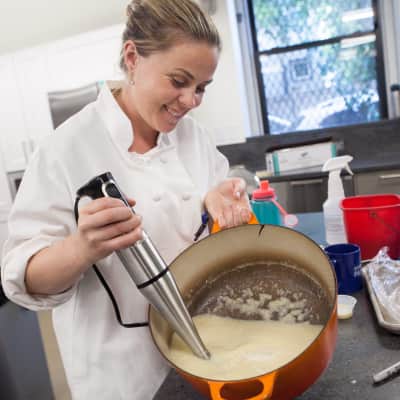
To achieve the smooth glossiness of stadium nacho cheese, stand immersion blender in cheese sauce and tilt saucepan so sauce covers blade. Blend sauce until shiny, about 30 seconds. This sauce is best served warm. If you have a slow cooker, you can hold it in there on the warm setting. If not, serve the sauce in a microwave-safe bowl so that you can easily reheat it in the microwave as needed (15 to 30 seconds on high power will do the trick).
Instructions
- For the Gochujang Sauce: Whisk water, gochujang, gochugaru, sugar, and corn syrup together in small saucepan. Bring to simmer over medium heat and cook, stirring occasionally with rubber spatula, until sauce has thickened and measures about 1 cup, 3 to 5 minutes. Remove from heat and set aside.
- For the Cheese Sauce: Combine cheddar and Swiss in medium bowl. Whisk ⅔ cup water and sodium citrate together in small saucepan until sodium citrate dissolves. Bring to simmer over medium heat. Whisking constantly, gradually add cheese mixture, about ¼ cup at a time, to simmering water, making sure each addition is fully incorporated before adding next, about 2 minutes. (Mixture will be very thick.)
- Reduce heat to medium-low and, whisking constantly, gradually add gochujang sauce. Scrape down saucepan with rubber spatula and continue to cook, stirring constantly, until sauce is slightly thickened, about 45 seconds longer. (Sauce will continue to thicken as it cools.) Remove saucepan from heat and either transfer sauce to serving bowl or make it extra-shiny with immersion blender. Serve warm, with plenty of tortilla chips. (The sauce can be refrigerated in an airtight container for up to 1 week.)


Yield
Serves 6 to 8Ingredients
Gochujang Sauce
Cheese Sauce
Ingredients
Gochujang Sauce
Cheese Sauce
Ingredients
Gochujang Sauce
Cheese Sauce
Why This Recipe Works
Store-bought nacho cheese sauce has a gooey, melty texture but barely tastes like cheese. Aged cheeses, such as cheddar, have rich, complex flavor but make for grainy sauces when melted. We think we’d all be a lot better off if we lived in a cheese sauce world where we didn’t have to choose between texture and flavor—and it turns out, we don’t. In 2011 Modernist Cuisine popularized the use of sodium citrate, an emulsifying salt, to defy cheese logic and make gooey nacho cheese from the good stuff.
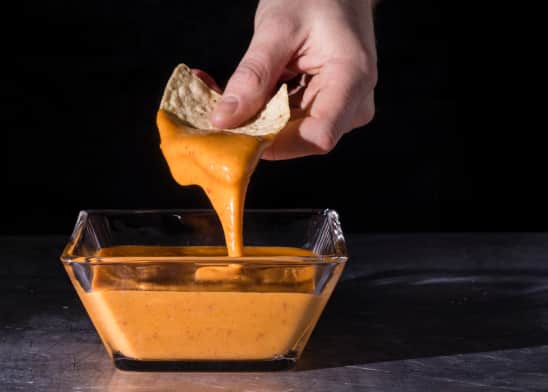
The base of this cheese sauce is a supertasty combination of sharp aged cheddar and Swiss cheese. But we didn’t stop there. For this recipe, we wanted to riff on a favorite late-night boozy snack food: cheesy ddukbokki, Korean rice cakes swimming in a spicy gochujang sauce topped with a mound of melty cheese. Gochujang is a Korean hot pepper paste that is used in many Korean dishes. Here we fold a quick gochujang sauce into the cheese for a dip that’s spicy, sweet, and salty. It’s a vibrant shade of orange-red—reminiscent of the traditional spicy queso sauce present at so many Super Bowl parties across the United States (but the similarities end there).


17 Comments