Crispy Pan-Seared Fish with Piquillo Pepper Sauce
By America's Test KitchenPublished on April 24, 2017
Yield
Serves 4

Ingredients
Fish
4 (6- to 8-ounce) skin-on white fish fillets, 1 to 1½ inches thickKosher salt 1½ teaspoons sugar 2 tablespoons vegetable oil 2 tablespoons finely chopped fresh parsleySauce
1 medium vine-ripened tomato, cored and quartered2 ounces jarred piquillo peppers, drained¼ cup panko bread crumbs 2 teaspoons sherry vinegar 1 garlic clove, peeledKosher salt ½ teaspoon smoked paprika ⅛ teaspoon cayenne pepper ¼ cup extra-virgin olive oilBefore You Begin
This recipe works well with any skin-on, 1- to 1½-inch-thick firm whitefish fillets. And while this bright, creamy sauce is a great counterpoint to the crispy fillets, feel free to get creative and sauce the fish how you like. Compared to regular jarred roasted red peppers, jarred piquillo peppers have thinner flesh, with a complex, slightly bitter flavor underlying their sweetness. They are used extensively in Spanish cooking and particularly in tapas.
Instructions
- For the Fish: Combine 1½ teaspoons salt and sugar in small bowl. Using sharp knife score skin lengthwise at ½-inch intervals, making ¼-inch-deep cuts, stopping ½ inch from top and bottom of filet. Season flesh side of fillets evenly with salt mixture and place skin side up on wire rack set in rimmed baking sheet. Season skin side with ¼ teaspoon salt. Refrigerate for at least 45 minutes or up to 1½ hours.
- For the Sauce: Meanwhile, place tomato, peppers, panko, vinegar, garlic, ½ teaspoon salt, paprika, and cayenne in blender and blend on high speed until smooth, about 2 minutes. With blender running, slowly drizzle in oil until smooth and creamy, about 1 minute. Strain sauce through fine-mesh strainer, pressing on solids to extract as much liquid as possible; discard solids. Season with salt to taste.
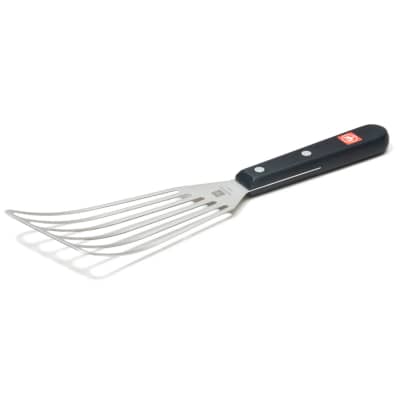
- Remove fish from refrigerator and pat skin dry with paper towels. Heat oil in 12-inch nonstick skillet over high heat until just smoking. Carefully slide fillets, skin side down, into skillet. Immediately reduce heat to medium-low; using fish spatula, firmly press fillets down for 20 to 30 seconds to create good contact between skin and skillet. Continue to cook, tilting skillet occasionally to distribute oil, until skin is well browned and flesh is opaque except for top ¼ inch, 8 to 14 minutes. (If at any time during searing, oil starts to smoke or sides of fish start to brown, reduce heat so that oil is sizzling but not smoking.)
- Turn off heat. Flip fish and continue cooking until fish registers 125 degrees F/52 degrees C, about 30 seconds longer. Immediately transfer fish to large platter or wire rack set in rimmed baking sheet. Spoon dollops of sauce onto individual plates. Sprinkle parsley in fillet-sized rectangles next to sauce. Place fillets, skin side up, on top of parsley rectangles. Serve.


Yield
Serves 4Ingredients
Fish
Sauce
Ingredients
Fish
Sauce
Ingredients
Fish
Sauce
Why This Recipe Works
For a lot of cooks, it can feel like the difference between succulent, moist fish and dry, flaky pucks is a matter of seconds in the frying pan. At that point, why even try to do it yourself? But cooking a restaurant-worthy piece of seared fish at home doesn’t have to be hard. There are two secrets that make it a cinch.
The first? Salt your fish before you cook it. As with most other meats, pretreating the fish with salt accomplishes two things. One, salt seasons the flesh by diffusion, as it moves from an area of greater salt concentration to an area of lower concentration. Salt dissolves in the water in the flesh and moves inward, seasoning the fish deeply. Two, salt actually dissolves some of the proteins in the fish and forms a gel that can hold on to more moisture. In this short salting time, the effect is mostly contained to the exterior portions of the flesh—the very regions most likely to be overcooked. (Salting also drastically reduces the dreaded white band of coagulated albumin that appears when fish is seared). All that science lingo comes down to a simple process: Season sturdy whitefish filets with a mixture of salt and sugar (for balanced seasoning), let it hang out for a little less than an hour, and cook it.
The second secret is going low and slow. Instead of searing the fish hard and flipping it or even finishing it in the oven, opt for a gentler cooking method: Start in a hot pan and drop the flame to maintain an even, steady sear. Cooking the fish most of the way on the skin side—an old-school, fancy French technique dubbed “unilateral” cooking—ensures that the skin gets incredibly crispy while the flesh stays moist. After that, a gentle kiss of heat on the flesh side is all the fish needs to finish cooking. With a quick, tangy tomato-pepper sauce, this is a versatile dish you can whip up any night of the week to impress even the pickiest pescatarian.
Photography by Steve Klise



10 Comments