Homemade Sea Salt
By Dan SouzaPublished on April 24, 2017
Yield
Makes about ½ cup sea salt
Ingredients
Before You Begin
It is incredibly important to use seawater from a clean, unpolluted source. Do not use water from an area with an active red tide warning. If you have any doubt about water quality, do not use it. Calcium and magnesium salts found in seawater can make sea salt unpleasantly bitter. This recipe provides ways to remove both. If your salt tastes great (i.e., it is not bitter) at the end of step 2, you’re done. If it is still bitter at that point, proceed to step 3.
In step 1, be sure to use an enameled Dutch oven. Boiling a concentrated salt solution is highly corrosive and can damage metal pots and pans. It is important to use an enameled pot for this step and glass bakeware for the rest of the recipe.
In step 3, you can use any salt that lists only salt on its ingredient list. Avoid iodized salts and those containing anticaking agents.
Instructions
- Strain water through coffee filter into large enameled Dutch oven. Bring to boil over high heat. Boil water until fine white sediment forms on bottom of pot and water measures about 2 cups, 1 to 1½ hours. (If you don’t see white sediment form, it probably means your seawater is particularly low in calcium salts. Simply stop boiling at 2 cups and proceed to the next step.)
- Adjust oven rack to middle position and heat oven to 300 degrees F/150 degrees C. Transfer water to bowl or liquid measuring cup and let sediment settle for 5 minutes. Gently pour clear brine into 13 by 9-inch baking dish, being careful to leave sediment behind; discard sediment. Transfer dish to oven and bake until brine fully crystallizes, about 1½ hours. Let salt sit until cool enough to taste. Taste salt. If salt tastes great, gently scrape up salt with metal spatula and transfer to airtight container. (Salt can be stored indefinitely.) If salt is bitter, proceed to the next step.
- Whisk water and salt in bowl or liquid measuring cup until salt dissolves, 1 to 2 minutes. (A very small amount of salt may remain undissolved at bottom of bowl.) Using metal spatula, gently scrape up crystallized salt from dish and transfer to medium bowl (rinse and dry baking dish). Pour brine over salt, being careful to leave behind any undissolved salt. Gently stir for 30 seconds. Drain salt in fine-mesh strainer and discard brine. Transfer salt to rinsed and dried baking dish. Return to oven until fully dry, about 45 minutes. Let salt cool completely. Gently scrape up salt with metal spatula and transfer to airtight container. (Salt can be stored indefinitely.)


Yield
Makes about ½ cup sea saltIngredients
Ingredients
Ingredients
Why This Recipe Works
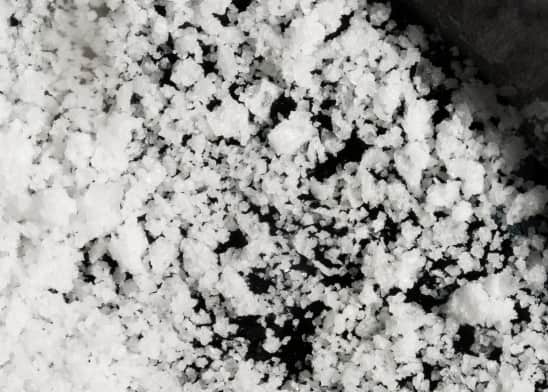
Years ago while on vacation in Maine I tried boiling down a pot of seawater until the salt crystallized on the bottom. It worked in the sense that I successfully boiled off the water, but the salt itself was a total failure—way too bitter and harsh. In addition to sodium chloride, seawater contains a mix of minerals—mainly calcium, magnesium, and sulfate. The calcium and magnesium salts can make sea salt very bitter. There are a couple of tricks that salt producers use to eliminate these compounds and produce clean, briny-tasting sea salt. The calcium salts crystallize before sodium chloride does, so they can be removed before they get incorporated into the salt crystals. And the magnesium salts can actually be washed off the finished salt by using a saturated salt solution (it sounds weird, but trust me, it works). I tried both of these techniques on the seawater that I scooped up from the rocky coast of Marblehead, Massachusetts, and they both made a marked improvement in bitterness. I also ran some tests to figure out the best way to get a coarse, flaky-textured salt—perfect for sprinkling on steak, seared fish, and cultured butter. Generally speaking, slower evaporation leads to larger crystal formation (we tried one batch left uncovered for a couple of days in the kitchen and got some particularly beautiful pyramid-shaped salt crystals). I found that I could rapidly boil down the seawater to about 2 cups (right before the sodium chloride started to crystalize) and then transfer the brine to a wide baking dish to finish slowly dehydrating in a low oven. The result is a mix of chunky crystal sizes that provide a delicate, satisfying crunch. If you have access to clean seawater, I highly recommend trying this technique. Local, handmade flaky sea salt makes a great gift (for your mouth).
Photography by Steve Klise


4 Comments