Cast Iron Dutch Baby
By Lawman JohnsonPublished on July 7, 2017
Time
1 hour
Yield
Serves 4
Ingredients
Before You Begin
You can use whole or low-fat milk instead of skim, but the Dutch baby won't be as crisp. For a real treat, serve with an assortment of berries and lightly sweetened whipped cream.
Instructions
- Adjust oven rack to middle position and heat oven to 450 degrees. Grease 12-inch cast-iron skillet with oil, place skillet in oven, and heat until oil is shimmering, about 10 minutes.
- Meanwhile, whisk flour, cornstarch, lemon zest, and salt together in large bowl. In separate bowl, whisk eggs until frothy, then whisk in milk, melted butter, and vanilla until incorporated. Whisk one-third of milk mixture into flour mixture until no lumps remain. Slowly whisk in remaining milk mixture until smooth.
- Quickly pour batter into skillet and bake until Dutch baby puffs and turns golden brown (edges will be dark brown), about 20 minutes, rotating skillet halfway through baking.
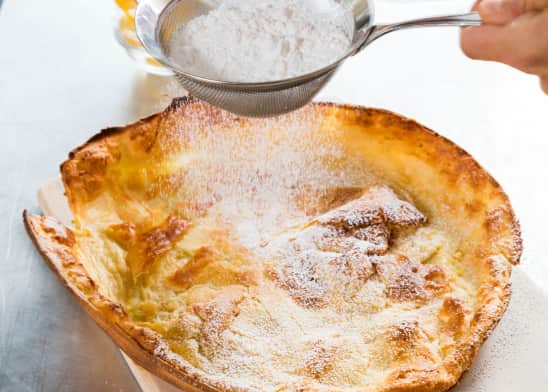
- Using potholders, remove skillet from oven. Being careful of hot skillet handle, transfer Dutch baby to cutting board using spatula. Dust with sugar and slice into wedges. Serve with lemon wedges.


Time
1 hourYield
Serves 4Ingredients
Ingredients
Ingredients
Why This Recipe Works
We wanted a puffy, well-risen Dutch baby with crisp sides and a tender bottom, but achieving that contrast did not come easily. Where ordinary pancakes call for baking soda and baking powder, Dutch babies rely on the conversion of water to steam for their lift—the milk, eggs, and butter in the batter all contain substantial amounts of water to help with that. To create a Dutch baby substantial enough to serve four, we turned to our 12-inch cast-iron skillet. Using a 450-degree oven allowed the Dutch baby to puff up spectacularly without burning. Our next goal was creating perfectly crisp sides. Since we knew that fat makes baked goods tender, we replaced the whole milk in the recipe with skim milk. Less fat translated to more crispness. To get a head start on this process, we greased and preheated the skillet. This simple step made all the difference in attaining crisp sides to go along with the custardy bottom; the lean batter cooked up quickly along the sides of the hot skillet. For even more crispness, we replaced some of the flour in the batter with cornstarch. To give the dish a flavor boost, we whisked a little vanilla extract and lemon zest into the batter. A generous dusting of confectioners' sugar provided the final touch.


64 Comments