America's Test Kitchen LogoCook's Country LogoCook's Illustrated Logo

Reviews You Can Trust.
See Why.

The Best Egg Substitutes

Are those who abstain from eggs destined to live a life without yummy treats? Hardly. We’re here to help.

Headshot of Carolyn Grillo
By Carolyn Grillo

Published on April 10, 2024

What You Need To Know

Eggs are undeniably delicious on their own. Yet in baked goods, we look to them less for flavor and more for their incredible ability to multitask. They emulsify and stabilize batters and doughs, aid in browning, leaven, help produce a tender crumb, and maintain optimal moisture levels. However, many people avoid or limit eggs. Enter commercial egg substitutes. Most of these products attempt to replace eggs in baking recipes. A few say that you can also eat them on their own, scrambled, including Just Egg, a product made by an innovative Silicon Valley plant-based food company.

In order to find the best egg substitute, we purchased several nationally available products and used them in place of eggs in some of our favorite recipes: Chewy Sugar Cookies, Birthday Sheet Cake, and Popovers. We also prepared scrambled “eggs” with the two products engineered for this purpose.

What Are Egg Substitutes Made From?

Most of the egg substitutes we tried are complex combinations of starches, leaveners, and gums. The starches work to bind and keep food moist even after cooling. The leaveners lighten and add fluffiness. The gums stabilize, emulsify, and add moisture.  

Two products also contain legume proteins, made from yellow split peas and mung beans, respectively. The other brands have very little, if any, protein. These two products are designed to have protein from a dietary perspective, and protein gives the eggs structure, allowing them to scramble up like regular eggs. They also include ingredients for color and flavor.

A great egg substitute allows those who don't consume eggs to enjoy delicious cake and cookies like these.

How Do Egg Substitutes Work?

Most of the egg substitutes are sold in a powdered format and must be mixed with water before use, each with its own recommended ratio of powder to water. One of the legume protein–based products we tried was a ready-to-use liquid we could dispense straight from the container.

Baking Cookies and Cake with Egg Substitutes

Were the cookies and cake made with egg substitutes identical to batches of cookies and cake made with eggs? No, but a few of them were good enough that our tasters were impressed. 

Some cookies were crispy on the edges with a chewy and tender center—our ideal sugar cookie. A few of the batches, however, were tougher and more dry than we’d like. Cookies don’t rise much in the oven, so they don’t need eggs for structure. Instead, eggs’ main role is to bind the ingredients and to supply enough moisture and fat to keep the cookie soft. 

We baked Chewy Sugar Cookies with each egg substitute, and our tasters rated every cookie's flavor and texture.

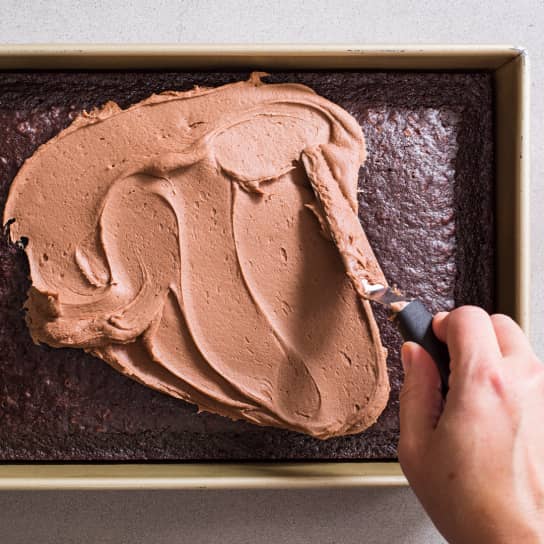
As for the cakes, some came out of the oven flat and pale, while others were tall and browned. A few were disappointingly gummy and wet; others were nicely moist and spongy. Cakes get most of their structure from gluten, but they rely on eggs for some of their stature as well as for emulsification, moisture, color, flavor, and a tender crumb. 

The differences we noticed in appearance and texture are due to the intricate makeup of the egg substitute and the complex ways in which ingredients interact while baking. For example, one egg substitute made baked goods that browned significantly more than the others, likely because its formulation contained baking soda, which causes faster browning reactions. Two products contained baking soda but also added cream of tartar, which lowers the pH and tempers browning, so the baked goods weren’t as dark as the product with baking soda alone. And one egg substitute uses cream of tartar and no baking soda, making it a little acidic, which slows down browning.

The starches used also greatly impact factors such as gelatinization and how the product reacts to temperature changes. Real eggs might seem simple, but they are incredibly difficult to replicate. Just think of the many forms they can take structurally, from a hollandaise to a soufflé and everything in between. Eggs are basically magic, and the ingredient lists of egg substitutes convey the complex textural engineering used to replicate that magic in these products.

Egg substitutes contain complex ingredients which together attempt to replicate the functions of eggs, such as browning. Depending on the combination of ingredients, cakes browned differently.

Tasters noted flavor differences too. Most of the cookies and cakes tasted sweet and buttery. However, a few tasters noticed unexpected, slightly off-putting “earthy,” “grassy,” and “vegetal” flavors in the baked goods made with egg substitutes that contained protein. It was easy to figure out why. Since the protein-based egg substitutes were made to be scrambled, manufacturers added savory ingredients such as onion, dried yeast, and turmeric to help mimic egg flavor and color. The manufacturers of both of these products say they can be used in baking, but oniony cake just isn’t for us.

Testing the Limits of Egg Substitutes

Next, we turned to a recipe that would really challenge our egg substitutes—popovers. As popovers bake, the water in the batter becomes steam and expands, stretching the walls and resulting in a balloon-like top. None of the egg substitutes were able to replicate the height or structure of a popover made with eggs. Most were short and unappealingly dense and gummy. However, the popovers made with protein-based egg substitutes had slightly better textures. It’s because the legume proteins behave similarly to egg protein, coagulating and gelling at around the same temperature. Starch-based egg substitutes contain little to no protein, so the walls didn’t rise or thin out quickly enough, resulting in wet popovers. The popovers’ flavor mirrored what we tasted in cookies and cakes—popovers made with starch-based powdered egg substitutes tasted pleasant and sweet. The two protein-based egg substitutes produced popovers that tasted savory, one making more unpleasant popovers than the other. We don’t recommend using any of these products to make popovers.

Egg substitutes don't have the necessary makeup to replicate the height or structure of a popover made with eggs. Most were short and unappealingly dense and gummy. When using egg substitutes, stick to recipes like cake and cookies instead.

Can You Really Make Scrambled Eggs with Egg Substitutes?

Since the two protein-based egg substitutes in our lineup can be scrambled, we set ourselves up at the stove with nonstick skillets and spatulas. The first product we tried is a yellow powder made primarily from pea protein. After combining it with water, we cooked the mixture as instructed. The cooked eggs were unappealingly pasty and mushy and tasted supersavory, like a bouillon cube. 

Scrambled eggs made with JUST Egg Plant Based Liquid Egg closely mimicked the bounce and chew of traditional eggs.

The other, from JUST Egg, is an innovative plant-based liquid made from mung beans. We poured the thin yellow liquid into a preheated, lightly oiled nonstick skillet and cooked it as we would fresh eggs, tilting the pan and moving the liquid around with a spatula. Once cooked, the texture was similar to creamy, dense scrambled eggs. The flavor was a bit more vegetal than we expect from scrambled eggs, but overall, better than the bouillon-like powdered scrambled eggs. We’d be happy eating them in the morning with a slice of toast.

Our Favorite Egg Substitute

We have good news if you avoid eggs or cook for someone who does. A majority of the egg substitutes we tested were good at replacing one or two functions or uses of eggs—browning, retaining moisture, rising, scrambling, or flavor, for example. One, however, stood out because it replicated the most functions of an egg during baking, making it the best and most reliable option for baking without eggs. Judee’s Vegan Egg Replacer Mix made cookies with a “pleasant flavor and satisfying chew” and an impressive, evenly browned cake with an ”airy” and “springy” crumb. While it didn’t succeed in baking popovers, we still think it’s worth keeping on hand for less challenging baking recipes such as cookies and cakes.

We recommend JUST Egg Plant Based Liquid Egg as the best replacement for making scrambled eggs and omelets. Its plant-based scrambled eggs closely mimicked the bounce and chew of traditional eggs. We didn’t like it as much in baked goods as several of our starch-based powdered egg substitutes due to some errant vegetal notes we detected in the cake.

  • Taste in Chewy Sugar Cookies
  • Taste in Birthday Sheet Cake
  • Taste in Popovers
  • With two products that were manufactured for this use, make scrambled “eggs” 
  • Samples were randomized and assigned three-digit codes to prevent bias

FAQs

Some manufacturers say their egg substitutes can be used in recipes that call for an extra yolk or white, while other companies say their products cannot be. Check the packaging of the egg substitute you’re using to see if it can be used in recipes that call for something other than a whole egg.

Everything We Tested

Recommended

WinnerJudee’s Vegan Egg Replacer Mix

Our favorite egg substitute made a uniformly browned vanilla cake with a “moist crumb” that was both impressively “airy and a bit springy.” Tasters were “pleasantly surprised by this substitute.” Sugar cookies “had a pleasant flavor and satisfying chew.” It “tasted like a perfect buttery sugar cookie,” noted one taster. Although this egg substitute struggled to make popovers, we think it’s a wonderful replacement for many baked goods.

Yield: 57 eggs ($0.21 per egg)

Ingredients: Potato starch, tapioca starch, baking soda, cellulose gum, cream of tartar

Instructions: Mix together 1½ teaspoons of powder and 2 tablespoons of warm water per whole egg

Price at Time of Testing: $11.99 for 8 oz ($1.50 per oz)

Our favorite egg substitute made a uniformly browned vanilla cake with a “moist crumb” that was both impressively “airy and a bit springy.” Tasters were “pleasantly surprised by this substitute.” Sugar cookies “had a pleasant flavor and satisfying chew.” It “tasted like a perfect buttery sugar cookie,” noted one taster. Although this egg substitute struggled to make popovers, we think it’s a wonderful replacement for many baked goods.

Yield: 57 eggs ($0.21 per egg)

Ingredients: Potato starch, tapioca starch, baking soda, cellulose gum, cream of tartar

Instructions: Mix together 1½ teaspoons of powder and 2 tablespoons of warm water per whole egg

Price at Time of Testing: $11.99 for 8 oz ($1.50 per oz)

Best for Scrambled EggsJUST Egg Plant Based Liquid Egg

This innovative liquid egg substitute closely mimicked the texture of scrambled eggs. And it doesn’t get easier than pouring a few tablespoons out of the container and into a pan. In baked goods, it had mixed results. Cookies were “a little too tough.” Cake was “moist and soft.” “It had great structure and felt the most springy and cake-like to me,” noted one taster. Though it made some of the more acceptable popovers, they were still dense and gummy. Several tasters noticed “vegetal,” “grassy” flavors in baked goods, which are likely due to the dehydrated onion and tumeric.

Yield: 10 eggs ($0.68 per egg)

Ingredients: Water, mung bean protein, expeller-pressed canola oil, contains less than 2% of dehydrated onion, gellan gum, natural carrot extractives (color), turmeric extractives (color), potassium citrate, salt, sugar, tapioca syrup solids, tetrasodium pyrophosphate, transglutaminase, nisin (preservative)

Instructions: Shake container, use 3 tablespoons of mixture per whole egg

Price at Time of Testing: $6.79 per 16 oz ($0.42 per oz)

This innovative liquid egg substitute closely mimicked the texture of scrambled eggs. And it doesn’t get easier than pouring a few tablespoons out of the container and into a pan. In baked goods, it had mixed results. Cookies were “a little too tough.” Cake was “moist and soft.” “It had great structure and felt the most springy and cake-like to me,” noted one taster. Though it made some of the more acceptable popovers, they were still dense and gummy. Several tasters noticed “vegetal,” “grassy” flavors in baked goods, which are likely due to the dehydrated onion and tumeric.

Yield: 10 eggs ($0.68 per egg)

Ingredients: Water, mung bean protein, expeller-pressed canola oil, contains less than 2% of dehydrated onion, gellan gum, natural carrot extractives (color), turmeric extractives (color), potassium citrate, salt, sugar, tapioca syrup solids, tetrasodium pyrophosphate, transglutaminase, nisin (preservative)

Instructions: Shake container, use 3 tablespoons of mixture per whole egg

Price at Time of Testing: $6.79 per 16 oz ($0.42 per oz)

Namaste Foods Vegan Egg Replacer

Tasters noted that cake made with this egg substitute was “delicate and soft,” with a “fluffy” middle. It had “nice subtle vanilla sweetness without any overpowering aftertaste.” The cookies were “perfectly chewy” with a nice crispiness around the edges. One taster wrote that it was “closest to the sugar cookie I am used to.” This starch-based egg substitute made small, gummy popovers with chewy and tough outer walls.

Yield: 56 eggs ($0.17 per egg)

Ingredients: Tapioca starch, arrowroot powder, citrus fiber, cream of tartar and sodium bicarbonate

Instructions: Mix together 2 teaspoons egg replacer with 2 tablespoons warm water per whole egg. Allow to sit several minutes until bubbles settle.

Price at Time of Testing: $9.79 per 12 oz ($0.82 per oz)

Tasters noted that cake made with this egg substitute was “delicate and soft,” with a “fluffy” middle. It had “nice subtle vanilla sweetness without any overpowering aftertaste.” The cookies were “perfectly chewy” with a nice crispiness around the edges. One taster wrote that it was “closest to the sugar cookie I am used to.” This starch-based egg substitute made small, gummy popovers with chewy and tough outer walls.

Yield: 56 eggs ($0.17 per egg)

Ingredients: Tapioca starch, arrowroot powder, citrus fiber, cream of tartar and sodium bicarbonate

Instructions: Mix together 2 teaspoons egg replacer with 2 tablespoons warm water per whole egg. Allow to sit several minutes until bubbles settle.

Price at Time of Testing: $9.79 per 12 oz ($0.82 per oz)

Bob’s Red Mill Gluten Free Vegan Egg Replacer

The first thing we noticed about baked goods made with this egg substitute was how dark brown they were. This product includes baking soda, which causes faster browning reactions. The cake was “moist,” “tender and pretty light” and “tasted great,” with “perfect sweetness.” The cookies tasted delicious, but were a little “dry” and “crispy.” Popovers had a nice height, but the crusts were thick and chewy with a dense and gummy interior texture.

Yield: 34 eggs ($0.13 per egg)

Ingredients: Potato starch, tapioca flour, baking soda, psyllium husk

Instructions: Mix together 1 tablespoon egg replacer with 2 tablespoons water per whole egg. Mix well and let sit for 1 minute to thicken.

Price at Time of Testing: $4.49 for 12 oz ($0.37 per oz)

The first thing we noticed about baked goods made with this egg substitute was how dark brown they were. This product includes baking soda, which causes faster browning reactions. The cake was “moist,” “tender and pretty light” and “tasted great,” with “perfect sweetness.” The cookies tasted delicious, but were a little “dry” and “crispy.” Popovers had a nice height, but the crusts were thick and chewy with a dense and gummy interior texture.

Yield: 34 eggs ($0.13 per egg)

Ingredients: Potato starch, tapioca flour, baking soda, psyllium husk

Instructions: Mix together 1 tablespoon egg replacer with 2 tablespoons water per whole egg. Mix well and let sit for 1 minute to thicken.

Price at Time of Testing: $4.49 for 12 oz ($0.37 per oz)

Recommended with Reservations

Ener-G Egg Replacer

Cookies made with this starch-based egg substitute had “good sugar and vanilla flavor.” They also had “great chew” in the center and were “quite firm around the edges.” Unfortunately, the cake was disappointingly pale and flat compared to other cakes. And while it tasted “light and sweet,” tasters described its texture as “gummy and soft,” “chewy,” and “sticky.” Popovers were pleasantly sweet, but they were pale likely because this egg replacer contains cream of tartar and no baking soda, which makes it a little bit acidic and slows down browning.

Yield: 100 eggs ($0.09 per egg)

Ingredients: Potato starch, tapioca flour, leavening (calcium lectate, calcium carbonate, cream of tartar), cellulose gum, modified cellulose.

Instructions: Mix together 1½ teaspoons of egg replacer with 1 tablespoon of warm water per whole egg.

Price at Time of Testing: $13.89 for 16 oz ($0.87 per oz)

Cookies made with this starch-based egg substitute had “good sugar and vanilla flavor.” They also had “great chew” in the center and were “quite firm around the edges.” Unfortunately, the cake was disappointingly pale and flat compared to other cakes. And while it tasted “light and sweet,” tasters described its texture as “gummy and soft,” “chewy,” and “sticky.” Popovers were pleasantly sweet, but they were pale likely because this egg replacer contains cream of tartar and no baking soda, which makes it a little bit acidic and slows down browning.

Yield: 100 eggs ($0.09 per egg)

Ingredients: Potato starch, tapioca flour, leavening (calcium lectate, calcium carbonate, cream of tartar), cellulose gum, modified cellulose.

Instructions: Mix together 1½ teaspoons of egg replacer with 1 tablespoon of warm water per whole egg.

Price at Time of Testing: $13.89 for 16 oz ($0.87 per oz)

Not Recommended

AcreMade Plant-Based Egg Substitute

This protein-based egg substitute made cookies that had “crunchy edges and chewy interiors.” Several tasters noticed that cookies had an off-putting “earthy,” “grassy,” “mushroom” flavor and that the cake had a “vegetal aftertaste.” This cake baked up nice and tall but was a bit “mushy and dense.” This product is one of two that claim to be able to make scrambled eggs. Unfortunately, the scrambled eggs were pasty and mushy and tasted like savory bouillon cubes. Popovers baked with this egg substitute had a decent rise, due to the product’s protein, but were still wet and gummy on the interior.

Yield: 12 eggs ($0.67 per egg)

Ingredients: Pea protein, lupin flour, upcycled pea starch, gellan gum, methylcellulose, sea salt, tetrasodium pyrophosphate, onion powder, dried yeast, calcium carbonate, turmeric (for color), natural flavor

Instructions: Mix together 1 tablespoon of powder with ¼ cup of water per whole egg when baking. For scrambled eggs (serves 2-3 people) mix ¼ cup powder with ⅔ cup water. Whisk until smooth.

Price at Time of Testing: $7.99 per 4.9 oz ($1.63 per oz)

This protein-based egg substitute made cookies that had “crunchy edges and chewy interiors.” Several tasters noticed that cookies had an off-putting “earthy,” “grassy,” “mushroom” flavor and that the cake had a “vegetal aftertaste.” This cake baked up nice and tall but was a bit “mushy and dense.” This product is one of two that claim to be able to make scrambled eggs. Unfortunately, the scrambled eggs were pasty and mushy and tasted like savory bouillon cubes. Popovers baked with this egg substitute had a decent rise, due to the product’s protein, but were still wet and gummy on the interior.

Yield: 12 eggs ($0.67 per egg)

Ingredients: Pea protein, lupin flour, upcycled pea starch, gellan gum, methylcellulose, sea salt, tetrasodium pyrophosphate, onion powder, dried yeast, calcium carbonate, turmeric (for color), natural flavor

Instructions: Mix together 1 tablespoon of powder with ¼ cup of water per whole egg when baking. For scrambled eggs (serves 2-3 people) mix ¼ cup powder with ⅔ cup water. Whisk until smooth.

Price at Time of Testing: $7.99 per 4.9 oz ($1.63 per oz)

Reviews You Can Trust

The mission of America’s Test Kitchen Reviews is to find the best equipment and ingredients for the home cook through rigorous, hands-on testing. Have a question or suggestion? Send us an email at atkreviews@americastestkitchen.com. We appreciate your feedback!

The Expert

Author: Carolyn Grillo

Carolyn Grillo

Senior Editor, ATK Reviews

Carolyn is a senior editor for ATK Reviews. She's a French-trained professional baker.

Carolyn Grillo is a senior editor for ATK Reviews. She studied French patisserie at Le Cordon Bleu in Paris and worked as a baker before joining the review team. Her culinary background helps her evaluate bakeware and write about ingredients. Carolyn is also responsible for writing The Well-Equipped Cook, a weekly newsletter about kitchen equipment. Hailing from the land of Taylor ham and Italian delis (New Jersey), she has strong opinions about both and isn't afraid to share them.

Appears In

This item is featured in the following. Click the links to dig in!

*All products reviewed by America’s Test Kitchen are independently chosen, researched, and reviewed by our editors. We buy products for testing at retail locations and do not accept unsolicited samples for testing. We list suggested sources for recommended products as a convenience to our readers but do not endorse specific retailers. When you choose to purchase our editorial recommendations from the links we provide, we may earn an affiliate commission. Prices are subject to change.

Reviews You Can Trust.
See Why.

This is a members' feature.
America's Test Kitchen LogoCook's Country LogoCook's Illustrated Logo