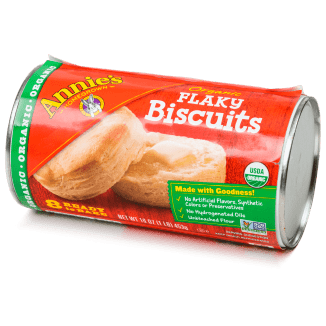

- Taste plain
The word “biscuit” comes from Middle English and French words that mean “twice-cooked bread,” which is fitting because centuries ago, biscuits were essentially crackers (or hardtack). Convenience was key: This simple staple was easy for travelers, sailors, and soldiers to pack and transport.
Modern-day biscuits are fluffier and softer, thanks to leaveners, but people still care about convenience—as evidenced by the popularity of premade biscuits (although the primary appeal now is saving time, not making easily portable battle rations). These are typically precut, ready-to-bake portions of biscuit dough that come canned or bagged and are stored in the refrigerator or freezer until use—no stirring, kneading, or cutting required.
We previously evaluated refrigerated ready-to-bake biscuits, but our winner was discontinued, so it was time to retest. We tasted four widely available biscuits priced from $1.98 to $3.99 per package ($0.25 to $0.50 per biscuit), and this time we included one product that came frozen in addition to three that were refrigerated.

Texture Trifecta: We Liked Flaky Layers, A Crisp Exterior, And A Soft Interior
Biscuits come in a variety of styles, but they can be broadly categorized as either laminated biscuits—created using a process in which buttery pastry dough is folded repeatedly to create defined, flaky layers—or tender biscuits, which are softer and more uniform in consistency and appearance. Our lineup included three laminated biscuits and one tender-style offering.
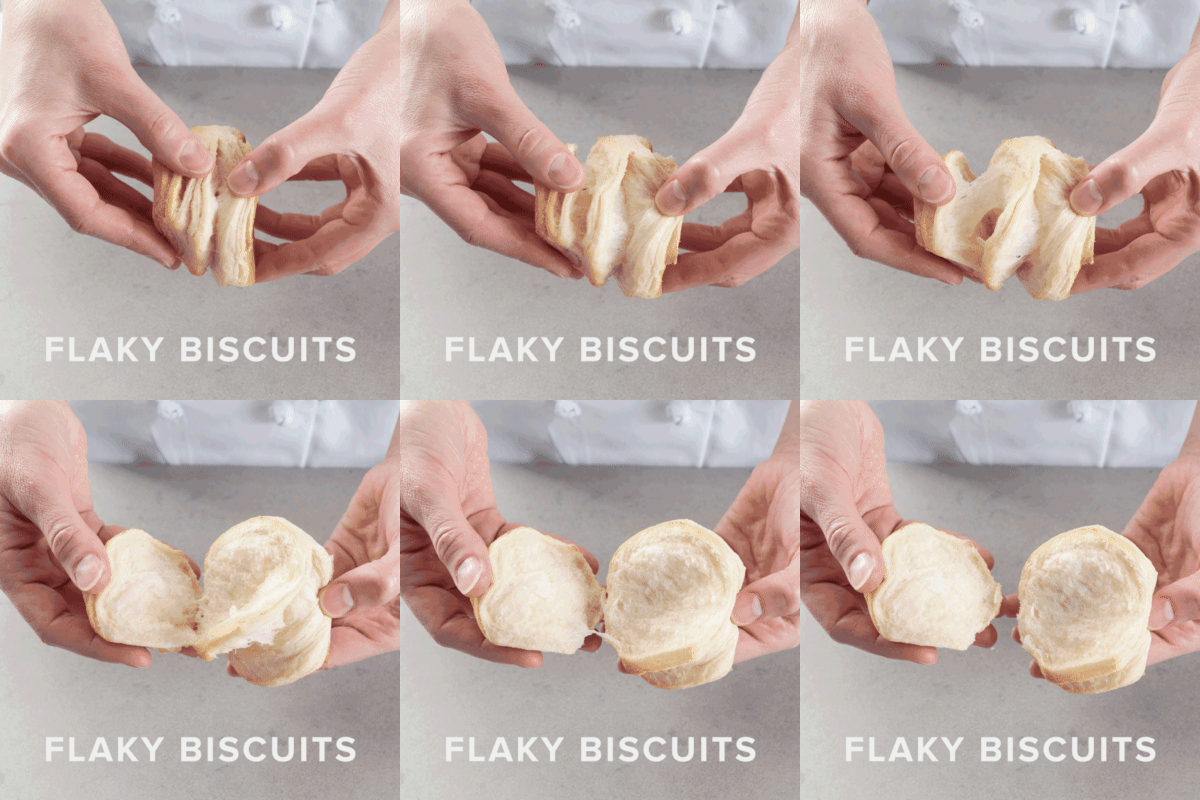
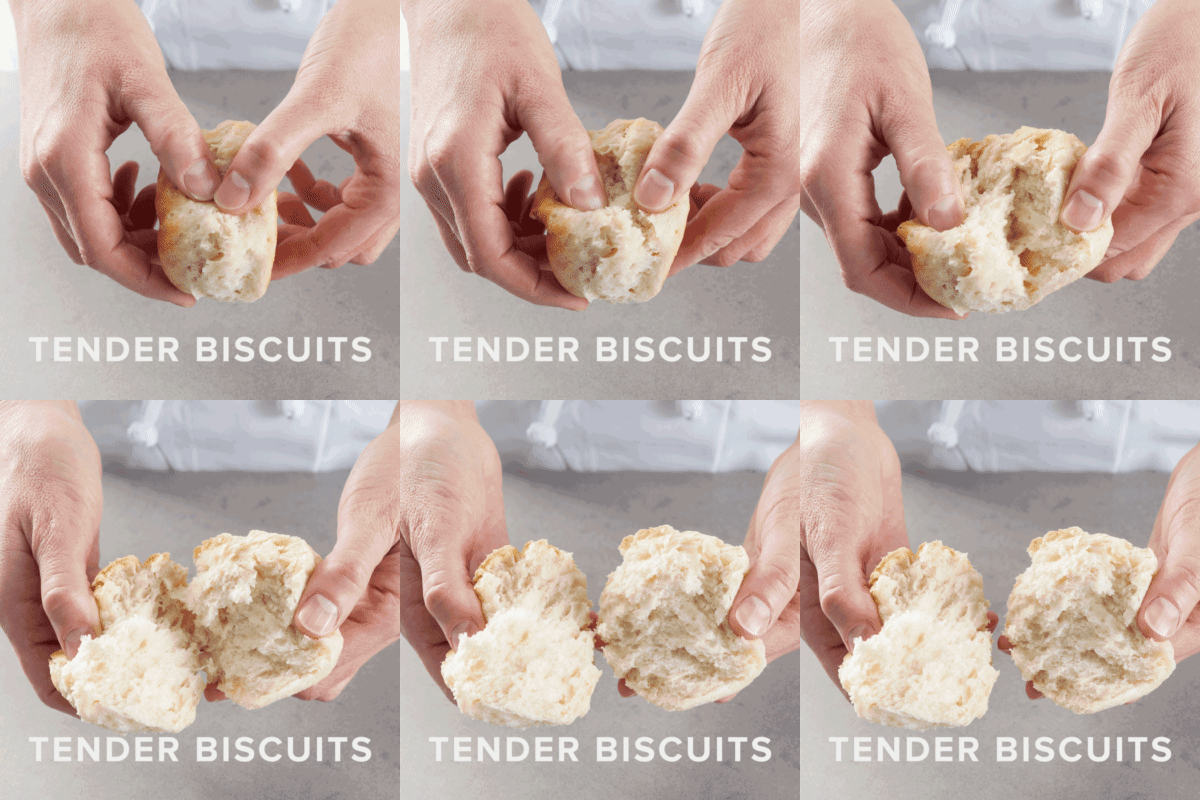
The one nonlayered biscuit was tender and bread-like throughout, with no noticeable distinction between interior and exterior. Tasters lamented the lack of flakiness, saying that these biscuits were cakey and not crispy enough at the edges. Another biscuit was downgraded because, though it had layers, they weren’t well-defined and were chewy, not flaky.
We overwhelmingly preferred laminated-style biscuits with distinct layers that “pulled apart easily” and had great textural contrast. As one taster said of our favorite biscuit, the “texture was perfect—light and fluffy, with the right amount of crisp on the outside.”

Associate Editor Miye Bromberg prepares a tray of premade biscuits during a comparative taste test of four different types.
Sweet, Buttery Flavor Was Best
Each biscuit had a distinct flavor. One was noticeably blander than the others; we checked the nutrition labels and found that it had about 60 percent less sugar—2 grams per serving, compared to 5 grams per serving in the other biscuits. With more than twice as much sugar, the other biscuits were a little sweeter, which we liked.

One biscuit mix could contain butter extract, strawberry extract, and vanilla extract. Another could contain butter extract, orange extract, and almond extract. Both labels will just say ‘natural flavors.’
We noticed other flavor differences, too, especially between our two highest-ranked biscuits, which had identical ingredient lists and nutritional information. However, the runner-up had an “almost fruity” taste, whereas our winner had a “neutral butter” flavor.

Intrigued, we investigated. Like the other biscuits in our lineup, both of these products included “natural flavor” as an ingredient. Two biscuits also included “artificial flavor.” The difference? Both are lab-created chemical formulations, but the source of the chemicals varies. Scientists extract chemicals from natural ingredients such as plants to make natural flavors, and they create synthetic chemicals to make artificial flavors. However, the U.S. Food and Drug Administration doesn’t require companies to specify exactly what their natural or artificial flavors comprise, so each biscuit’s flavor formulation can be different—and hard to ascertain.
Matt Hartings, associate professor in the Department of Chemistry at American University, who teaches the chemistry of cooking, explained, “One biscuit mix could contain butter extract, strawberry extract, and vanilla extract. Another could contain butter extract, orange extract, and almond extract. Both labels will just say ‘natural flavors.’” He also said that even if two manufacturers use the same combination of flavorings, one could be using more than the other; however, they’re not required to list amounts used, either. Companies would not disclose recipe information, but we suspect that the differences our tasters noticed in these two biscuits came down to undefined additives.
- Distinct layers
- Crisp exterior, soft interior
- Mild sweetness
- Higher sodium
- Buttery flavor
More Sodium Was Better
Sodium was more straightforward: More was better. Our least favorite biscuit had the lowest sodium content in the lineup, 442 grams per serving—roughly 25 percent less than our favorite biscuit had. Our two highest-ranked biscuits, meanwhile, each had 600 milligrams of sodium per serving. Our science editor explained that salt enhances our perception of other flavors, so although the higher-sodium biscuits didn’t necessarily taste saltier, they were noticeably more flavorful.
Our Favorite Biscuit
Immaculate Baking Organic Flaky Biscuits ($3.99 for 16 ounces) were our clear winner; they even earned a rare “highly recommended” designation from our tasters, who liked these biscuits’ “distinct layers”; “good, crispy outsides”; and “flaky,” “tender” interiors. We thought their sweet, buttery taste was the “best flavor of the bunch,” so even though we still think it’s worth putting in extra effort for a delicious homemade biscuit, these are an easy alternative if you’re pressed for time.