America's Test Kitchen LogoCook's Country LogoCook's Illustrated Logo

Reviews You Can Trust.
See Why.

The Best Meat-Free Burgers

New meatless burgers are revolutionizing the food world. Can they satisfy both vegetarians and meat eaters?

Headshot of Kate Shannon Levine
By Kate Shannon Levine

Last Updated September 23, 2021

Top Pick

WINNERImpossible Foods Impossible Burger

The flavor, texture, and appearance of this product, which is sold in 12-ounce packages, are remarkably similar to real ground beef. Both its mineral-y flavor and blood-red color are due largely to the company’s pioneering use of heme protein from soy leghemoglobin, an iron-containing molecule naturally found in soy roots and made on a large scale by inserting the DNA from the roots into yeast and fermenting it. The coarse texture and bits of solid coconut oil resemble beef flecked with fat. As one taster summed it up: “If I didn’t know that this was made from plants, I would think it was meat.”

Fat : 14 g

Sugar : < 1 g

Format : Ground

Sodium : 370 mg

Protein : 19 g

Ingredients : Water, soy protein concentrate, coconut oil, sunflower oil, natural flavors, 2% or less of: potato protein, methylcellulose, yeast extract, cultured dextrose, food starch modified, soy leghemoglobin, salt, soy protein isolate, mixed tocopherols (vitamin E), zinc gluconate, thiamine hydrochloride (vitamin B1), sodium ascorbate (vitamin C), niacin, pyridoxine hydrochloride (vitamin B6), riboflavin (vitamin B2), vitamin B2

Price at Time of Testing: $10.39 for 12 oz ($0.87 per oz)

The flavor, texture, and appearance of this product, which is sold in 12-ounce packages, are remarkably similar to real ground beef. Both its mineral-y flavor and blood-red color are due largely to the company’s pioneering use of heme protein from soy leghemoglobin, an iron-containing molecule naturally found in soy roots and made on a large scale by inserting the DNA from the roots into yeast and fermenting it. The coarse texture and bits of solid coconut oil resemble beef flecked with fat. As one taster summed it up: “If I didn’t know that this was made from plants, I would think it was meat.”

Fat : 14 g

Sugar : < 1 g

Format : Ground

Sodium : 370 mg

Protein : 19 g

Ingredients : Water, soy protein concentrate, coconut oil, sunflower oil, natural flavors, 2% or less of: potato protein, methylcellulose, yeast extract, cultured dextrose, food starch modified, soy leghemoglobin, salt, soy protein isolate, mixed tocopherols (vitamin E), zinc gluconate, thiamine hydrochloride (vitamin B1), sodium ascorbate (vitamin C), niacin, pyridoxine hydrochloride (vitamin B6), riboflavin (vitamin B2), vitamin B2

Price at Time of Testing: $10.39 for 12 oz ($0.87 per oz)

What You Need To Know

A meatier burger. A perfect burger. A meat lover’s burger. This doesn’t sound like marketing for vegetarian burgers, but it is. There’s a seismic shift happening in the world of vegetarian, or plant-based, “meat.” Companies are shaking their health-store reputations and targeting consumers who like meat but who, for any number of reasons, want to eat less of it. More products than ever before are intended to mimic the taste, texture, and experience of eating meat. Some of these burgers even claim to stay red and juicy at the center when cooked, much like real meat that’s been cooked rare or medium-rare. The meat eater–friendly approach is working: Americans spent $801 million on plant-based meat last year, according to research from the Plant Based Foods Association and the Good Food Institute. That’s an increase of 10 percent over the previous year. As a testament to the success of plant-based meat—and the threat it poses to conventional meat producers—many meat producers are now urging lawmakers to pass laws preventing meat-free products from containing words such as “meat” or “burger” on their packaging.

The plant-based meat companies getting the biggest press are the relative newcomers Impossible Foods and Beyond Meat. Each was inspired by an ambitious goal: combating climate change by lessening, or even completely stopping, human dependence on livestock. Both companies acknowledge that they can only accomplish that sky-high goal if their products are delicious and satisfying enough to win over meat eaters. They’ve had the most success so far with burgers, which Americans first got to taste in restaurants as varied as Burger King, Applebee’s, and David Chang’s Momofuku Nishi. Impossible Foods and Beyond Meat products are now available in supermarkets, with Beyond Meat offering burger patties and both companies offering packages of coarsely ground plant-based meat that resembles bulk ground beef. The companies say that these bulk products can be formed into burgers or incorporated into any recipe that calls for ground beef. Increasingly, these meat-free options are found right next to the regular ground beef in supermarket meat sections instead of with the tofu and other vegetarian proteins. However, they tend to cost more, sometimes up to about $18 per pound compared with about $6 per pound for ground beef. 

As curious as we were about the implications the rising popularity of plant-based meat will have on the climate, animal agriculture, and America’s meat-eating habits, we wanted to know the answers to much simpler questions. Does the next generation of meat-free burgers taste good? Can they really appeal to both vegetarians and meat eaters? To find out, we identified top-selling brands using sales information provided by IRI, a Chicago-based market research firm. We purchased eight products that were clearly positioned as meat-like. Six were sold as preformed burger patties, and two were “ground” products that we shaped into burgers ourselves. (For consistency, we’ll refer to all the products in our lineup as “burgers” because that’s how we ate them.) We cooked the burgers on the stovetop and held two blind tastings: plain, and on buns with ketchup and lettuce. 

We sampled the burgers two ways: plain and on buns with lettuce and ketchup. Some of them really looked and tasted like beef burgers—but others had funky flavors or soft, spongy textures that could never pass for real beef.

Plant Based Burgers Versus Beef Burgers

Beef burgers, for the most part, are simple: just ground beef, probably seasoned with salt and pepper, that’s pressed into patties. Raw beef has very little flavor, but when it’s cooked, a complicated series of chemical reactions—collectively known as the Maillard reaction—occurs to create an intensely flavorful, crusty, browned exterior. Meanwhile, the beef fat that’s dispersed throughout the patty melts, helping distribute the burger’s aroma and flavor and moistening the ground meat so that it’s tender.

Everything about plant-based burgers is different, starting with the ingredient (or combination of ingredients) used to make up the bulk of each burger. For the products in our lineup, it was pea protein, soy protein, mycoprotein, or wheat gluten. The general process for making pea and soy proteins goes like this: The legume is dried, cracked, and ground into flakes. Next, the oil is removed, the defatted flakes are ground into flour, and the protein is isolated from the flour and combined with other ingredients. Mycoprotein, an ingredient in one of the burgers we tasted, is harvested from a vat-grown fungus. The harvested mycoprotein is then seasoned, steamed, chilled, shaped, and frozen to meld its fibers together. The base protein of the two remaining burgers was wheat gluten, a sticky, elastic mass that’s left behind after a wheat dough is formed, kneaded to develop gluten, and then rinsed to remove its starch. 

Other essential ingredients in meat-free burgers are fats (usually one or more kinds of oil) intended to add richness and flavor, as well as thickeners and binders that make the patties moist and hold them together. Finally, many contain vegetable purees or juices, spices, seasonings, and flavorings that make the burgers taste meaty and savory. All told, each of the burgers in our lineup had at least a dozen ingredients and sometimes more than 20. For some, that complex combination of ingredients added up to something remarkable. Many closely matched the protein level, fat content, and calorie count of a real beef burger (see “Comparing the Burgers”).

Our three favorite products, from newcomers Impossible Foods and Beyond Meat, really resembled raw beef both when they were raw (shown above) and cooked. Other burgers looked much more like the traditional veggie burgers that have been sold in supermarkets for years.

Comparing Meat Free Burgers

Many products looked like beef, too. As we formed the bulk meat into 4-ounce patties, we were floored by how realistic they looked. They held together really well. Two of the preformed burgers looked quite convincing, too. We grew even more impressed by some of the burgers as they cooked. They started off a familiar reddish pink and gradually turned brown, their exteriors became crispy, and they let off smoke and sizzled in much the same way that ground beef does. They even remained slightly red and juicy at the center. But not all of them were very convincing or appetizing. Some of the patties were very flat and uniform and the same brownish-gray color as the meatless burgers of yesteryear. When cooked, the exterior of one got oddly sticky and did not develop a good sear. The takeaway? The next generation of meat-free burgers may have arrived, but the old guard has yet to depart.

Do Any Actually Taste Like Meat?

In terms of flavor, the burgers fell into three groups: bland, intensely seasoned, and impressively beefy. Bland burgers were disappointing but not objectionable. Burgers that were too sweet, overwhelmingly savory, or supersmoky, on the other hand, were off-putting. The sweetness came from either added sugar or vegetable purees. The intense savoriness—which often reminded tasters of soy sauce, barbecue sauce, or Worcestershire sauce—was likely due to an excess of umami-boosting ingredients, such as yeast extract and malt extract, or smoke flavor. When we calculated the nutrition information for a 4-ounce serving of each product, we noticed that those overly seasoned burgers contained a considerable amount of sodium (upwards of 400 milligrams) and sugar (a gram or more).

Our favorites had a truly savory quality that tasted “meaty” and “beefy.” The best, from Impossible Foods, achieved its distinctly “iron-y” and “mineral-y” flavor through its unique use of an important ingredient called heme protein. Heme is a type of iron-containing molecule; the most familiar example is hemoglobin, which makes blood red. The scientists at Impossible Foods made two key discoveries about it. First, the heme naturally present in meat influences the Maillard reaction when that meat is cooked, playing an essential role in developing its unique flavor. And second, a vegan version made from legumes could do the same thing. In fact, says Celeste Holz-Schietinger, director of research at Impossible Foods, heme from cows and heme from legumes “are identical molecule to molecule” and “create the exact same flavor profile.” Today, the company uses soy leghemoglobin, which it produces by inserting DNA from soy plants into yeast cells, which produce their own copies of the protein. Heme protein, which is blood red in color, also gives the burgers from Impossible Foods a reddish color that darkens as it cooks, much like ground beef. It also helps the burgers stay juicy, moist, and slightly red at the center. The company holds a patent for the use of heme protein in food, preventing other manufacturers from using the technology. Other companies use fruit or vegetable juice for color, which tinted the burgers very vibrant shades of red. Some products made with them did darken as they cooked and were much more beef-like than other meat-free burgers we had seen before, but even the best weren’t quite as convincingly beef-like in appearance as the burger made with heme. 

Burgers Ranged From Thin And Sad To Big And Beefy

Burger texture was just as important as flavor. Many of the preformed burgers were much too smooth and uniform in texture. Some were “mushy,” “spongy,” or “squishy.” One preformed patty, which weighed about 3 ounces and was less than ½ inch thick, felt small and insubstantial. Another had an oddly “feathered,” “wispy” texture that reminded tasters of a crab cake. Our favorites developed satisfyingly crunchy, crispy crusts and firmed up on the inside as they cooked. The best weighed roughly 4 ounces per portion and were thicker, about ¾ inch on average. Best of all, they had coarse, somewhat irregular textures. Biting through them felt a lot like biting through a beef burger, especially when we sampled them on buns with toppings. 

The type of protein used to form the base of the burgers certainly played a role in their texture, but it wasn’t the sole factor. Although our favorites were made with soy protein and pea protein, respectively, so were two of our least favorite burgers. The difference between a meaty, beef-like texture and a smoother, softer texture likely came down to processing. Animal muscle protein is formed into bundles of long fibers, which give beef burgers their satisfying chew. To achieve a comparable bite from plant-based protein, the companies need to tweak it. For starters, companies can choose the size and shape of the ingredients. Impossible Foods, for example, cooks its soybeans and dries them using a process that Holz-Schietinger says elongates their fibers so that they’re more meat-like. Companies can also control how the ingredients are combined, which usually involves mixing them all together in something resembling a giant stand mixer or extruding the product through tubes, and how the mixtures are formed into patties or bulk ground products. The mixing and shaping methods will both affect the texture of the final product. 

Our three favorite products contained another set of ingredients that proved essential for creating meat-like texture: coconut oil used in combination with canola or sunflower oil. Coconut oil is solid at room temperature (it melts at 76 degrees), so the little flecks of it embedded in these products looked and felt very similar to the bits of fat visible in uncooked ground beef. As the burgers cook, the coconut oil flecks melt and help distribute the burger’s aroma and flavor in much the same way beef fat does in beef burgers.

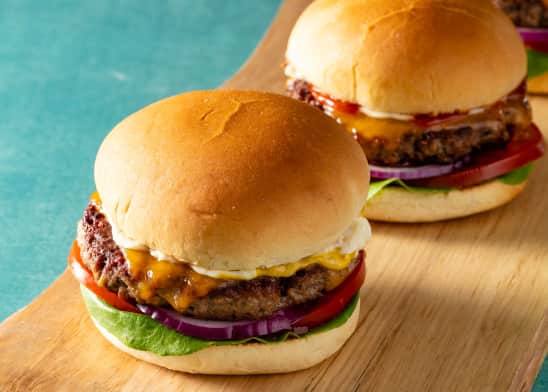
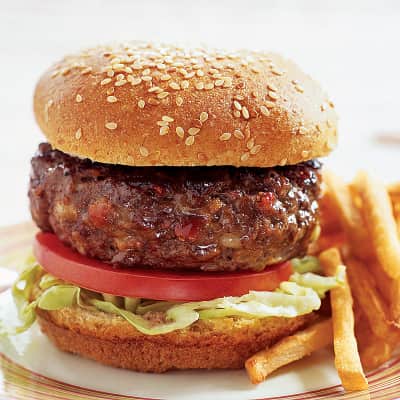
The Impossible Burger from Impossible Foods lived up to the hype. It's our favorite meat-free burger.

The Best Meat Free Burger: Impossible Burger

We’ve eaten a lot of remarkable food in the test kitchen, but these tastings stood out as some of the most memorable. Tasters were surprised by how completely some products mimicked beef burgers and described them accordingly: Comments included “I can’t tell this isn’t meat,” “It tastes like a normal burger,” and “This blew me away!” Our favorite, the Impossible Burger, lived up to the hype that has surrounded it since Impossible Foods was founded in 2011. Sold in 12-ounce vacuum-packed squares of coarsely ground plant-based meat, it looks remarkably like ground beef, both in its package and after we formed it into patties and cooked them. We were also impressed by its realistic mineral-y taste. Although Impossible Burger was our clear favorite, we did like both of the plant-based products from Beyond Meat. Their exteriors didn’t brown quite as impressively as the Impossible Burger and their interiors retained a slightly purple tint, but their textures were very similar to real beef. All three products are excellent meat-free choices for anyone who wants to eat less meat or offer a high-quality option to vegetarian family or friends.

  • Eight products, including 6 preformed patties and 2 products resembling ground beef that we formed into 4-ounce patties
  • Purchased at Boston-area supermarkets
  • Price per burger ranged from about $0.40 to about $1.50 per ounce (about $6.40 to about $24.00 per pound)
  • Cook on stovetop; sample plain
  • Cook on stovetop; sample in buns with ketchup and lettuce
  • Compare ingredients
  • Compare nutrition information per serving, adjusting to standard 113-gram (or roughly 4-ounce) serving as necessary
  • Tastes distinctly beefy and meaty
  • Savory, sweet, and salty flavors are in balance
  • Contains heme from soy leghemoglobin, an iron-containing molecule that contributes an iron-y, mineral-y flavor and blood-red color
  • Browns and develops a crispy exterior as it cooks
  • Texture is slightly coarse and irregular, much like real beef, both when raw and cooked

Everything We Tested

Highly Recommended

WINNERImpossible Foods Impossible Burger

The flavor, texture, and appearance of this product, which is sold in 12-ounce packages, are remarkably similar to real ground beef. Both its mineral-y flavor and blood-red color are due largely to the company’s pioneering use of heme protein from soy leghemoglobin, an iron-containing molecule naturally found in soy roots and made on a large scale by inserting the DNA from the roots into yeast and fermenting it. The coarse texture and bits of solid coconut oil resemble beef flecked with fat. As one taster summed it up: “If I didn’t know that this was made from plants, I would think it was meat.”

Fat : 14 g

Sugar : < 1 g

Format : Ground

Sodium : 370 mg

Protein : 19 g

Ingredients : Water, soy protein concentrate, coconut oil, sunflower oil, natural flavors, 2% or less of: potato protein, methylcellulose, yeast extract, cultured dextrose, food starch modified, soy leghemoglobin, salt, soy protein isolate, mixed tocopherols (vitamin E), zinc gluconate, thiamine hydrochloride (vitamin B1), sodium ascorbate (vitamin C), niacin, pyridoxine hydrochloride (vitamin B6), riboflavin (vitamin B2), vitamin B2

Price at Time of Testing: $10.39 for 12 oz ($0.87 per oz)

The flavor, texture, and appearance of this product, which is sold in 12-ounce packages, are remarkably similar to real ground beef. Both its mineral-y flavor and blood-red color are due largely to the company’s pioneering use of heme protein from soy leghemoglobin, an iron-containing molecule naturally found in soy roots and made on a large scale by inserting the DNA from the roots into yeast and fermenting it. The coarse texture and bits of solid coconut oil resemble beef flecked with fat. As one taster summed it up: “If I didn’t know that this was made from plants, I would think it was meat.”

Fat : 14 g

Sugar : < 1 g

Format : Ground

Sodium : 370 mg

Protein : 19 g

Ingredients : Water, soy protein concentrate, coconut oil, sunflower oil, natural flavors, 2% or less of: potato protein, methylcellulose, yeast extract, cultured dextrose, food starch modified, soy leghemoglobin, salt, soy protein isolate, mixed tocopherols (vitamin E), zinc gluconate, thiamine hydrochloride (vitamin B1), sodium ascorbate (vitamin C), niacin, pyridoxine hydrochloride (vitamin B6), riboflavin (vitamin B2), vitamin B2

Price at Time of Testing: $10.39 for 12 oz ($0.87 per oz)

Recommended

Beyond Meat Beyond Burger

The reformulated version of these preformed patties was “pleasantly juicy,” with a “slight irregular texture” that was “firm and almost bouncy . . . but still tender.” These patties’ “ability to form a crust adds a nice texture reminiscent of beef burgers,” said one taster. A few tasters picked up on “unfavorable” and “strange” flavors, but overall these burgers were “beefy,” “tasty,” and “supersatisfying.” The cooked burgers had the same slightly purple hue as the version we originally evaluated, likely due to the beet juice added for coloring.

Fat : 14 g

Sugar : 0 g

Format : Patties

Sodium : 390 mg

Protein : 20 g

Ingredients : Water, pea protein, expeller-pressed canola oil, refined coconut oil, rice protein, natural flavors, dried yeast, cocoa butter, methylcellulose. Contains 1% or less: potato starch, salt, potassium chloride, beet juice color, apple extract, pomegranate concentrate, sunflower lecithin, vinegar, lemon juice concentrate, vitamins and minerals (zinc sulfate, niacinamide [vitamin B3], pyridoxine hydrochloride [vitamin B6], cyanocobalamin [vitamin B12], calcium pantothenate)

Price at Time of Testing: $4.76 for 8 oz ($0.60 per oz)

The reformulated version of these preformed patties was “pleasantly juicy,” with a “slight irregular texture” that was “firm and almost bouncy . . . but still tender.” These patties’ “ability to form a crust adds a nice texture reminiscent of beef burgers,” said one taster. A few tasters picked up on “unfavorable” and “strange” flavors, but overall these burgers were “beefy,” “tasty,” and “supersatisfying.” The cooked burgers had the same slightly purple hue as the version we originally evaluated, likely due to the beet juice added for coloring.

Fat : 14 g

Sugar : 0 g

Format : Patties

Sodium : 390 mg

Protein : 20 g

Ingredients : Water, pea protein, expeller-pressed canola oil, refined coconut oil, rice protein, natural flavors, dried yeast, cocoa butter, methylcellulose. Contains 1% or less: potato starch, salt, potassium chloride, beet juice color, apple extract, pomegranate concentrate, sunflower lecithin, vinegar, lemon juice concentrate, vitamins and minerals (zinc sulfate, niacinamide [vitamin B3], pyridoxine hydrochloride [vitamin B6], cyanocobalamin [vitamin B12], calcium pantothenate)

Price at Time of Testing: $4.76 for 8 oz ($0.60 per oz)

Beyond Meat Beyond Beef

Our tasters liked the newest version of this bulk product just as much as the previous one we tasted. When formed into burgers and cooked, it was “juicy” and “firm,” and the exteriors of the burgers “crisped up a bit and got nice and caramelized.” It “had a distinctly metallic and nutty flavor that [is] associated with some plant-based meat.” When eaten plain, this product was “salty” and “rich.”

Fat : 14 g

Sugar : 0 g

Format : Ground

Sodium : 390 mg

Protein : 20 g

Ingredients : Water, pea protein, expeller-pressed canola oil, refined coconut oil, rice protein, natural flavors, dried yeast, cocoa butter, methylcellulose, contains 1% or less: potato starch, salt, potassium chloride, beet powder color, apple extract, pomegranate concentrate, sunflower lecithin, vinegar, lemon juice concentrate, vitamins and minerals (zinc sulfate, niacinamide [vitamin B3], pyridoxine hydrochloride [vitamin B6], cyanocobalamin [vitamin B12], calcium pantothenate)

Price at Time of Testing: $9.99 for 16 oz ($0.62 per oz)

Our tasters liked the newest version of this bulk product just as much as the previous one we tasted. When formed into burgers and cooked, it was “juicy” and “firm,” and the exteriors of the burgers “crisped up a bit and got nice and caramelized.” It “had a distinctly metallic and nutty flavor that [is] associated with some plant-based meat.” When eaten plain, this product was “salty” and “rich.”

Fat : 14 g

Sugar : 0 g

Format : Ground

Sodium : 390 mg

Protein : 20 g

Ingredients : Water, pea protein, expeller-pressed canola oil, refined coconut oil, rice protein, natural flavors, dried yeast, cocoa butter, methylcellulose, contains 1% or less: potato starch, salt, potassium chloride, beet powder color, apple extract, pomegranate concentrate, sunflower lecithin, vinegar, lemon juice concentrate, vitamins and minerals (zinc sulfate, niacinamide [vitamin B3], pyridoxine hydrochloride [vitamin B6], cyanocobalamin [vitamin B12], calcium pantothenate)

Price at Time of Testing: $9.99 for 16 oz ($0.62 per oz)

Recommended with Reservations

MorningStar Farms Incogmeato Plant-Based Ground

Tasters were pleased with this product's ability to develop a “char on the outside” of the burgers. This “crispy edge” provided a contrast to the interior of the burger, which had a “nice medium-rare texture and appearance” and “held together well,” though some found it a bit too “uniform,” “pasty,” and “spongy.” This product’s flavor was meaty and “inoffensive”; however, some tasters noticed an “artificial” aftertaste.

Fat : 16 g

Sugar : < 1 g

Format : Ground

Sodium : 400 mg

Protein : 20 g

Ingredients : Water, soy protein concentrate, canola oil, palm oil, methylcellulose, contains 2% or less of potato starch, dextrose, salt, yeast extract, cultured dextrose for freshness, apple juice powder (color), cornstarch, sunflower lecithin, vegetable juice concentrate (color), vitamin B1 (thiamin hydrochloride), vitamin B12, ascorbic acid for freshness

Price at Time of Testing: $9.59 for 12 oz ($0.80 per oz)

Tasters were pleased with this product's ability to develop a “char on the outside” of the burgers. This “crispy edge” provided a contrast to the interior of the burger, which had a “nice medium-rare texture and appearance” and “held together well,” though some found it a bit too “uniform,” “pasty,” and “spongy.” This product’s flavor was meaty and “inoffensive”; however, some tasters noticed an “artificial” aftertaste.

Fat : 16 g

Sugar : < 1 g

Format : Ground

Sodium : 400 mg

Protein : 20 g

Ingredients : Water, soy protein concentrate, canola oil, palm oil, methylcellulose, contains 2% or less of potato starch, dextrose, salt, yeast extract, cultured dextrose for freshness, apple juice powder (color), cornstarch, sunflower lecithin, vegetable juice concentrate (color), vitamin B1 (thiamin hydrochloride), vitamin B12, ascorbic acid for freshness

Price at Time of Testing: $9.59 for 12 oz ($0.80 per oz)

Quorn Meatless Gourmet Burgers

These burgers were packed with sweet, savory, salty flavor. Some tasters thought they were very satisfying, but others found their intensity overwhelming, comparing the flavor to such packaged foods as barbecue potato chips and beef jerky. It’s likely the company used a generous amount of malt extract and yeast, which amp up the umami, or savory, quality of foods. The texture of the burgers was softer and smoother than our favorites. This product, which contains egg white, is vegetarian but not vegan. 

Fat : 10 g

Sugar : 1 g

Format : Patties

Sodium : 649 mg

Protein : 14 g

Ingredients : Mycoprotein (37%), egg white, wheat flour, onion, palm oil, canola oil, milk protein concentrate, contains 2% or less of natural flavor, roasted barley malt extract, salt, maltodextrin, dextrose, calcium chloride, calcium acetate, potassium chloride, citric acid, sugar, potato dextrin, yeast, coconut oil, black pepper

Price at Time of Testing: 4.99 for 11.3 oz ($0.44 per oz)

These burgers were packed with sweet, savory, salty flavor. Some tasters thought they were very satisfying, but others found their intensity overwhelming, comparing the flavor to such packaged foods as barbecue potato chips and beef jerky. It’s likely the company used a generous amount of malt extract and yeast, which amp up the umami, or savory, quality of foods. The texture of the burgers was softer and smoother than our favorites. This product, which contains egg white, is vegetarian but not vegan. 

Fat : 10 g

Sugar : 1 g

Format : Patties

Sodium : 649 mg

Protein : 14 g

Ingredients : Mycoprotein (37%), egg white, wheat flour, onion, palm oil, canola oil, milk protein concentrate, contains 2% or less of natural flavor, roasted barley malt extract, salt, maltodextrin, dextrose, calcium chloride, calcium acetate, potassium chloride, citric acid, sugar, potato dextrin, yeast, coconut oil, black pepper

Price at Time of Testing: 4.99 for 11.3 oz ($0.44 per oz)

Dr. Praeger’s Perfect Burger

Although these burgers are big, tall, and reddish purple like our favorites when uncooked, they were still vibrant red once cooked. Their texture was soft throughout, reminding tasters of an undercooked burger. The flavor was mild and a little sweet, likely due to the added vegetable purees.

Fat : 13 g

Sugar : 0 g

Format : Patties

Sodium : 380 mg

Protein : 20 g

Ingredients : Hydrated pea protein blend (water, pea protein), sunflower oil, beets, natural flavors, sweet potato puree, butternut squash puree, carrot puree, methyl cellulose, oat fiber, fruit and vegetable juice (for color), sea salt, onion powder

Price at Time of Testing: 4.59 for 8 oz ($0.57 per oz)

Although these burgers are big, tall, and reddish purple like our favorites when uncooked, they were still vibrant red once cooked. Their texture was soft throughout, reminding tasters of an undercooked burger. The flavor was mild and a little sweet, likely due to the added vegetable purees.

Fat : 13 g

Sugar : 0 g

Format : Patties

Sodium : 380 mg

Protein : 20 g

Ingredients : Hydrated pea protein blend (water, pea protein), sunflower oil, beets, natural flavors, sweet potato puree, butternut squash puree, carrot puree, methyl cellulose, oat fiber, fruit and vegetable juice (for color), sea salt, onion powder

Price at Time of Testing: 4.59 for 8 oz ($0.57 per oz)

Pure Farmland Simply Seasoned Protein Starters

When we formed this product into burger patties and cooked them, they developed “a nice crusty exterior” while their insides remained juicy. The burgers held together well, but some tasters found them “mushy.” Many tasters thought the seasoning was “too strong,” with clear notes of pepper, onion, and garlic. This product’s “bright orange” and “very red” color reminded tasters more of chorizo than of beef and made it hard to know when the burgers were done.

Fat : 14.4 g

Sugar : 0 g

Format : Ground

Sodium : 432.6 mg

Protein : 16.5 g

Ingredients : Water, soy protein concentrate, coconut oil, canola oil, isolated soy protein, less than 2% spice, natural flavorings, roasted garlic powder, dehydrated garlic, onion powder, salt, sunflower oil, soy fiber, sugar, potato starch, red beet juice concentrate (for color), annatto (for color), yeast extract, cultured dextrose, maltodextrin (from corn, tapioca, and potato), methylcellulose, citric acid, soy lecithin

Price at Time of Testing: $7.69 for 16 oz ($0.48 per oz)

When we formed this product into burger patties and cooked them, they developed “a nice crusty exterior” while their insides remained juicy. The burgers held together well, but some tasters found them “mushy.” Many tasters thought the seasoning was “too strong,” with clear notes of pepper, onion, and garlic. This product’s “bright orange” and “very red” color reminded tasters more of chorizo than of beef and made it hard to know when the burgers were done.

Fat : 14.4 g

Sugar : 0 g

Format : Ground

Sodium : 432.6 mg

Protein : 16.5 g

Ingredients : Water, soy protein concentrate, coconut oil, canola oil, isolated soy protein, less than 2% spice, natural flavorings, roasted garlic powder, dehydrated garlic, onion powder, salt, sunflower oil, soy fiber, sugar, potato starch, red beet juice concentrate (for color), annatto (for color), yeast extract, cultured dextrose, maltodextrin (from corn, tapioca, and potato), methylcellulose, citric acid, soy lecithin

Price at Time of Testing: $7.69 for 16 oz ($0.48 per oz)

Not Recommended

MorningStar Farms Meat Lovers Vegan Burger

Tasters were split on whether people who love meat would find the “vegetal,” “savory,” “meaty” flavors of these burgers very satisfying or out of place. The patties were also thin, and their texture was unlike anything else in our lineup. The exteriors became very crisp when cooked and almost appeared fried, and the interiors had a distinctly wispy, feathered texture, which wasn’t unpleasant, but they reminded us more of crab cakes than burgers.

Fat : 18 g

Sugar : < 1 g

Format : Patties

Sodium : 580 mg

Protein : 27 g

Ingredients : Water, vegetable oil (corn, canola, and/or sunflower), wheat gluten, soy protein isolate, soy flour, contains 2% or less of natural flavor, methylcellulose, cornstarch, salt, cooked onion and carrot juice concentrate, sunflower oil, spices, garlic powder, onion powder, yeast extract, tomato paste (tomatoes), xanthan gum

Price at Time of Testing: $4.99 for 8 oz ($0.62 per oz)

Tasters were split on whether people who love meat would find the “vegetal,” “savory,” “meaty” flavors of these burgers very satisfying or out of place. The patties were also thin, and their texture was unlike anything else in our lineup. The exteriors became very crisp when cooked and almost appeared fried, and the interiors had a distinctly wispy, feathered texture, which wasn’t unpleasant, but they reminded us more of crab cakes than burgers.

Fat : 18 g

Sugar : < 1 g

Format : Patties

Sodium : 580 mg

Protein : 27 g

Ingredients : Water, vegetable oil (corn, canola, and/or sunflower), wheat gluten, soy protein isolate, soy flour, contains 2% or less of natural flavor, methylcellulose, cornstarch, salt, cooked onion and carrot juice concentrate, sunflower oil, spices, garlic powder, onion powder, yeast extract, tomato paste (tomatoes), xanthan gum

Price at Time of Testing: $4.99 for 8 oz ($0.62 per oz)

Lightlife Plant-Based Burger

These slightly soft, pink burgers looked more like salmon patties or turkey burgers than beef burgers both when raw and once cooked. Each burger contained a little sugar and a fair amount of sodium. Instead of tasting beefy, they were sweet and generically, somewhat “artificially” savory. Although the burgers were too soft on the inside, we liked that they were thick and that their exteriors browned nicely.

Fat : 17 g

Sugar : 1 g

Format : Patties

Sodium : 540 mg

Protein : 20 g

Ingredients : Water, pea protein isolate, expeller pressed canola oil, modified corn starch, modified cellulose, yeast extract, virgin coconut oil, sea salt, natural flavor, beet powder (color), ascorbic acid (to promote color retention), onion extract, onion powder, garlic powder

Price at Time of Testing: Price: $8.99 for 8 oz ($1.12 per oz)

These slightly soft, pink burgers looked more like salmon patties or turkey burgers than beef burgers both when raw and once cooked. Each burger contained a little sugar and a fair amount of sodium. Instead of tasting beefy, they were sweet and generically, somewhat “artificially” savory. Although the burgers were too soft on the inside, we liked that they were thick and that their exteriors browned nicely.

Fat : 17 g

Sugar : 1 g

Format : Patties

Sodium : 540 mg

Protein : 20 g

Ingredients : Water, pea protein isolate, expeller pressed canola oil, modified corn starch, modified cellulose, yeast extract, virgin coconut oil, sea salt, natural flavor, beet powder (color), ascorbic acid (to promote color retention), onion extract, onion powder, garlic powder

Price at Time of Testing: Price: $8.99 for 8 oz ($1.12 per oz)

Gardein Ultimate Beefless Burger

Although they didn’t taste much like beef, these burgers weren’t short on flavor. They were intensely sweet and savory, like “burnt vegetables and soy sauce” or a funky “teriyaki sauce.” These burgers had the most sugar per serving in our lineup and, as they cooked, their exteriors became very sticky and tacky. Both thin and small, the patties felt insubstantial and were dwarfed by a hamburger bun.

Fat : 7 g

Sugar : 1.3 g

Format : Patties

Sodium : 426 mg

Protein : 19 g

Ingredients : Water, soy protein concentrate, canola oil, vital wheat gluten, onions, soy protein isolate, methylcellulose, yeast extract, malt extract (malted barley, water), onion powder, garlic powder, organic ancient grain flour (khorasan wheat, amaranth, millet, quinoa), dried garlic, organic distilled vinegar, natural flavors, cane sugar, potato starch, sea salt, salt, celery seed, organic cane sugar, smoke flavor, spice extractives, spices, pea protein

Price at Time of Testing: $4.79 for 12 oz ($0.40 per oz)

Although they didn’t taste much like beef, these burgers weren’t short on flavor. They were intensely sweet and savory, like “burnt vegetables and soy sauce” or a funky “teriyaki sauce.” These burgers had the most sugar per serving in our lineup and, as they cooked, their exteriors became very sticky and tacky. Both thin and small, the patties felt insubstantial and were dwarfed by a hamburger bun.

Fat : 7 g

Sugar : 1.3 g

Format : Patties

Sodium : 426 mg

Protein : 19 g

Ingredients : Water, soy protein concentrate, canola oil, vital wheat gluten, onions, soy protein isolate, methylcellulose, yeast extract, malt extract (malted barley, water), onion powder, garlic powder, organic ancient grain flour (khorasan wheat, amaranth, millet, quinoa), dried garlic, organic distilled vinegar, natural flavors, cane sugar, potato starch, sea salt, salt, celery seed, organic cane sugar, smoke flavor, spice extractives, spices, pea protein

Price at Time of Testing: $4.79 for 12 oz ($0.40 per oz)

Reviews You Can Trust

The mission of America’s Test Kitchen Reviews is to find the best equipment and ingredients for the home cook through rigorous, hands-on testing. Have a question or suggestion? Send us an email at atkreviews@americastestkitchen.com. We appreciate your feedback!

The Expert

Author: Kate Shannon Levine

Kate Shannon Levine

Editorial Director, ATK Reviews

Kate is the editorial director for ATK Reviews. She's a culinary school graduate and former line cook and cheesemonger.

Kate Shannon Levine is the editorial director for ATK Reviews. She’s covered a wide variety of topics at America’s Test Kitchen, but she especially loves writing about cheese, pantry staples such as anchovies and kosher salt, and cleaning products. One of her proudest accomplishments is finding a life-changing kitchen sponge (really) and proving once and for all that it's a bad idea to leave a soggy sponge in the bottom of your sink. Prior to joining America’s Test Kitchen, she attended Boston University’s culinary program and worked as both a line cook and a cheesemonger.

Appears In

This item is featured in the following. Click the links to dig in!

*All products reviewed by America’s Test Kitchen are independently chosen, researched, and reviewed by our editors. We buy products for testing at retail locations and do not accept unsolicited samples for testing. We list suggested sources for recommended products as a convenience to our readers but do not endorse specific retailers. When you choose to purchase our editorial recommendations from the links we provide, we may earn an affiliate commission. Prices are subject to change.

Reviews You Can Trust.
See Why.

This is a members' feature.
America's Test Kitchen LogoCook's Country LogoCook's Illustrated Logo