Caviar is a food that’s steeped in mystique. Few of us have eaten it in any great quantity, yet almost all of us have strong ideas about what it signifies. For many, caviar is more a concept than a thing to be consumed. Some see it as the pinnacle of culinary luxury, an epicurean tradition with an aura of Old World decadence. Others see it as an emblem of conspicuous consumption.
The reality is both more simple and more complicated than our assumptions. Yes, it is a product with roots in Russia. And yes, over the centuries, it has become an expensive, rarefied good. But it wasn’t always this way. And caviar is no longer exclusive to Russia, if it ever was. While most of the caviar now sold around the world is extracted from fish farmed in China, the United States has its own history with this storied delicacy. In fact, for a brief period during the 19th century, the United States was actually the world’s leading producer of caviar. The craft continues today across a wide swath of the country, with caviar and roe made everywhere from North Carolina to Oklahoma to California.
To learn more, we tasted nine of the most widely available varieties of caviar and roe currently produced in the United States. We also consulted with more than a dozen farmers, fishers, retailers, aquaculture specialists, U.S. Fish and Wildlife Service agents, and food scientists to get the scoop.

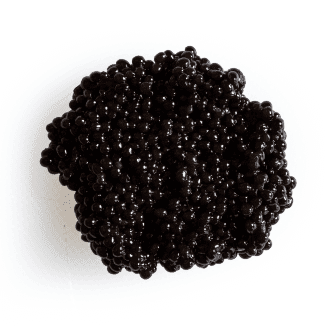
We tried nine different types of caviar and roe.
Caviar? Roe? What’s the Difference?
First things first: There’s caviar, and then there’s roe. Both are essentially salted fish eggs. It’s commonly accepted that caviar is made solely from the eggs of sturgeon, an ancient family of bony fish. Roe, by contrast, comes from any other type of fish. There’s no standard of identity for caviar in the United States, though. While the U.S. Food and Drug Administration mandates that the term “caviar” by itself be used only in reference to sturgeon fish eggs, legally, producers can sell products such as “salmon caviar,” “whitefish caviar,” or “paddlefish caviar” as long as they make it clear which other fish the eggs are coming from.

The first caviar was made centuries ago, in what is now Russia and Iran, from the eggs of sturgeon, an ancient family of bony fish. Photo: Getty Images
In part, the distinction is historical. The first caviar was made centuries ago, in what is now Russia and Iran, from the eggs of sturgeon caught in the Caspian Sea. There are three quintessential types of Russian caviar, each made from a different species of sturgeon: sevruga; osetra; and the most prized of all, beluga. For hundreds of years, sturgeon were plentiful in the Caspian—so much so that, as writer Richard Adams Carey explains, caviar was enjoyed by rich and poor alike in Russia. As late as the 18th century, it “cost no more than butter and other staples, and in fact was used as a substitute for butter in sauces during Lent.” In the 19th century, advances in refrigeration and transportation allowed Russia to export caviar to the rest of the world, limiting supply and access at home, increasing prices everywhere, and enshrining it as a luxury food par excellence.

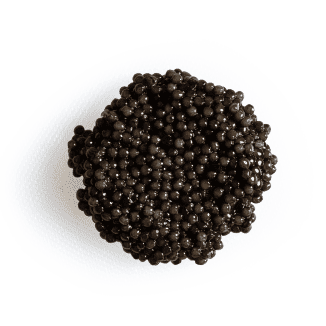
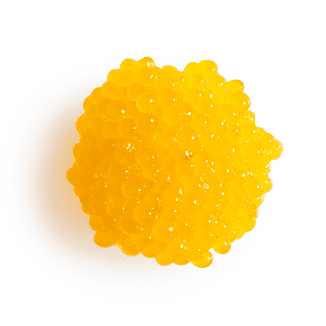
Today, "true" caviar (left) is still made exclusively from sturgeon eggs. Eggs from any other fish are commonly called roe (right).
Over time, rampant overfishing depleted the Caspian sturgeon population to near extinction. In an effort to conserve sturgeon, all trade in caviar is now regulated by a global organization called the Convention on International Trade in Endangered Species of Wild Fauna and Flora. Since 2005, it has been functionally illegal to import caviar from beluga sturgeon caught in the Caspian—and nearly impossible to get any other type of Russian or Iranian caviar in the United States.
But sturgeon aren’t confined to the Caspian region; eight species of sturgeon are native to the United States. As European demand for caviar rose and supply started to dwindle, enterprising Americans and American immigrants started fishing those native species in the late 19th century. Most of America’s caviar went to Europe, though Carey notes that it also became common in the United States, where the cheapest stuff was served like peanuts at New York City bars—a free snack whose saltiness encouraged patrons to drink. Eventually, America’s industry fell prey to some of the same problems that Russia’s industry did. Overfishing, pollution, and dams effectively eliminated American sturgeon fisheries by the turn of the 20th century.

In recent years, roe—including the salmon roe pictured here—has also gained popularity in the United States.
In recent decades, however, conservation efforts and developments in aquaculture have made American caviar production viable again. American interest in roe has increased simultaneously; in many cases, roe is a logical extension for existing fisheries and farms that already handle the same fish for meat. Today, caviar and roe come from fish that are either farmed (grown entirely in captivity), raised and caught in the wild, or ranched (raised in captivity to a point and then released into a more controlled wild environment). In almost all cases, the specific fish involved is raised only one way: White sturgeon caviar, for example, is made exclusively from farmed fish, whereas hackleback caviar is made only from wild-caught ones. The method used to raise each type of fish is determined by a variety of factors, including whether the fish is native to the United States, the size of the fish population in the wild (where applicable), fishing industry conventions, and state and federal regulations.

Some sturgeon are "wild-caught," meaning that they are either raised and caught entirely in the wild or raised in a hatchery until they’re big enough to safely release into the wild and then caught later. Photo: Getty Images
How Caviar and Roe Are Made
Caviar and roe differ slightly in how they’re processed. They’re produced similarly up to a point. First, the egg sack is removed from a mature female fish. It is then rubbed against a stainless-steel mesh screen, which separates the eggs from the surrounding fatty membrane. The eggs are washed to get rid of any remaining debris and then drained. They are salted for a brief period, usually no more than half an hour and often less. On their own, the eggs have very little flavor. The salt both seasons the eggs, giving them their characteristic brininess, and preserves them; the precise amount used depends on the size and maturity of the eggs harvested. After the eggs are salted, they’re drained again to remove excess water and then packed into large tins. Roe is typically sold or flash-frozen immediately after this stage. By contrast, most caviar is aged for anywhere from a few weeks to a year, a process that changes the flavor of the eggs and, many argue, makes it more complex than that of roe. Caviar is also available in different grades, which are determined by the bead (egg) size, color, and quality of the eggs used; roe generally isn’t graded.

Fish egg sacks are rubbed against a metal screen, which helps separate the eggs from their surrounding fatty membrane. Photo: Getty Images
Each Type of Caviar and Roe Is Unique
Ultimately, the flavor and texture of any fish egg, caviar or roe, depends on a wide variety of factors. Some of it has to do with the quality of the fish eggs in their original form—the size, texture, and volume of the eggs can differ from fish to fish and from week to week. The environment in which the fish was raised also plays a role. Several of the caviar and roe makers we talked to spoke of their trade as an artisanal process similar to making wine, with the same issues of terroir and locality at play even with farmed fish. Climate, local ecosystems, fish diet, and water temperature and composition can all have an impact. For example, white sturgeon farmed in Idaho, where it’s colder, can take up to 12 years to be mature enough to cull; the same fish farmed in warmer California, however, can take seven or eight years. And finally, how the eggs are harvested, processed, and transported can all contribute to the way they taste and feel by the time they get to the consumer.

We tried caviar from farmed and ranched fish, in basic and premium grades.
So does a fish egg by any other name taste as good? If you’re like us, the answer is yes. Almost every one of our 11 tasters had a different favorite caviar or roe. Each type of caviar and roe is unique, with its own particular flavor and texture profile; all are worth trying. The products also span a wide range of prices, costing from $5 to $135 an ounce. Pricier isn’t necessarily better either. In fact, many tasters actually preferred the flavors of the less expensive products. It really depends on what piques your interest, whether that’s an assertively fishy product; a milder, nuttier one; a product with big beads; or a product with small ones. With the following guide, we hope to demystify the world of caviar and roe—and to help you find the right product for both your palate and your wallet.