Sugar is sweet, but it’s also so much more than just a sweetener. It balances savory and bitter flavors, adds structure to baked goods, and promotes browning in everything from pie crusts to steaks.

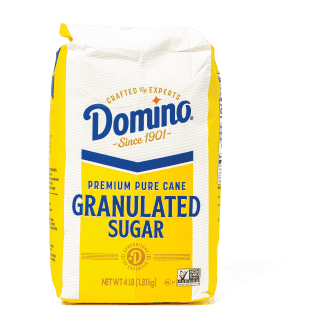
In the United States, Domino is by far the most well-known brand on the market. It’s what we stock in the test kitchen and what most people buy to bake with at home if they’re not buying a store brand. With such a commodity ingredient, dominated by a single brand, does it even matter what you buy?
Terms such as “raw,” “organic,” “pure,” and “cane” are common on sugar packaging, but what do they even mean? We’re here to break it all down and investigate.
The History of Sugar
Sugarcane is one the world’s main sources of granulated sugar. It’s a species of perennial grass native to New Guinea that requires tropical conditions to grow. Cane sugar comprises the vast majority of granulated sugar on supermarket shelves, but sugar can also be made from sugar beets. Beet sugar rose in popularity in climates that couldn’t grow sugarcane (learn more about beet sugar in the FAQ below).
Although sugar had been refined in India for centuries, granulated sugar as we know it today was made in Persia in the fifth century, according to historian Ulbe Bosma in his book The World of Sugar (2023). As the Greeks and Romans went to India, they brought sugar back, and it spread to Europe and the Middle East. Even as sugar's cultivation became more common and it's popularity grew, it was nowhere near as ubiquitous as it is today. In the 18th century, the average English person consumed just 4 pounds of sugar per year, according to a 2019 episode of the Netflix documentary series Rotten entitled “A Sweet Deal.” Today, Americans consume close to 40 pounds of refined sugar per year, according to the documentary.

As demand soared in the early 16th century, production reached its capacity in the Eastern Hemisphere and sugar companies looked to the Americas to expand. Many enslaved Africans were forced to work on sugar plantations in the Caribbean, and it is estimated that up to two-thirds of the 12.5 million people who were taken from Africa and survived the journey to the Americas were sent to work on sugar plantations.
Sugarcane is an extremely labor-intensive crop to grow and harvest. Up until the late 20th century, it was primarily cut by hand, and some farmers still prefer this method over machine harvesting because it leaves more of the root intact, which allows the plant to grow more abundantly the next season. Terrible conditions persist on plantations. Rotten shows an example of the modern sugar-processing industry, in which workers live in small, isolated communities with poor conditions, earning little money. The plantation featured in the documentary is in the Dominican Republic, which accounts for one-sixth of the United States’ sugar imports.

Why Is Domino Sugar King?
The sugar market in the United States is heavily regulated, with various subsidies and loans to support domestic farmers and refineries. In the late 19th century, in order to maximize profits and control more of the market, eight sugar companies formed the American Sugar Trust, now known as ASR Group, which is now the largest sugar refiner in the world. It is owned by the Sugar Cane Growers Cooperative of Florida and the Florida Crystals Corporation, which has a long history of sugar production in Cuba and relocated to Florida in 1959 during the Cuban revolution. These conglomerates own many of the sugar brands available on American supermarket shelves across the country, such as Domino, C&H, and Florida Crystals.
How Is Granulated Sugar Processed?
Because sugarcane requires tropical climates to grow, in the United States it’s primarily grown in Florida, Texas, and Louisiana. After sugarcane is harvested, it’s typically processed near where it was grown. This is because the sugarcane has a very short shelf life. It’s crushed to extract cane juice and filtered to remove debris from harvesting. Then, the juice is boiled to concentrate it until it forms crystals, spun in a centrifuge to separate the crystals from any residual liquid (aka molasses), and dried with hot air. This is considered raw sugar. It still has a coarse texture and a brown color due to some remaining molasses.

At this point, the raw sugar is shipped to a refinery. American refineries also process raw sugar imported from countries in the Caribbean, Central and South America, and Africa. To make pure granulated cane sugar at the refinery, the raw sugar is dissolved in water and processed to remove any remaining impurities and color. Often, this filtering is done using bone char, a porous, absorbent charcoal made from animal bone, which is why white cane sugar is considered non-vegan. It is centrifuged again to remove the liquid, and the crystals may be ground to create a finer texture. In order to make brown sugar, molasses is added back to this refined sugar. To make confectioners’ sugar (also known as powdered sugar), it is ground especially fine and mixed with cornstarch.
The Real Difference Between Organic and Conventional Sugar
At the supermarket, bags of sugar are labeled with a wide range of terminology, from “raw” to “organic” to “natural.” “Organic” is a certification and means that the cane is grown without prohibited substances such as certain fertilizers and pesticides. Organic sugar also does not use bone char in its processing. Other terms, such as “raw” or “natural,” are not regulated. In general, the sugars marked with terms such as these are less refined than mainstream brands like Domino, but it isn’t always clear to what degree. Turbinado and Demerara sugar are less-refined types of coarse raw sugar. They are often used in baking for the crunchy texture they add to the exterior of baked goods.
A Closer Look
We took sugar samples to the Massachusetts Institute of Technology and looked at them under a high-powered microscope, magnified to 40x.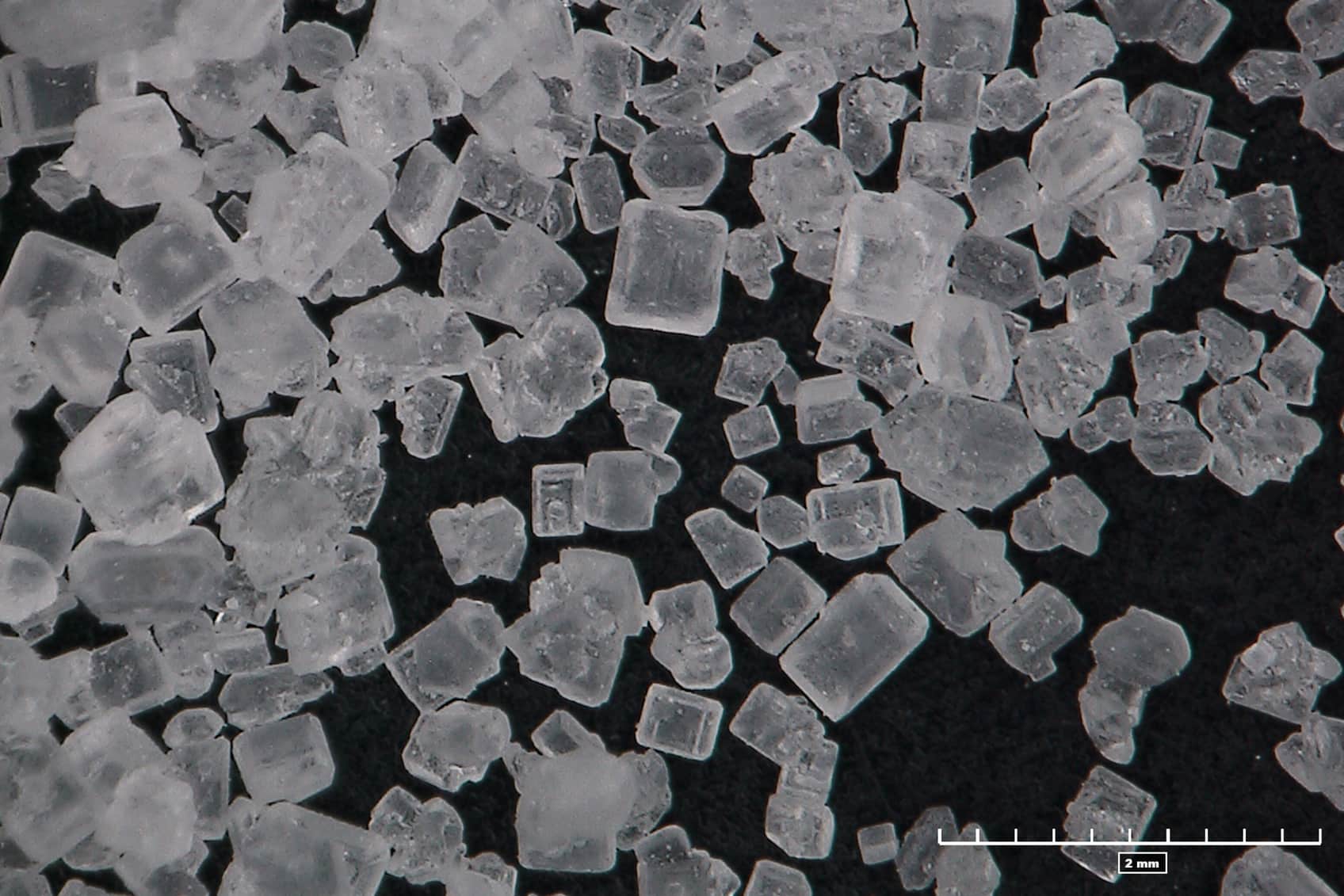
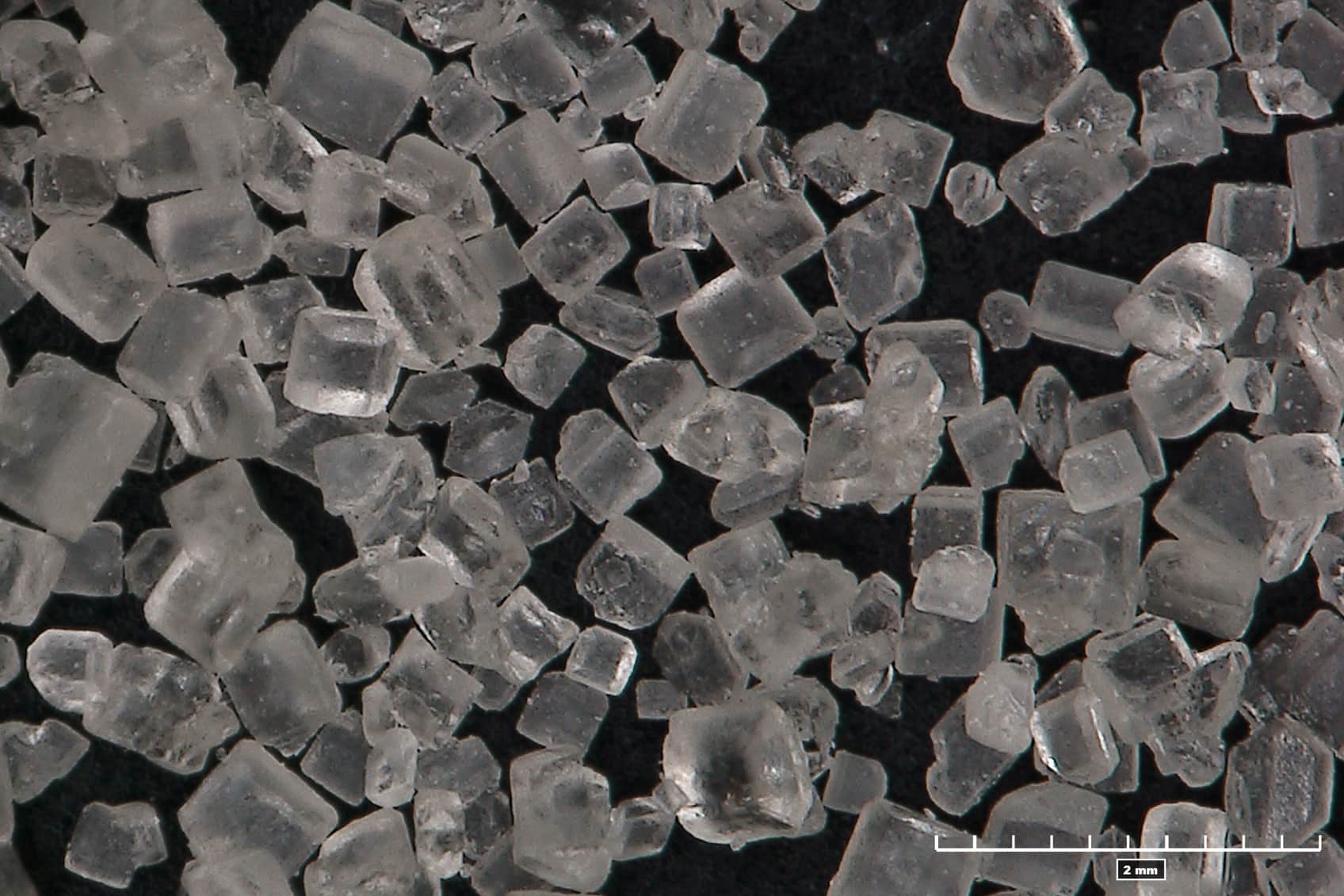
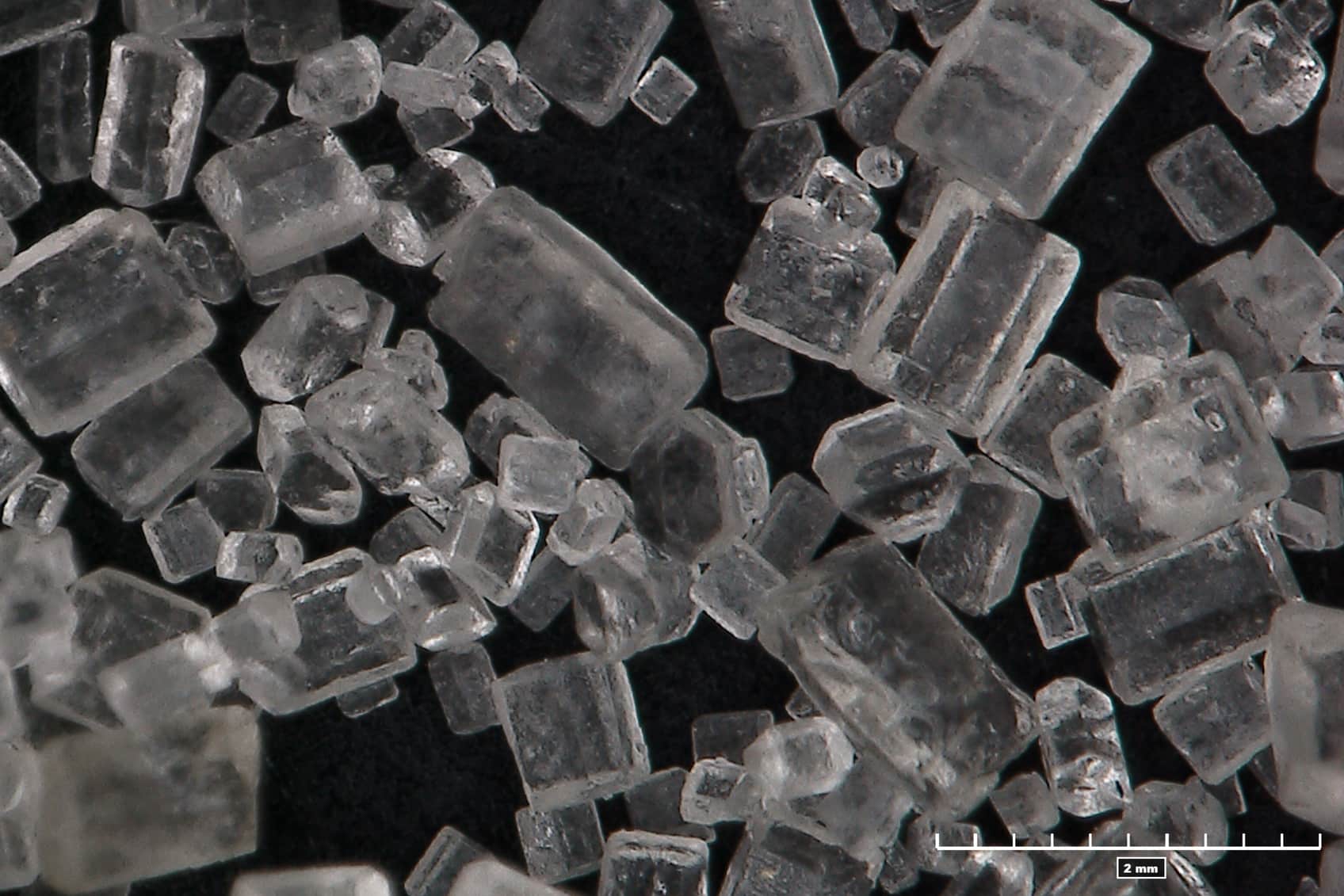
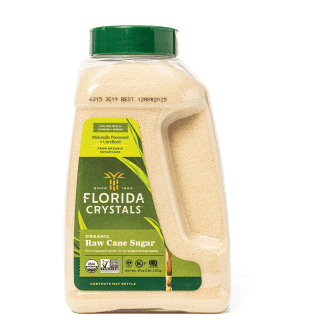
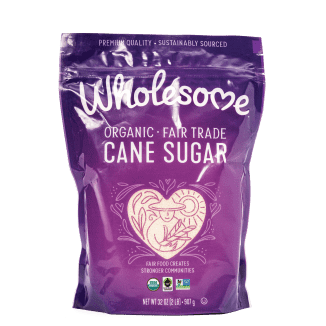
We bought every brand of sugar we could find, both organic and conventional, and examined them side by side. Even to the naked eye, there were marked differences between organic and conventional sugars. The organic products were typically beige or light brown and had a coarser, more irregular texture. The conventional sugars were pure white and uniformly fine. Next, we zeroed in on the two most different brands of sugar: the most even and fine-textured, Domino, and the chunkiest, Wholesome. We also chose one in the middle from Florida Crystals. We took samples of these three to the Massachusetts Institute of Technology and looked at them under a high-powered microscope with Mike Tarkanian, a senior lecturer in the Department of Materials Science and Engineering. When the sugar was magnified to 40x, the differences were stark. The Wholesome sugar crystals were roughly twice as big as the Domino crystals. They were also more irregular, while Domino’s were more consistent.
Baking with Organic and Conventional Sugar
To see how these differences played out in recipes, we headed into the test kitchen with our three sugars to do some baking. We focused on cookies, our theory being that the differences would be starkly exposed in the smooth, low-moisture dough. We started with the most basic treatment of the sugar in our recipe catalog, our Sugar Cookie Mix, which calls for simply whisking the ingredients together in a bowl before baking. We didn’t notice major flavor differences, but textural differences were apparent. The cookies made with the Wholesome sugar had a more cracked, craggy exterior and a pleasantly grainy texture. They were also a bit more chewy, likely due to their higher moisture content from the traces of molasses present in Wholesome’s product. (This molasses is what makes brown sugar sticky. Molasses is hygroscopic, meaning it attracts and retains more water.)
Like the Domino sugar crystals themselves, the cookies made with Domino sugar were uniform in appearance and texture. They also had a lighter, airy crumb. Paul Adams, our senior science research editor, explained that finer sugar dissolves more quickly, resulting in a smoother dough that holds air better when it rises, while coarse sugar dissolves more slowly, leaving more undissolved crystals in the dough and interrupting the structure.
Many of our cookie recipes include a step that manipulates the sugar, such as whisking it with melted butter to help it dissolve or buzzing it in a food processor to make it finer. If the sugar were ground up by a blade, would the differences between products still be clear? We tried Easy Holiday Sugar Cookies to see. We found that the food processor ground the sugar into smaller pieces, which helped the sugar dissolve more. As a result, the differences between products were barely perceptible to our tasters.

We also wanted to look at a recipe that involved creaming butter and sugar in a stand mixer, a common step in some cookie recipes. The cookies made with Wholesome had a slightly more pocked, corrugated surface and a sandy texture, but differences were far less pronounced than those of the cookies we made without a stand mixer. Creaming the ingredients in a machine for a few minutes helps the crystals dissolve. Most cakes are made this way and will also likely show fewer differences, if any, when made with a fine white sugar such as Domino versus chunkier, more beige organic brands.
Does It Matter Which Sugar You Buy?
We liked the cookies made with all the sugars in our lineup, but your baked goods will vary a bit depending on the type you choose. Here are some things to consider.
- Color: Organic/raw sugars may contribute a slightly darker color to whatever you’re making due to the residual molasses. While this may not matter so much when making brownies, for example, it will make a simple syrup that is tinged brown.
- Moisture: Organic/raw sugars also have a slightly higher moisture content and may make baked goods a little more moist and chewy, similar to the role of brown sugar in cookies.
- Texture: Depending on how heavily mixed the batter or dough is, coarser sugars will give your baked goods a slightly gritty, grainy texture, which some people enjoy as it adds more character to the treat.
All our recipes that call for granulated sugar are developed with a conventional granulated white sugar such as Domino unless otherwise specified, so that is what we recommend you use when making them. In many of our recipes, we use methods that solve for variation and irregularities in sugar texture, such as blitzing the sugar in the food processor or whisking it with melted butter to dissolve it. We liked all the sugars in our lineup, so we decided to forgo a ranked chart and instead listed them in order of coarseness, from fine to coarse.
- Order a range of granulated sugars sold nationwide and examine color and granule size differences
- Choose a coarse, medium, and fine sugar
- Bake sugar cookies using Sugar Cookie Mix recipe to examine differences in a recipe that doesn’t manipulate sugar at all
- Bake Easy Holiday Sugar Cookies to examine differences in a recipe that grinds the sugar in the food processor
- Bake NYT Cooking Classic Sugar Cookiesto examine differences in a recipe that creams the butter and sugar in a stand mixer