Mozzarella is one of America’s favorite cheeses. It’s not just one cheese, though. It’s a family of cheeses with roots in Italy that date back hundreds of years.
We’ve written about mozzarella before, always focusing on a specific type—fresh mozzarella, block mozzarella, burrata, shredded mozzarella—and trying to find the best version. With this guide, I’m taking a broader approach, looking at what each style has to offer and outlining what you need to know when you shop for them.

The Origin of Mozzarella
Mozzarella was once made exclusively with water buffalo milk in Italy, likely due to the influence of migrants from the Eastern Mediterranean and the Middle East, who introduced water buffalo’s–milk cheeses to Italy in the 12th century, according to The Oxford Companion to Cheese (2016). By the 18th century, water buffalo mozzarella became popular, particularly in and around the region of Campania in southwest Italy.
The water buffalo herds were destroyed during World War II, forcing a change to mozzarella made with cow’s milk. This version traveled to New York City with Italian immigrants and became the norm around the world. Although water buffalo have returned to Italy and mozzarella made with their milk is a source of pride for Italians, most mozzarella is still made with cow’s milk.
How Mozzarella Is Made
What we call fresh mozzarella is the original version of the cheese. It’s also the starting point for many other cheeses in the bigger mozzarella family. I wanted to see the cheesemaking process firsthand, so I visited the Mozzarella House, a small manufacturer in Peabody, Massachusetts.


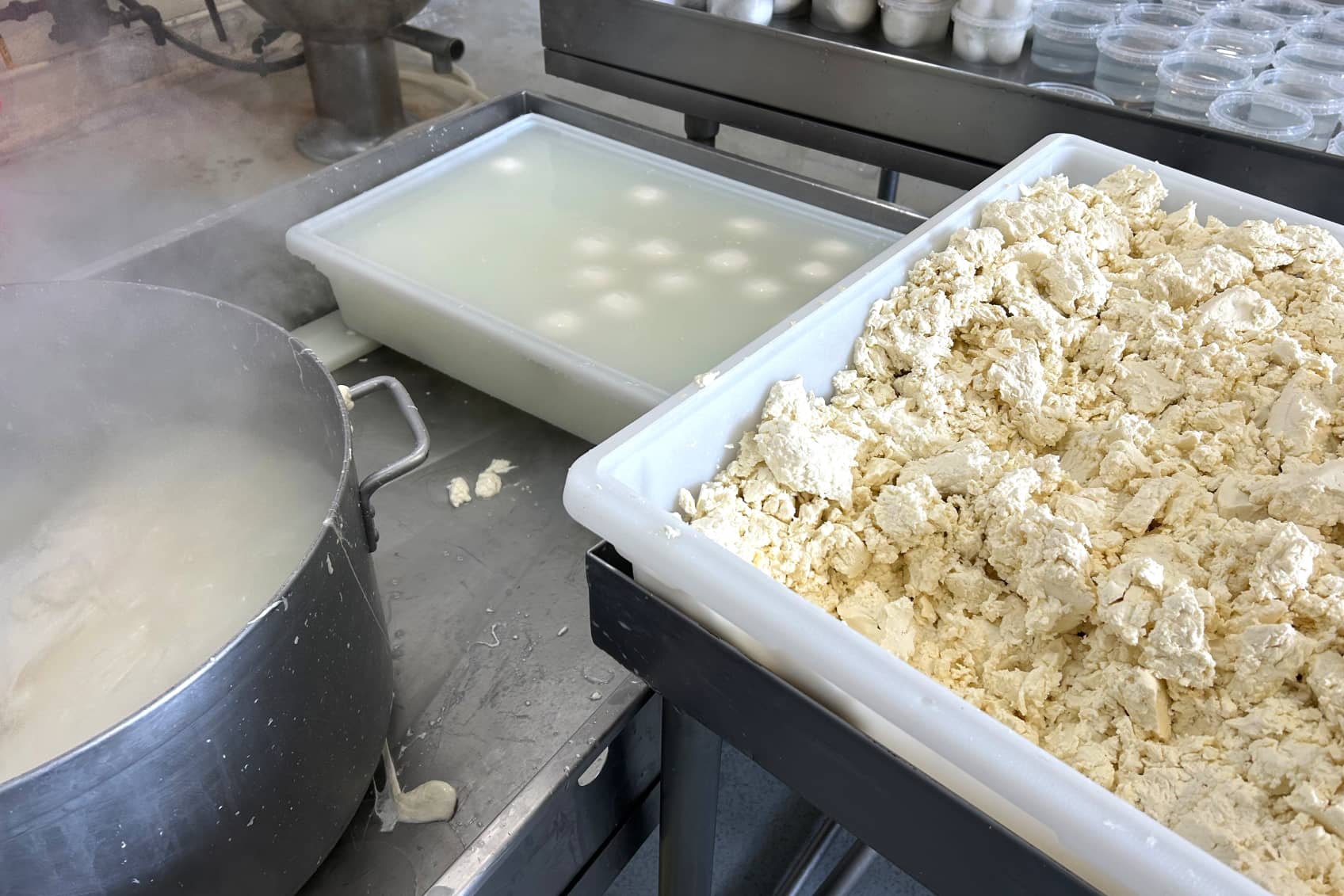


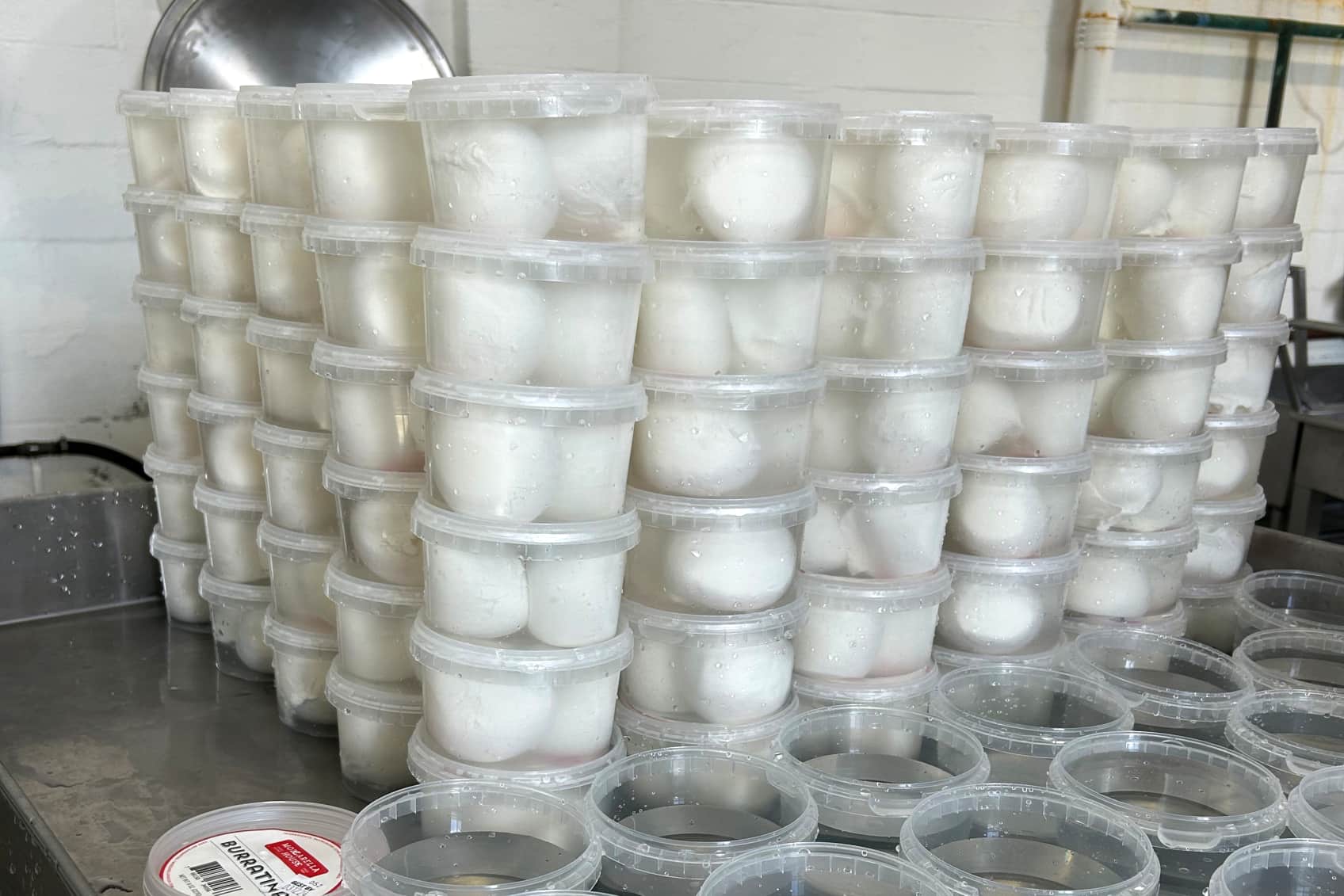
The first step of making mozzarella is adding acid, rennet, and sometimes starter cultures to milk and heating it, which causes the milk to separate into curds and liquid whey. I watched as a cheesemaker stood at a table, three containers in front of her: a tub filled with soft, springy curds; a pot of steaming hot water; and a tub of cold water. Mozzarella is categorized as a “pasta filata” or “stretched curd” cheese, and it quickly became clear why. With the precision that comes with having done something thousands of times, the cheesemaker transferred a heap of curds to the hot water, where the cheese formed a cohesive mass. She quickly and methodically stretched and pulled the cheese between her hands and then stretched one end of it into the air with a large wooden paddle. As she alternated between techniques, the movements reminded me both of kneading dough and of pulling taffy. After the mozzarella turned glossy and elastic, she pulled off a small section of the cheese, formed it into a smooth ball, and then pinched it closed and dropped it into the cold water to set up.
Instead of being shaped into balls, that freshly stretched mozzarella can be stuffed with cream and curds to make burrata, smoked to develop additional layers of flavor, or hung on a string and aged to make scamorza. Alternatively, with a few tweaks to the recipe and technique, the mozzarella can be firm and dry enough to be shaped into loaves that are commonly sliced or grated.
A Multitude of Mozzarellas
In this guide, we’re focusing on eight styles of mozzarella. We sampled each plain and collected tasting notes from our panelists. We’ve listed them below organized roughly by age and the complexity of the manufacturing process, with the simplest versions of fresh mozzarella appearing first. For each, we’ve listed basic information about how it’s made, how to use it, and what to look for when shopping.
Fresh Mozzarella
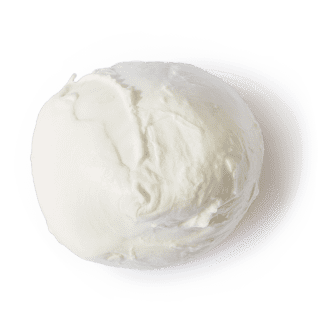
What Is Fresh Mozzarella? Fresh mozzarella is made by stretching curds in hot water and forming the glossy, elastic cheese into balls (see above). It’s quite high in moisture—usually about 60 percent—and is not aged. It can be packaged in water or vacuum-sealed in plastic with very little liquid.
Mozzarella made from cow’s milk is sometimes called fior di latte to differentiate it from versions made with water buffalo’s milk.
How to Use Fresh Mozzarella: Although we sometimes tear or slice fresh mozzarella and scatter pieces over pizza before baking it, we use it more frequently in uncooked applications. It’s a classic paired with tomatoes (or peaches) in caprese salad.
Shopping for Fresh Mozzarella:
Fresh mozzarella is sold by size. In addition to large 8-ounce balls, it’s common to see three other options. Ovolini are 4 ounces each, roughly the size of a very big egg. Bocconcini, which can be translated as “nibbles” or “bites,” are 1¾ to 2 ounces. Ciliegine are ⅓ to ½ ounce, similar in size to “ciliegie,” or cherries. Each individual manufacturer will typically follow the same recipe and general technique for each of its offerings, so there’s no real difference in flavor, just size and shape. If you have larger balls, slice or cube them to complement the size and shape of the produce you’re serving them with. Smaller balls of mozzarella can be halved or quartered.
We have a slight preference for mozzarella made with vinegar (as opposed to citric acid or lactic acid) because it tends to have more of the characteristic tang we prize in fresh mozzarella. Our favorite, BelGioioso Fresh Mozzarella, comes in a variety of sizes; all are made according to the same recipe and method. Our tasters described these cheeses as “extremely moist” with a “fresh, slightly grassy” flavor and a “pleasant sweetness.” One person remarked on the bright, fresh flavor and delicate texture, saying it was “like very little had to happen to transform some good milk into cheese.”
Smoked Fresh Mozzarella
What Is Smoked Fresh Mozzarella? After mozzarella is shaped, it can be smoked using one of two general methods. “The easiest is to create a smoke flavoring solution using liquid smoke,” says Dean Sommer of the University of Wisconsin–Madison’s Center for Dairy Research. The other method involves cold-smoking the cheese in a chamber, which is more time-consuming and “generally not very workable for large quantities of cheese.” It can be difficult if not impossible to tell from product packaging which technique was used. We confirmed with the manufacturers of the mozzarella we sampled that it had been cold smoked over wood
Smoked mozzarella tends to be a little firmer and drier than other types of fresh mozzarella. The exterior develops a light brown tinge.
How to Use Smoked Fresh Mozzarella: Smoked mozzarella can be used similarly to other fresh mozzarella. Try it melted in a sandwich or in a tomato tart.
Shopping for Smoked Fresh Mozzarella: Smoked fresh mozzarella is often sold in roughly 8-ounce balls. We sampled BelGioioso Smoked Fresh Mozzarella; a representative from the company confirmed that it is made using the same method as the company’s regular fresh mozzarella and is then smoked using hickory. Smoked cheeses can be polarizing, but many of our tasters were enthusiastic, describing it as “just smoky enough” and noting that this riff on an otherwise mild style of cheese had a lot of extra “flavor and interest.”
Mozzarella di Bufala (Buffalo Mozzarella)

What Is Buffalo Mozzarella? The original version of mozzarella, it’s made using the milk of water buffalo. The milk has twice the fat of cow’s milk, so cheese made with it is extra-creamy, rich, and lush. It’s also a brighter white than cow’s-milk mozzarella and has a pronounced grassy aroma and tangy flavor.
Mozzarella di Bufala Campana was granted Protected Designation of Origin (PDO) by the European Union in 1996. It must be made in specific provinces in southwest Italy—the area where mozzarella originated—according to exacting standards, as overseen by the Consorzio di Tutela di Mozzarella Campana (Consortium for the Protection of Mozzarella Campana). Manufacturers must also use only the milk of a specific breed, the Italian Mediterranean water buffalo.
How to Use Buffalo Mozzarella: Mozzarella made with water buffalo’s milk is incredibly moist and creamy, so much so that some of our tasters mistook it for burrata. Don’t use it in recipes where its delicate texture and special flavor will be lost. Instead, serve it with a simple tomato salad or alongside a hunk of good bread and let it be the star of the show.
Shopping for Buffalo Mozzarella: PDO cheese will feature a yellow-and-red PDO seal. It will also have a circular logo with the black silhouette of a water buffalo head. Mozzarella di bufala is typically packaged with a little liquid inside a plastic container or bag. We sampled Casearia Antiche Bontà Mozzarella di Bufala. “Tangy” and “grassy” with “some funk to it,” there was no mistaking this mozzarella for that made with mild-flavored cow’s milk. It had “a delightful soft bounce” and a rich, yielding interior that stood out as especially lush and special.
Burrata

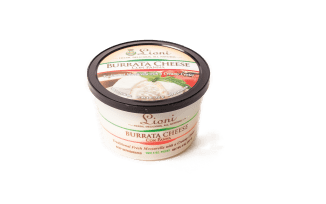
What Is Burrata? The same fresh mozzarella that’s shaped into balls and pinched closed can first be stuffed with a delightfully creamy mixture of fresh curds and cream called stracciatella (see below). Burrata—which means “buttery” or “buttered”—came on the scene in Puglia in the early 20th century as a way to utilize scraps from the mozzarella-making process. Beginning in the 1950s, cheese factories began to scale up their production and distribution of burrata. It’s now eaten around the world and has become incredibly popular in American supermarkets and restaurants.
How to Use Burrata: For a simple showstopper, toss pieces of burrata in a pasta dish of rigatoni and tomatoes or dot them over a savory Dutch baby after it bakes. Most of the time, it’s best to keep it simple. Nestle a ball of burrata into a platter of grilled vegetables or serve it alongside bread and cured meats.
Shopping for Burrata: In our side-by-side comparisons of different brands of burrata, the ratio of mozzarella shell to filling was important. We liked those with roughly a 50/50 ratio of sturdy shell to thick, ultracreamy filling. We also found burrata with about 70 milligrams of sodium per 1-ounce serving to be more flavorful than cheeses with less, as the salt brought out the fresh-dairy flavor of the cheese. Our tasters found burrata to be a “beautifully creamy” cheese with “fresh dairy” flavor; our favorite is Lioni Burrata con Panna, with BelGioioso Burrata a close runner-up. One taster raved, “I love the flavor more than any creamy thing I can think of—including desserts!”
Stracciatella
What Is Stracciatella? Stracciatella is a mixture of mozzarella curds and cream. In America, it’s probably best known as the luxurious filling inside burrata (see above). At the Mozzarella House in Peabody, Massachusetts, they run sheets of fresh mozzarella through a machine that cuts them into spaghetti-like strips. (“Stracciatella” means “little rag” or “shred.”) They then toss the strips with heavy cream, which breaks the strips into smaller pieces and forms a cohesive and spectacularly creamy mix.
How to Use Stracciatella: You can use stracciatella in many of the same ways you’d use burrata. It’s excellent slathered over toasted bread with a drizzle of honey or a spoonful of tangy caponata.
Shopping for Straciatella: Stracciatella is not as widely available in supermarkets as fresh mozzarella or burrata, but we expect that to change. Lioni and BelGioioso (the makers of our two highest-ranked burrata products) each sell a version. You may be able to find housemade stracciatella at Italian specialty shops such as Eataly. “Perfectly luscious” and “decadent,” it was also pleasantly salty and had a nice “tang” that offset its richness.
Scamorza

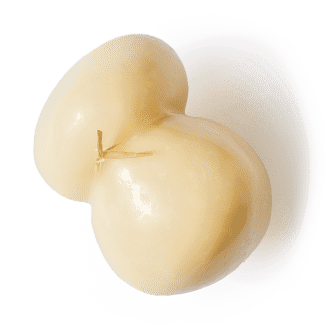
What Is Scamorza? Scamorza is an aged mozzarella that originated in the Basilicata, a region in southern Italy that borders Calabria and Puglia, but is now made in other locations across Italy and outside the country as well. It can be made with cow’s milk or a mixture of cow’s milk and sheep’s milk. The cheese curds are pulled and stretched using the pasta filata technique and then shaped—traditionally into braids or a pear shape—and hung on string to age. Scamorza is sometimes smoked.
How to Use Scamorza: With a drier, firmer texture than fresh mozzarella or block mozzarella, it’s a great snacking cheese and melts well. Try it over pizza, in a pressed sandwich, or in a baked pasta dish.
Shopping for Scamorza: We tried scamorza and smoked scamorza from The Mozzarella Company, a Dallas-based manufacturer founded in 1982 that helped popularize artisanal mozzarella in America. Both versions were wrapped in wax that had to be removed before eating. They were firm and sliceable, with a mild but very enjoyable milky, tangy, slightly salty flavor. The smoked scamorza, which the company advertises as having been smoked over pecan shells, was tinted light brown and had a “really strong smoked flavor.”
Block Mozzarella

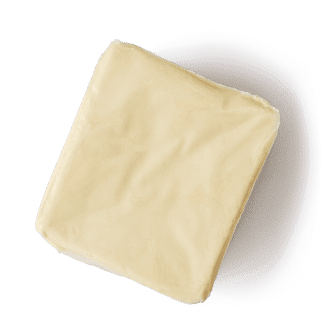
What Is Block Mozzarella? This firmer, drier style of mozzarella was invented in America in the early 1900s by Italian immigrants who wanted a mozzarella that lasted longer. Like fresh mozzarella, it’s a pasta filata cheese. The curds are cooked and stirred longer than when making fresh mozzarella, resulting in mozzarella with lower moisture and more acidity.
To differentiate it from fresh mozzarella, it’s commonly referred to as “low-moisture” mozzarella. (You’ll likely encounter this term on pizza shop menus and in recipes.) However, the term “low-moisture” has a specific meaning as defined by the U.S. Food and Drug Administration (FDA) and it applies to only some block mozzarellas (see “Shopping for Block Mozzarella” below).
There’s also a big range in total fat levels. It’s commonly made with milk that contains about 3.25 percent fat, says Dean Sommer of the University of Wisconsin–Madison’s Center for Dairy Research. However, manufacturers can also remove enough cream from the milk to lower its fat levels to 2.5 percent or lower, which is comparable to a jug of 2 percent milk at the supermarket.
How to Use Block Mozzarella: Block mozzarella has a subtle milky sweetness and a slight tang. It also melts beautifully, so it’s one of our go-tos for everything from pan pizza and baked ziti to grilled vegetable sandwiches and mashed potato casseroles. Although packages of sliced, shredded, or grated mozzarella are convenient, we generally prefer the versatility of block mozzarella.
Shopping for Block Mozzarella: We like block mozzarella with higher levels of both moisture and fat. Per regulations by the FDA, you can get a clue on those levels by examining the product packaging. Look for cheeses labeled simply “mozzarella.”
Cheeses labeled simply “mozzarella” contain 52 to 60 percent moisture and up to 21 percent fat—higher levels that translate to richer flavor and texture. Avoid cheeses labeled “low-moisture,” as they contain as little as 45 percent moisture. Similarly, avoid cheeses labeled “part-skim,” which contain as little as 14.4 percent fat.
Our favorites are Polly-O Whole Milk Mozzarella Cheese and Galbani Whole Milk Mozzarella Cheese; both are tender, moist, and full-flavored.
Shredded Mozzarella

What Is Shredded Mozzarella? Shredded mozzarella is block mozzarella (see above) that has been shredded at a factory and packaged in bags for convenience. In our tests, we’ve seen a wide range in sizes and textures, from wispy little bits to big, substantial shreds. To keep the cheese from sticking together, the shreds are typically tossed with an anticaking agent such as cellulose powder.
How to Use Shredded Mozzarella: Shredded mozzarella can be used in recipes where you’d otherwise shred the cheese yourself: French bread pizza, stromboli, creamy dips, and more. The anticaking agents can be unpleasantly gritty and powdery if you’re eating the shreds plain, but they can offer an advantage when the cheese is melted. The powder prevents the milk proteins from bonding together too tightly, so the cheese melts more smoothly in dishes such as Korean Corn Cheese.
Shopping for Shredded Mozzarella: We prefer bigger, more substantial shreds of mozzarella because they melt more uniformly than very finely shredded cheese, which tends to clump up and stick together. As with block mozzarella, we prefer higher fat and moisture levels. Unfortunately, it can be hard to find those attributes in shredded cheese. Our former winner has been reformulated, so we currently recommend Sargento Off the Block Shredded Low Moisture Part-Skim Mozzarella Cheese. We liked its “smooth creaminess” and that the “long, relatively thick” shreds were “consistent in size and shape but not identical,” much like freshly grated cheese.

 Buy at Amazon