
Among all fresh produce, lemons are one of the most essential in the kitchen. From zippy salad dressing and creamy risotto to a balanced cocktail, lemon juice elevates everything it touches. We try to always have lemons in the fridge, but sometimes we run out. When that happens, is dinner (or dessert) ruined, or can a packaged product work in their place?
In the past, the only substitutes commonly found for fresh lemons were the ubiquitous lemon-shaped squeeze bottles tucked to the side of the produce section. Nowadays, supermarkets stock half a dozen options. There have also been advancements in processing technology that promise to improve the taste of bottled lemon juice. And that’s not all. You can find different formats, such as lemon juice powder and refrigerated options too.
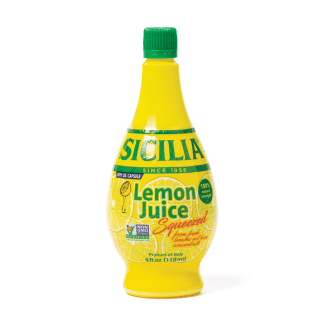
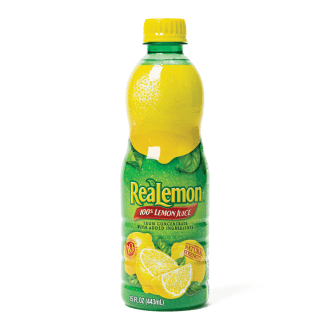
Circana, a Chicago-based market research firm, helped us sort through the top-selling lemon substitutes. We put together a lineup of bottled juices, including one pricey option that’s sold refrigerated, and several lemon juice powders.
We use lemons in a wide variety of ways—unheated and cooked, in savory dishes and sweet—and we looked for recipes that reflected those different uses. We landed on lemonade, where the flavor of the lemon substitutes would be front and center; a citrus-forward vinaigrette; and lemon posset, a dessert that involves heating the lemon juice and requires a certain pH level to achieve a lush, pudding-like texture. Each time, we prepared a version with fresh lemon juice for comparison. We omitted lemon zest in all the recipes in order to focus on the juice replacements.

How Are Lemon Juice and Lemon Juice Powder Processed?
You can’t simply bottle fresh lemon juice and sell it. If you did, bacteria naturally present in the juice would grow and render the juice unpalatable. To make lemon juice that lasts weeks or even months, manufacturers heat the juice (typically just below 212 degrees) for a short period of time in a process called heat pasteurization. Some manufacturers also add preservatives, such as sulphur dioxide and sodium benzoate.

Lemon juice powder can be made using a process called spray drying, in which the pasteurized juice is sprayed into hot air to remove moisture, resulting in powder. After drying, maltodextrin can be added to prevent clumping; citric acid and/or lemon oil are added to accentuate the citrus flavor. Lemon juice powder is lightweight, easy to store, and promises an even longer shelf life than its liquid counterparts. You can use a little at a time, reconstituting it with water, much like you would use buttermilk powder.

Unfortunately, treating lemon juice with intense heat to make either bottled juice or powder has drawbacks. “The volatile compounds in citrus are sensitive to heat, and they tend to escape when cooked,” said Nick Korn, a bar industry veteran and managing partner of OFFSITE, a Boston-based professional development and education firm focused on the hospitality industry. Juice processors have adopted a technology called high-pressure processing (HPP), which attempts to retain the natural flavors of perishable products. In this method, bottled juice is submerged in a tank filled with cold water, and high pressure is exerted to eliminate common pathogens. Because this process requires sophisticated machinery and resources, HPP products are more costly to produce than typical bottled lemon juice—but are they worth the price tag?
Searching for the Best Lemon Substitutes
The lemonades we made ranged from pale yellow to almost neon and had slightly different consistencies. One of the powders proved tricky to use. Even though we took care to whisk the mixture thoroughly, some sticky, goo-like powder stuck on the bottom of the pitcher. Some people noted refrigerated HPP juice was “tangy” and “tasted like real lemon” but lacked a bit of freshness; it didn’t score as high as the fresh lemon juice, nor did it outperform the other bottled juices.

In vinaigrette, the lemon juice substitutes again differed from each other. Some were too “mellow,” while another tasted way too sharp, like “straight-up citric acid.” Our favorites were “tart” and “pleasantly tangy,” and they stayed emulsified—just like the one made with fresh juice.
The lemon posset recipe hinges on the juice having a certain pH. We measured each lemon juice substitute’s pH, reconstituting the products with water first if necessary. The levels ranged from 2.03 to 2.62 (fresh lemon juice is typically somewhere between 2 to 3), low enough to coagulate the milk proteins and form a gel-like texture. While all of the samples gelled appropriately, they weren’t identical. Some were almost too thick, and others were a bit looser than ideal. Posset made with powder was a bit “clumpy” and “gritty” despite our best effort to mix the powder in water. Another powder resulted in an overly sweet posset that tasted more like vanilla pudding than lemon. All the lemon substitutes were acidic enough to deliver the acceptable texture, but they fell a little short on fresh and complex flavors from lemons.
Format Matters for Lemon Substitutes
Our determination: If the recipe calls for a large amount of lemon juice or if lemons are the front and center of the recipe, you’re better off using fresh lemons. Both in posset and lemonade, the lemon substitutes left us yearning for more freshness, aromatic nuances, and “authentic citrus vibrancy.”
However, it’s still worth having a bottled lemon juice on hand for when you find yourself unexpectedly short on fresh lemons and need to use a small amount in a dressing or sauce. The format of the lemon juice substitute matters. We recommend skipping lemon juice powders. One powder contained more citric acid than lemons, which resulted in sharp-tasting vinaigrette and posset, while another lacked sufficient acidity to replicate the vibrancy of fresh lemons. Although we were drawn to the convenience of powders that can be doled out a small bit at a time, they simply don’t perform as well as bottled juice. For the bottled juice, the HPP product didn’t offer a clear advantage over the others, so we don’t think it’s worth the heftier price tag. We think shelf-stable bottled lemon juice is fine to use. We have a slight preference for those with fewer ingredients, which tasted brighter than ones with added preservatives. We’ve listed the juices and powders below in order of our tasters’ preference, but the differences among the bottled juices were small, so we suggest purchasing a bottle in the size and price that works for you.
- Taste in Lemonade alongside lemonade made with freshly squeezed lemon juice
- Taste in Lemon Vinaigrette alongside vinaigrette made with freshly squeezed lemon juice
- Taste in Lemon Posset alongside posset made with freshly squeezed lemon juice
- Measure the pH of each lemon substitute
- Bottled juice that contains only lemons