America's Test Kitchen LogoCook's Country LogoCook's Illustrated Logo

Reviews You Can Trust.
See Why.

Milk Chocolate

Milk chocolate bars are often dismissed as candy for kids, but we found some that even the pickiest chocolate connoisseur could appreciate.

Headshot of Lauren Savoie
By Lauren Savoie

Published on July 9, 2019

Top Pick

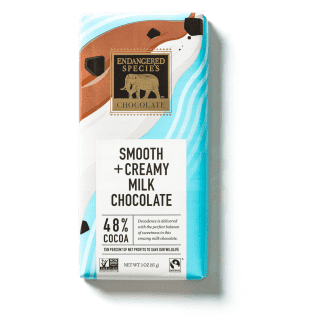
WinnerEndangered Species Chocolate Smooth + Creamy Milk Chocolate

This nationally available chocolate from a once-small Oregon-based brand was “rich” and “intense,” with “deep cocoa notes” and a “balanced” sweetness thanks to its high cacao percentage. Its texture was “smooth” and “snappy,” and its “glossy texture” and “complex” flavor reminded some tasters of “artisan dark chocolate.”

Sugar: 14 g

Ingredients: Milk chocolate (chocolate liquor, milk, sugar, cocoa butter, lactose, soy lecithin, vanilla)

Cacao percentage: 48%

First ingredient: Chocolate liquor

Price at Time of Testing: $3.49 for 3 oz bar ($1.16 per oz)

This nationally available chocolate from a once-small Oregon-based brand was “rich” and “intense,” with “deep cocoa notes” and a “balanced” sweetness thanks to its high cacao percentage. Its texture was “smooth” and “snappy,” and its “glossy texture” and “complex” flavor reminded some tasters of “artisan dark chocolate.”

Sugar: 14 g

Ingredients: Milk chocolate (chocolate liquor, milk, sugar, cocoa butter, lactose, soy lecithin, vanilla)

Cacao percentage: 48%

First ingredient: Chocolate liquor

Price at Time of Testing: $3.49 for 3 oz bar ($1.16 per oz)

What You Need To Know

For years, artisanal dark chocolate bars have hogged all the glory, prominently displaying bean origins and high cacao percentages on their fancy wrappers. But who’s to say milk chocolate bars can’t be artisanal, too? In 2018, the Specialty Food Association noted that more manufacturers than ever are making “dark milk” chocolates—products that feature higher cacao percentages but still have enough milk for a smooth, creamy texture and nuanced flavor. These products are meant to appeal to those looking for something more robust than classic milk chocolate, but not quite as bitter as some dark chocolates. When we last tasted milk chocolate, we named Dove Silky Smooth Milk Chocolate as our winner. But with so many new products pushing the boundaries of milk chocolate, it was time to take another look.

While the majority of milk chocolate is consumed in the form of holiday candy and chocolate coatings, we went in search of milk chocolate bars that could be savored both by the piece and chopped up or melted as a cooking ingredient. We gathered 10 nationally available products, priced from about $0.40 to about $1.20 per ounce, and sampled them plain and in milk chocolate pots de crème.

We prepared pots de crème with different brands of milk chocolate to taste for differences in flavor and texture.

What’s The Difference Between Dark Chocolate And Milk Chocolate?

The chocolate making process begins with fermenting, roasting, and grinding cacao nibs into a chocolate liquor that contains near-equal parts of cocoa solids and cocoa butter. The liquor is then blended with additional cocoa butter and mixed with sugar to make dark chocolate, or processed with both milk and sugar to make milk chocolate. At this stage, some manufacturers also add emulsifiers such as lecithin or flavoring agents such as vanilla beans. The higher the proportion of sugar or milk there is in a given chocolate, the less room there is for chocolate liquor or cocoa butter, so milk chocolate tends to have a lower cacao percentage than dark chocolate. (The cacao percentage is the proportion of the finished chocolate made from the cacao bean and includes chocolate liquor and any added cocoa butter). While the U.S. Food and Drug Administration (FDA) doesn’t police the term “dark chocolate,” it does mandate that bittersweet or semisweet chocolates (terms often used interchangeably to refer to dark chocolates) must contain at least 35 percent cacao. (Some dark chocolate bars contain more than 85 percent cacao.) By contrast, the FDA requires a minimum of only 10 percent cacao in milk chocolate. The amount of milk also distinguishes dark and milk chocolates. The FDA mandates that milk chocolate must contain at least 12 percent total milk solids, while semisweet and bittersweet chocolate cannot have more than 12 percent total milk solids.

While all the products we tried are sold as "milk chocolate," they varied dramatically in the amount of milk they contained. Some almost resembled dark chocolate, while others were much paler in color—indicating that they likely contained more milk solids.

Cacao Percentage In Milk Chocolate

We can recommend all the products we tasted, at least for eating plain. However, in both the plain and pots de crème tastings, we preferred milk chocolates that we perceived as having a complex, rich chocolate flavor. We wanted to actually taste the chocolate in the bars, and gave higher marks to products that had balanced sweetness, prominent cocoa notes, and just a hint of bitterness. Since cocoa flavor is directly related to the percentage of cacao in the chocolate, we looked at packaging and contacted manufacturers to find out the cacao percentages of each product. Many manufacturers would not disclose this information, and independent labs we contacted said they could not measure cacao percentages in milk chocolate. However, we were able to determine the cacao percentages of six products, which ranged from 27 to 48 percent. Our higher-rated products were at the upper end of that range, with 40 percent cacao or more. Our winning chocolate had the most cacao of all: 48 percent. While these percentages are still relatively low compared to our favorite dark chocolate bar and dark chocolate chips, which both contain 60 percent cacao, tasters thought milk chocolate with a high percentage of cacao packed the most flavor and was rich and complex without being too bitter.

Dark chocolate typically contains just cacao and sugar and a very small percentage of emulsifiers or other added ingredients. The milk chocolates in our tasting fell into two categories: high cacao percentage milk chocolates and low cacao percentage milk chocolates. The high cacao percentage milk chocolates typically contain more cacao than either milk or sugar. By contrast, the low cacao percentage milk chocolates contain more sugar than any other ingredient. We liked the balanced flavor and texture of the high cacao percentage milk chocolates.

There was one exception to our preference for higher-cacao milk chocolate: a product from Theo containing 45 percent cacao, which ranked at the bottom of the plain tasting. Though it had a bit less cacao than our favorite product, tasters thought the cocoa flavor was too overwhelming and bordering on acidic and bitter. Our senior science research editor explained that these flavors aren’t necessarily defects, but could be due to a variety of factors including the type and origin of the beans, how the beans were processed, and what additives were used. While some tasters like a more acidic and bitter flavor in dark chocolate, they thought these flavors were a little too overwhelming for what they expect of milk chocolate. That said, the acidity and bitterness mellowed a bit when we melted this product into pots de crème.

Cooking And Baking With Milk Chocolate

A higher cacao percentage was also key to producing the signature thick and fluffy texture of chocolate pots de crème, a simple pudding made of heated milk, cream, eggs, and chocolate. We measured all ingredients to the ounce and heated every batch to the same temperature. However, the texture of the puddings varied greatly depending on the chocolate used to make them: some were thick and dense, while others were drippy and ran right off our spoons. This difference correlated directly to the cacao percentage of each chocolate. Products with a higher cacao percentage made very thick, luscious puddings. Products with higher cacao percentages have more cocoa solids, a feature which helps puddings set up thicker. Our senior science research editor also explained that cocoa fat stiffens better than milk fat, providing additional thickness. By contrast, products with lower cacao percentages (and lower amounts of cocoa solids and fat to help the puddings set) were runny and drippy. Our takeaway: it’s important to use a milk chocolate with a high cacao percentage if you’re making a recipe that relies heavily on the chocolate for its texture. However, we ultimately chose not to factor the pots de crème test into our final rankings since it’s a less common usage that doesn’t reflect the way we most often eat milk chocolate—plain.

Milk chocolates with a high cacao percentage made pots de crème that set up thick and dense, whereas milk chocolates with a low cacao percentage made drippy pots de crème that ran off our spoons.

More Cacao, Less Sugar

Milk chocolates with lower cacao percentages had more sugar than those with higher cacao percentages. Our winning product contains 35 percent sugar (14 grams per 40 gram serving), while lower-ranked products contain as much as 58 percent sugar (23 grams per 40 gram serving). While not unpleasant, products that contained more sugar were described by tasters as “one-note” and “sweet,” “like Easter candy.”  Chocolates with less sugar were “balanced” and “nuanced,” with “subtle sweetness.”

To see how the chocolates would perform in a more typical baking recipe, we used the product with the lowest percentage of sugar (our winner) and the product with the highest percentage of sugar to make two types of cookies: Perfect Chocolate Chip Cookies and Chocolate-Chunk Oatmeal Cookies with Dried Cherries. Both products produced cookies with perfectly acceptable textures; however, we preferred the cookies made with our top-ranked chocolate for their nicely balanced, complex chocolate flavor. Cookies made with the other product tasted overly sweet.

While both these ingredient labels list "milk chocolate" as their first and only ingredient, we took a closer look at what's inside the parentheses. Our favorite chocolates list cacao products first on their ingredient labels, meaning that there is more cacao in the chocolate than any other ingredient. Lower-ranked products list sugar first, meaning that sugar, not chocolate, is their primary ingredient.

  • Cacao percentage of 40 percent or higher
  • Chocolate listed before sugar or milk on ingredient list, indicating that there is more chocolate than any other ingredient
  • 17 grams of sugar or less per 40-gram serving, for a balanced chocolate that isn’t overly sweet
  • Free from distracting tart or overly bitter notes

Shopping For Milk Chocolate

So how can you tell if your milk chocolate has a high cacao percentage? Fortunately, our highest-ranking products each have their cacao percentage conveniently listed on the wrapper. However, if the chocolate you’re eyeing doesn’t, the ingredient list can help. Our lower-ranked products almost all list sugar and milk before any trace of chocolate, meaning the cacao percentage will be low. By contrast, our top products list “chocolate” or “chocolate liquor” as their first ingredient, meaning there is proportionally more of it than any other ingredient. For the most robust chocolate flavor, we recommend purchasing a product that lists “chocolate” as the first ingredient over products with milk or sugar listed first.

The Best Milk Chocolate: Endangered Species Chocolate Smooth + Creamy Milk Chocolate

While we can recommend every chocolate we tasted, top honors went to Endangered Species Chocolate Smooth + Creamy Milk Chocolate. The winning bar and our runner-up from Scharffen Berger were among the most expensive products in our lineup at more than $1 per ounce, but both featured rich, deep cocoa notes and a smooth, creamy texture. Tasters loved the bar from Endangered Species Chocolate—which, at 48 percent, had the highest cacao percentage of the bars we tried—for its nuanced chocolate flavor and balanced sweetness.

Everything We Tested

Recommended

WinnerEndangered Species Chocolate Smooth + Creamy Milk Chocolate

This nationally available chocolate from a once-small Oregon-based brand was “rich” and “intense,” with “deep cocoa notes” and a “balanced” sweetness thanks to its high cacao percentage. Its texture was “smooth” and “snappy,” and its “glossy texture” and “complex” flavor reminded some tasters of “artisan dark chocolate.”

Sugar: 14 g

Ingredients: Milk chocolate (chocolate liquor, milk, sugar, cocoa butter, lactose, soy lecithin, vanilla)

Cacao percentage: 48%

First ingredient: Chocolate liquor

Price at Time of Testing: $3.49 for 3 oz bar ($1.16 per oz)

This nationally available chocolate from a once-small Oregon-based brand was “rich” and “intense,” with “deep cocoa notes” and a “balanced” sweetness thanks to its high cacao percentage. Its texture was “smooth” and “snappy,” and its “glossy texture” and “complex” flavor reminded some tasters of “artisan dark chocolate.”

Sugar: 14 g

Ingredients: Milk chocolate (chocolate liquor, milk, sugar, cocoa butter, lactose, soy lecithin, vanilla)

Cacao percentage: 48%

First ingredient: Chocolate liquor

Price at Time of Testing: $3.49 for 3 oz bar ($1.16 per oz)

Scharffen Berger Extra Rich Milk Chocolate

Another chocolate with a relatively high percentage of cacao, this brand was “deeply cocoa” flavored, “on the border of milk and dark chocolate.” It contains whole vanilla beans, and tasters picked up on “delicate” notes of “vanilla” and “coconut,” which made this “a very well-rounded chocolate.” Its texture was “silky” and “smooth,” and it made perfectly thick pots de crème.

Sugar: 17 g

Ingredients: Chocolate, sugar, milk, cocoa butter, nonfat milk, non-GMO soy lecithin, whole vanilla beans

Cacao percentage: 41%

First ingredient: Chocolate

Price at Time of Testing: $3.47 for 3 oz bar ($1.16 per oz)

Another chocolate with a relatively high percentage of cacao, this brand was “deeply cocoa” flavored, “on the border of milk and dark chocolate.” It contains whole vanilla beans, and tasters picked up on “delicate” notes of “vanilla” and “coconut,” which made this “a very well-rounded chocolate.” Its texture was “silky” and “smooth,” and it made perfectly thick pots de crème.

Sugar: 17 g

Ingredients: Chocolate, sugar, milk, cocoa butter, nonfat milk, non-GMO soy lecithin, whole vanilla beans

Cacao percentage: 41%

First ingredient: Chocolate

Price at Time of Testing: $3.47 for 3 oz bar ($1.16 per oz)

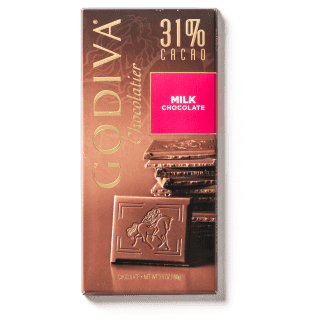
Godiva Large 31% Milk Chocolate Bar

Though this product had a lower cacao percentage than other highly ranked chocolates, many tasters thought its flavor was “rich” and “caramel-y,” not just uniformly sweet. Its texture was “smooth” and “slick.” Overall, a “solid all-around milk chocolate.”

Sugar: 22 g

Ingredients: Sugar, milk, cocoa butter, cocoa mass, natural flavoring, emulsifier (E322)

Cacao percentage: 31%

First ingredient: Sugar

Price at Time of Testing: $3.99 for 3.5 oz bar ($1.14 per oz)

Though this product had a lower cacao percentage than other highly ranked chocolates, many tasters thought its flavor was “rich” and “caramel-y,” not just uniformly sweet. Its texture was “smooth” and “slick.” Overall, a “solid all-around milk chocolate.”

Sugar: 22 g

Ingredients: Sugar, milk, cocoa butter, cocoa mass, natural flavoring, emulsifier (E322)

Cacao percentage: 31%

First ingredient: Sugar

Price at Time of Testing: $3.99 for 3.5 oz bar ($1.14 per oz)

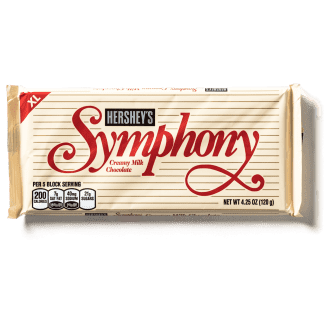
Hershey's Symphony Extra Large Creamy Milk Chocolate Bar

Tasters thought this product was “sweet,” “almost syrupy,” with a “classic” milk chocolate creaminess and smooth texture. We picked up on “subtle vanilla notes,” but otherwise its flavor was relatively “simple.” One of three products in our lineup made by the Hershey Company, this manufacturer wouldn’t disclose the cacao percentage of its chocolate.

Sugar: 22 g

Ingredients: Milk chocolate (sugar, milk, cocoa butter, chocolate, milk fat, soy lecithin, PGPR, emulsifier, vanillin, artificial flavor)

Cacao percentage: Proprietary

First ingredient: Sugar

Price at Time of Testing: $1.79 for 4.25 oz ($0.42 per oz)

Tasters thought this product was “sweet,” “almost syrupy,” with a “classic” milk chocolate creaminess and smooth texture. We picked up on “subtle vanilla notes,” but otherwise its flavor was relatively “simple.” One of three products in our lineup made by the Hershey Company, this manufacturer wouldn’t disclose the cacao percentage of its chocolate.

Sugar: 22 g

Ingredients: Milk chocolate (sugar, milk, cocoa butter, chocolate, milk fat, soy lecithin, PGPR, emulsifier, vanillin, artificial flavor)

Cacao percentage: Proprietary

First ingredient: Sugar

Price at Time of Testing: $1.79 for 4.25 oz ($0.42 per oz)

Lindt Classic Recipe Milk Chocolate Excellence Bar

This chocolate was “soft” and “creamy,” with a prominent “milkiness” and a slight “malted” taste from the addition of barley malt powder. Though tasters were split over the malted flavor, most agreed that this chocolate was “balanced,” and “moderately sweet.” It had a “classic,” “Easter candy” flavor.

Sugar: 21 g

Ingredients: Sugar, cocoa butter, milk, chocolate, skim milk, soy lecithin (emulsifier), barley malt powder, artificial flavor

Cacao percentage: 31%

First ingredient: Sugar

Price at Time of Testing: $3.99 for 4 oz bar ($1.00 per oz)

This chocolate was “soft” and “creamy,” with a prominent “milkiness” and a slight “malted” taste from the addition of barley malt powder. Though tasters were split over the malted flavor, most agreed that this chocolate was “balanced,” and “moderately sweet.” It had a “classic,” “Easter candy” flavor.

Sugar: 21 g

Ingredients: Sugar, cocoa butter, milk, chocolate, skim milk, soy lecithin (emulsifier), barley malt powder, artificial flavor

Cacao percentage: 31%

First ingredient: Sugar

Price at Time of Testing: $3.99 for 4 oz bar ($1.00 per oz)

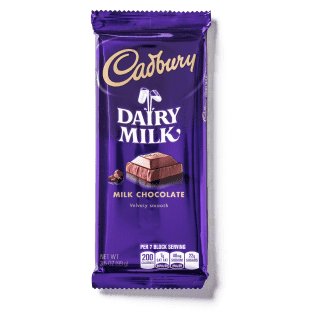
Cadbury Dairy Milk Chocolate Bar

This product from a British brand is now being made and sold in the United States by the Hershey Company. It was “creamy”, “sweet,” and “ultramilky.” The bars were thick enough to have “good snap,” but still had a “tender,” “melt-in-your-mouth” texture. Like other Hershey’s products we tested, it has more sugar and milk than chocolate; many tasters found it “a bit one-note” or “a tad too sweet.”

Sugar: 23 g

Ingredients: Milk chocolate (sugar, milk, chocolate, cocoa butter, lactose, soy lecithin, PGPR, emulsifier, natural and artificial flavor)

Cacao percentage: Proprietary

First ingredient: Sugar

Price at Time of Testing: $3.29 for 3.5 oz bar ($0.94 per oz)

This product from a British brand is now being made and sold in the United States by the Hershey Company. It was “creamy”, “sweet,” and “ultramilky.” The bars were thick enough to have “good snap,” but still had a “tender,” “melt-in-your-mouth” texture. Like other Hershey’s products we tested, it has more sugar and milk than chocolate; many tasters found it “a bit one-note” or “a tad too sweet.”

Sugar: 23 g

Ingredients: Milk chocolate (sugar, milk, chocolate, cocoa butter, lactose, soy lecithin, PGPR, emulsifier, natural and artificial flavor)

Cacao percentage: Proprietary

First ingredient: Sugar

Price at Time of Testing: $3.29 for 3.5 oz bar ($0.94 per oz)

Dove Milk Chocolate Bar

Our previous winner was “soft,” almost “melty,” and had “ultrasweet” prominent “caramel” notes. While its flavor was “classic candy bar,” it was a bit “one-note” for some tasters and overall we preferred options with more cacao. We can also surmise that it has a very low cacao percentage, as it made the drippiest pots de crème. While we didn’t factor this into our final rankings, it’s important to note if you plan on using this bar in a recipe that calls for a lot of melted milk chocolate.

Sugar: 23 g

Ingredients: Milk chocolate (sugar, cocoa butter, skim milk, chocolate, milkfat, lactose, soy lecithin, artificial flavor)

Cacao percentage: Proprietary

First ingredient: Sugar

Price at Time of Testing: $1.25 for 1.44 oz bar ($0.87 per oz)

Our previous winner was “soft,” almost “melty,” and had “ultrasweet” prominent “caramel” notes. While its flavor was “classic candy bar,” it was a bit “one-note” for some tasters and overall we preferred options with more cacao. We can also surmise that it has a very low cacao percentage, as it made the drippiest pots de crème. While we didn’t factor this into our final rankings, it’s important to note if you plan on using this bar in a recipe that calls for a lot of melted milk chocolate.

Sugar: 23 g

Ingredients: Milk chocolate (sugar, cocoa butter, skim milk, chocolate, milkfat, lactose, soy lecithin, artificial flavor)

Cacao percentage: Proprietary

First ingredient: Sugar

Price at Time of Testing: $1.25 for 1.44 oz bar ($0.87 per oz)

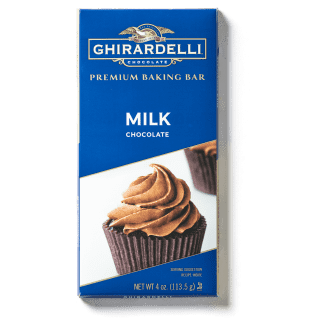
Ghirardelli Milk Chocolate Bar

This chocolate, from the company that makes our favorite dark chocolate bar and dark chocolate chips, was “sweet” and “milky,” with trace notes of vanilla. Texturally speaking, it had “good snap” and “nice creaminess.” The manufacturer wouldn’t disclose the exact cacao percentage, but said it can range from 27 to 32 percent. Some tasters thought it “lacked chocolate flavor,” but many thought it had a “classic,” “simple” profile.

Sugar: 21 g

Ingredients: Milk chocolate (sugar, whole milk powder, cocoa butter, unsweetened chocolate, soy lecithin—an emulsifier, vanilla)

Cacao percentage: Between 27% and 32%

First ingredient: Sugar

Price at Time of Testing: $2.99 for 4 oz bar ($0.75 per oz)

This chocolate, from the company that makes our favorite dark chocolate bar and dark chocolate chips, was “sweet” and “milky,” with trace notes of vanilla. Texturally speaking, it had “good snap” and “nice creaminess.” The manufacturer wouldn’t disclose the exact cacao percentage, but said it can range from 27 to 32 percent. Some tasters thought it “lacked chocolate flavor,” but many thought it had a “classic,” “simple” profile.

Sugar: 21 g

Ingredients: Milk chocolate (sugar, whole milk powder, cocoa butter, unsweetened chocolate, soy lecithin—an emulsifier, vanilla)

Cacao percentage: Between 27% and 32%

First ingredient: Sugar

Price at Time of Testing: $2.99 for 4 oz bar ($0.75 per oz)

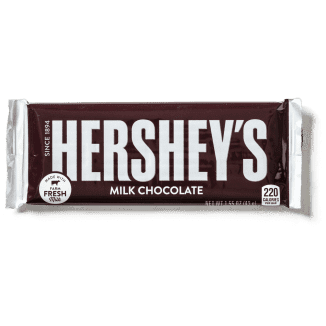
Hershey's Milk Chocolate

This iconic milk chocolate had a “caramel-y,” “ultrasweet” profile that was “familiar” and “comforting” to many tasters who enjoyed it as kids. However, some felt its flavor was “one-note” and “lacked any chocolate nuance.” The manufacturer wouldn’t disclose its cacao percentage, but we could conclude from its ingredients that it was relatively low: Both sugar and milk are listed before chocolate. Many tasters also noted that its texture was “soft,” “almost chewy” and lacked the “snap” of our higher-rated chocolates.

Sugar: 22 g

Ingredients: Milk chocolate (sugar, milk, chocolate, cocoa butter, milk fat, lecithin [soy], natural flavor)

Cacao percentage: Proprietary

First ingredient: Sugar

Price at Time of Testing: $1.29 for 1.55 oz bar ($0.83 per oz)

This iconic milk chocolate had a “caramel-y,” “ultrasweet” profile that was “familiar” and “comforting” to many tasters who enjoyed it as kids. However, some felt its flavor was “one-note” and “lacked any chocolate nuance.” The manufacturer wouldn’t disclose its cacao percentage, but we could conclude from its ingredients that it was relatively low: Both sugar and milk are listed before chocolate. Many tasters also noted that its texture was “soft,” “almost chewy” and lacked the “snap” of our higher-rated chocolates.

Sugar: 22 g

Ingredients: Milk chocolate (sugar, milk, chocolate, cocoa butter, milk fat, lecithin [soy], natural flavor)

Cacao percentage: Proprietary

First ingredient: Sugar

Price at Time of Testing: $1.29 for 1.55 oz bar ($0.83 per oz)

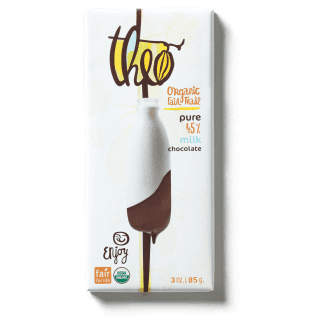
Theo Chocolate, Pure 45% Milk Chocolate

Though this product shared some of the characteristics of our higher-rated dark chocolates such as a high cacao percentage and relatively low amount of sugar, some tasters thought this chocolate was “overly tart” and “acidic,” with some “over-roasted” notes. Our senior science research editor explained that these flavors could be attributed to the origin of the cacao beans or how they’re roasted. While many thought this product had a “complex,” “robust” flavor, a few thought it was a bit too “funky” for milk chocolate.

Sugar: 17 g

Ingredients: Cane sugar, cocoa beans, cocoa butter, milk powder, ground vanilla bean

Cacao percentage: 45%

First ingredient: Cane sugar

Price at Time of Testing: $3.68 for 3 oz bar ($1.23 per oz)

Though this product shared some of the characteristics of our higher-rated dark chocolates such as a high cacao percentage and relatively low amount of sugar, some tasters thought this chocolate was “overly tart” and “acidic,” with some “over-roasted” notes. Our senior science research editor explained that these flavors could be attributed to the origin of the cacao beans or how they’re roasted. While many thought this product had a “complex,” “robust” flavor, a few thought it was a bit too “funky” for milk chocolate.

Sugar: 17 g

Ingredients: Cane sugar, cocoa beans, cocoa butter, milk powder, ground vanilla bean

Cacao percentage: 45%

First ingredient: Cane sugar

Price at Time of Testing: $3.68 for 3 oz bar ($1.23 per oz)

Reviews You Can Trust

The mission of America’s Test Kitchen Reviews is to find the best equipment and ingredients for the home cook through rigorous, hands-on testing. Have a question or suggestion? Send us an email at atkreviews@americastestkitchen.com. We appreciate your feedback!

Appears In

This item is featured in the following. Click the links to dig in!

*All products reviewed by America’s Test Kitchen are independently chosen, researched, and reviewed by our editors. We buy products for testing at retail locations and do not accept unsolicited samples for testing. We list suggested sources for recommended products as a convenience to our readers but do not endorse specific retailers. When you choose to purchase our editorial recommendations from the links we provide, we may earn an affiliate commission. Prices are subject to change.

Reviews You Can Trust.
See Why.

This is a members' feature.
America's Test Kitchen LogoCook's Country LogoCook's Illustrated Logo