Reviews You Can Trust.
See Why.
Premium (High-End) Pork
Nowadays, chefs and consumers pay top dollar for specialty pork breeds. But are those pedigreed labels a true indication of quality—or just a premium price tag?
Top Pick

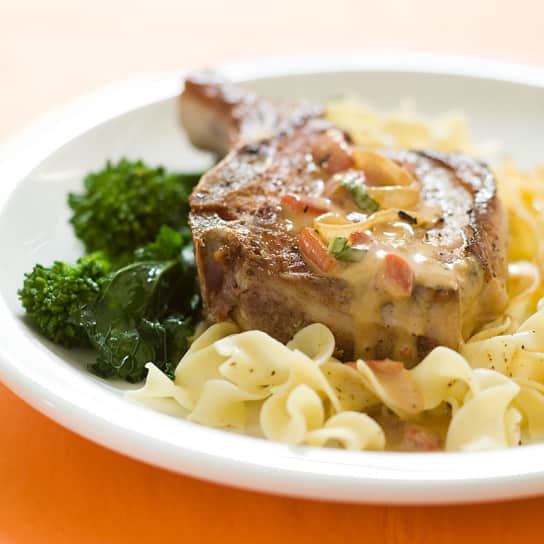
WinnerSnake River Farms: American Korubuta (Berkshire) Pork
Tasters raved about these reddish-pink chops’ extremely juicy, tender texture and “intense pork-y flavor,” which some likened to “smoked bacon.” The same meat is sold as Kurobuta in Japan.
Price at Time of Testing: $10 per pound, plus shipping
Tasters raved about these reddish-pink chops’ extremely juicy, tender texture and “intense pork-y flavor,” which some likened to “smoked bacon.” The same meat is sold as Kurobuta in Japan.
Price at Time of Testing: $10 per pound, plus shipping
Sign up for the Well-Equipped Cook newsletter
Shop smarter with our ATK Reviews team's expert guides and recommendations.
What You Need to Know
After years of advertising pork as “the other white meat,” pork producers have started to change their tune. Nowadays, fat, flavor, and even deeper color are making a comeback, with chefs and consumers paying top dollar for specialty breeds touted as being fattier, juicier, and far more flavorful. But we were skeptical: Are those pedigreed labels like Berkshire (known as Kurobuta in Japan) and Duroc a true indication of quality—or just a premium price tag? (Once mail-order shipping is factored in, specialty pork can cost at least twice as much as supermarket meat.)
If color was any indication of better quality, we were certainly on the right track. Three of the five bone-in chops we mail-ordered were cut from 100 percent Berkshire pigs, and their pigments were strikingly crimson-colored compared to the supermarket chops we bought.
The other two mail-order samples, both blends of Berkshire and other “heritage” breeds like Duroc, were less dark, though not as ghostly pale as the supermarket meat. But it wasn’t until we’d pan-seared all six samples that we were won over by the pricey pork. While the supermarket chops were comparatively bland and chewy, and the heritage samples weren’t markedly better, the Berkshire pork was juicy, smoky, and intensely pork-y—even bacon-like. (Just to be sure we’d taken cooking variations out of the equation as much as possible, we repeated the test by bringing the chops to exactly 135 degrees in a sous-vide machine before briefly searing them. The results were nearly identical.)
We were sold on the Berkshire pork, and wondered if its better flavor and juiciness were related to anything more than just the specific breed. As it turned out, the meat’s deep pink tint was more significant that we thought. According to Kenneth Prusa, professor of food science at Iowa State University, that color really is an indication of quality. It reflects the meat’s pH, which Prusa pinpoints as the “overall driver of quality” in pork. In mammals, normal pH is around 7. But Prusa told us even small differences in pH can have a significant impact on pork’s flavor and texture. Berkshire pigs are a bred to have a slightly higher pH than normal, which in turn makes their meat darker, firmer, and more flavorful. In fact, a high pH can be even more important than fat in determining flavor. Conversely, pork with low pH is paler, softer, and relatively bland.
In addition to genetics, pH is influenced by husbandry conditions, along with slaughtering and processing methods. Berkshire pigs are raised in low-stress environments that keep them calm. And the calmer the animal, the more evenly blood flows through its system, distributing flavorful juices throughout. Berkshire pigs are also slaughtered with methods that minimize stress, which causes a buildup of lactic acid in the muscles and lowers pH. Chilling the meat very rapidly after slaughter is yet another factor that affects pH, which begins to decline immediately once blood flow stops. Increasingly, commercial producers are adopting similar measures in slaughtering and processing in an effort to keep the pH of their pork as high as possible.
Bottom line: Berkshire pork won’t become a regular purchase for most of us, but we think our favorite sample is worth the occasional splurge. In the meantime, we’ll be picking out the pinkest pork at the supermarket.
Everything We Tested
Highly Recommended
WinnerSnake River Farms: American Korubuta (Berkshire) Pork
Tasters raved about these reddish-pink chops’ extremely juicy, tender texture and “intense pork-y flavor,” which some likened to “smoked bacon.” The same meat is sold as Kurobuta in Japan.
Price at Time of Testing: $10 per pound, plus shipping
Tasters raved about these reddish-pink chops’ extremely juicy, tender texture and “intense pork-y flavor,” which some likened to “smoked bacon.” The same meat is sold as Kurobuta in Japan.
Price at Time of Testing: $10 per pound, plus shipping
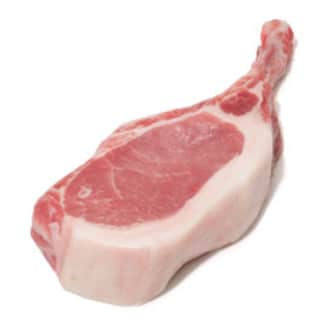
D' Artagnan: Berkshire Pork Chops, Milanese-Style Cut
Just as crimson-colored as our winner, these Berkshire chops (butchered from either end of the loin, Milanese-style) were “rich, nutty, tender, and juicy’’ with “tasty caramelized fat on the exterior.’’
Price at Time of Testing: $10.99 per pound, plus shipping
Just as crimson-colored as our winner, these Berkshire chops (butchered from either end of the loin, Milanese-style) were “rich, nutty, tender, and juicy’’ with “tasty caramelized fat on the exterior.’’
Price at Time of Testing: $10.99 per pound, plus shipping
Recommended
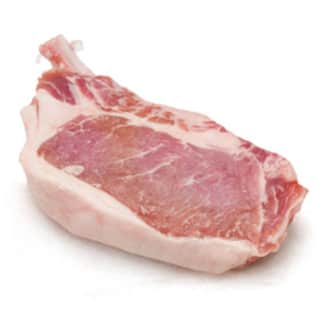
Eden Farms: French-Cut Kurobuta Pork
French-cut with the top of the bone stripped of meat, these 100-percent Berkshire chops were “exceptionally moist’’ and tender, with a flavor “reminiscent of bacon.” A few tasters found the pork (which had a slightly less red hue than that of our winner) had a somewhat less rich flavor.
Price at Time of Testing: $17.50 per pound, plus shipping
French-cut with the top of the bone stripped of meat, these 100-percent Berkshire chops were “exceptionally moist’’ and tender, with a flavor “reminiscent of bacon.” A few tasters found the pork (which had a slightly less red hue than that of our winner) had a somewhat less rich flavor.
Price at Time of Testing: $17.50 per pound, plus shipping
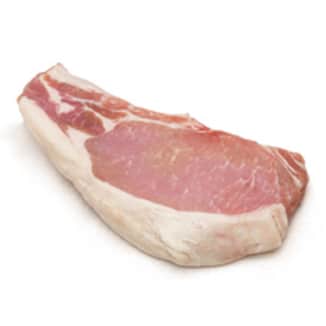
Heritage Acres: Berkshire and Berkshire-blend Pork
Tasters were split on these chops: Some praised their “moist, juicy” texture and “mild, clean,” “sweet’’ flavor, and others found nothing remarkable in the flavor, noting that it was “like corn,’’ and “not super pork-y.’’ Their color lacked the deep ruddiness of the 100-percent Berkshire pork.
Price at Time of Testing: $8.95 per pound, plus shipping
Tasters were split on these chops: Some praised their “moist, juicy” texture and “mild, clean,” “sweet’’ flavor, and others found nothing remarkable in the flavor, noting that it was “like corn,’’ and “not super pork-y.’’ Their color lacked the deep ruddiness of the 100-percent Berkshire pork.
Price at Time of Testing: $8.95 per pound, plus shipping

Vermont Quality Meats: Duroc and Duroc-blend Pork
As one taster summed up, the flavor of these faintly pink heritage-blend chops was “not amazing—just decent.” Others noted that their texture was “somewhat coarse and dry.”
Price at Time of Testing: $7.60 per pound, plus shipping
As one taster summed up, the flavor of these faintly pink heritage-blend chops was “not amazing—just decent.” Others noted that their texture was “somewhat coarse and dry.”
Price at Time of Testing: $7.60 per pound, plus shipping
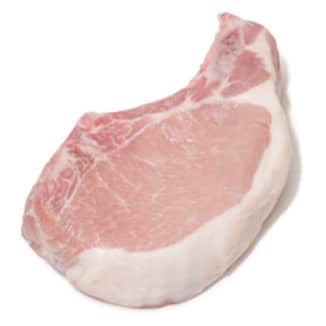
Supermarket pork chops
These last-place chops dulled in comparison to the 100-percent Berkshire pork. Their off-white meat was “moist enough,” but “chalky,” “coarsely grained,” and “relatively bland.”
Price at Time of Testing: $4.29 per pound
These last-place chops dulled in comparison to the 100-percent Berkshire pork. Their off-white meat was “moist enough,” but “chalky,” “coarsely grained,” and “relatively bland.”
Price at Time of Testing: $4.29 per pound
Reviews You Can Trust
The mission of America’s Test Kitchen Reviews is to find the best equipment and ingredients for the home cook through rigorous, hands-on testing. Have a question or suggestion? Send us an email at atkreviews@americastestkitchen.com. We appreciate your feedback!
Appears In
This item is featured in the following. Click the links to dig in!
*All products reviewed by America’s Test Kitchen are independently chosen, researched, and reviewed by our editors. We buy products for testing at retail locations and do not accept unsolicited samples for testing. We list suggested sources for recommended products as a convenience to our readers but do not endorse specific retailers. When you choose to purchase our editorial recommendations from the links we provide, we may earn an affiliate commission. Prices are subject to change.


Reviews You Can Trust.
See Why.