


 Buy at Amazon
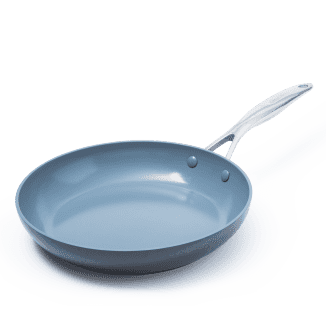
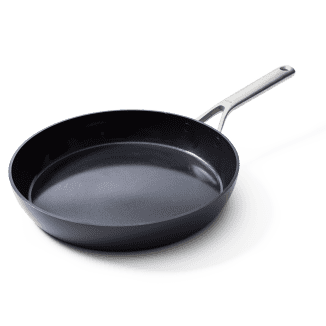
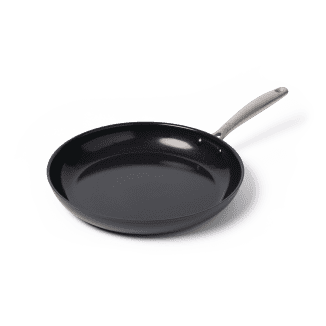
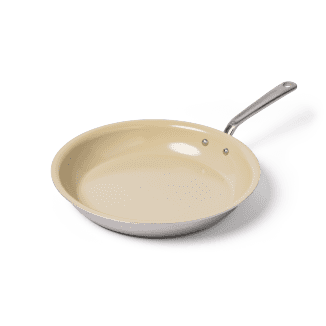
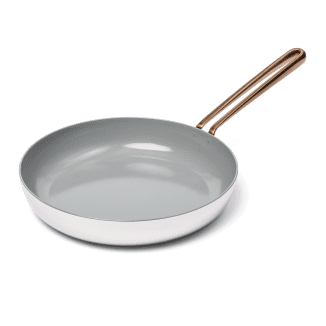
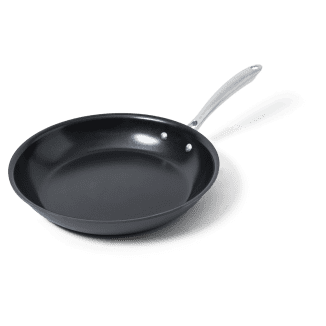
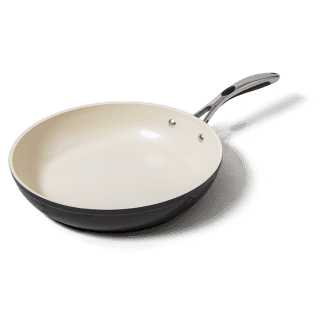
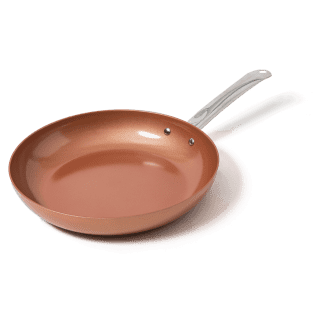
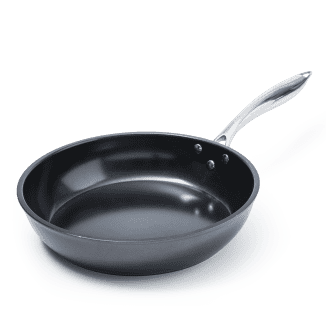
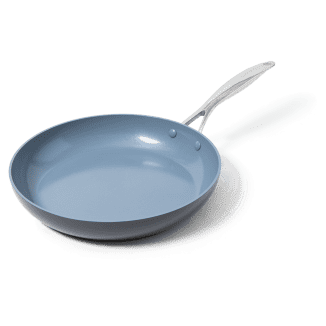
Our favorite ceramic nonstick skillet is the GreenPan Valencia Pro Hard Anodized Nonstick Frypan, 12 inch. It’s lightweight and has a comfortable handle, making it easy to maneuver. And it’s got a broad cooking surface that is truly nonstick, unlike many of the other models we’ve tested. It's also induction compatible.
If you cook for two to four people, we also recommend the smaller, 10-inch version of our top choices: the GreenPan Valencia Pro Hard Anodized Nonstick Frypan, 10-inch.
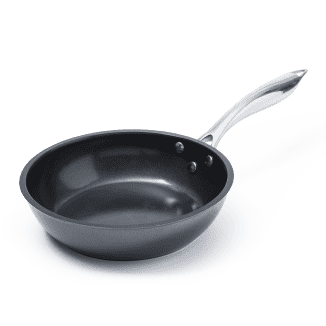
And if you cook for just one or two people at a time, we recommend the 8-inch version too: the GreenPan Valencia Pro Hard Anodized Nonstick Frypan, 8 inch.
We also have a review of traditional nonstick skillets as well.

A good ceramic nonstick skillet can be a great alternative to a traditional nonstick skillet. Slick and easy to clean, the best ceramic nonstick skillets are ideal for cooking delicate foods such as fish and eggs. And unlike traditional nonstick skillets, ceramic nonstick skillets don’t rely on polytetrafluoroethylene (PTFE), commonly known as Teflon, to ensure that their surfaces are slippery—a plus for cooks who are concerned about the health and environmental consequences of this chemical (see below).
Historically, we’ve found that most ceramic nonstick skillets aren’t very good. Most of the models we’ve tested couldn’t release food cleanly even when they were brand new, and even the best ceramic nonstick surfaces quickly deteriorated with use. In recent years, however, we’ve found a few models that are not only consistently nonstick but also durable and easy to use—and improvements to ceramic technology are ongoing.
What Size Skillet Should You Get?
If you’re only getting one nonstick skillet, it should be a 12-inch model. It’s the most versatile size, spacious enough to cook a frittata for six people or sear four veggie burgers.
On average, the cooking surface of a 10-inch skillet is about 1 or 2 inches smaller than that of a 12-inch skillet. This size comes in handy when cooking food for two to four people.
We like an 8-inch skillet for small tasks such as frying an egg or preparing a small batch of scrambled eggs.

What’s the Difference Between Traditional Nonstick and Ceramic Nonstick?
Traditional nonstick skillets have coatings made with PTFE. Best known by the brand name Teflon, PTFE (polytetrafluoroethylene) belongs to a larger category of chemical compounds called PFAS, which are responsible for making surfaces slippery and resistant to water and oils. The way PTFE is produced has changed over the decades, making nonstick pans safer and more durable.
Still, there remain concerns about how safe traditional nonstick pans are to use. Until about 2015, PTFE was processed with the help of a compound called perfluorooctanoic acid (PFOA) that was discovered to be dangerous to the environment and human health. PFOA has since been phased out in the United States, and new chemicals have taken its place in the PTFE manufacturing process; research into the relative safety of those replacement chemicals is ongoing. Currently, scientific research suggests that traditional nonstick cookware is safe to use as long as you don’t heat it above 500 degrees. If you heat a traditional nonstick skillet past this mark, it may emit toxic fumes. (For more information, see our article about nonstick cookware and health). In addition, all PTFE coatings will eventually wear out with use, and previous tests have shown us that they scratch easily as well.
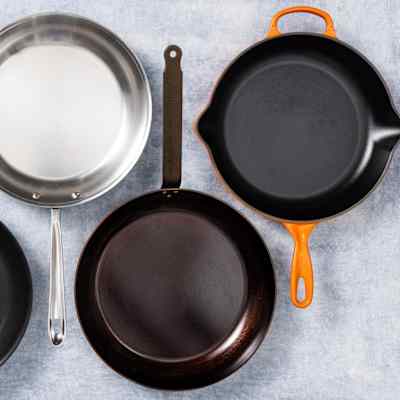
Best Practices for Nonstick, Cast-Iron, Carbon-Steel, and Other Types of Cookware
A pan’s material dictates how best to use and clean it. Our recommendations will help you use and care for common types of cookware.
Learn MoreIf you’d like to avoid or minimize your exposure to PTFE, ceramic nonstick cookware can be great. Ceramic cookware hit the market right around the time that the risks of PFOA were becoming clear. As with PTFE-based coatings, the metal pans are sprayed with a liquid material that, when heated, hardens to a slick surface. But unlike PTFE-based coatings, the liquid is made from a glass-like ceramic material derived from beach sand, and there is no risk of it releasing toxic fumes, even at high temperatures.
There are some tradeoffs, though. In general, we’ve found that ceramic nonstick isn’t quite as nonstick or as durable as traditional nonstick and gets even less nonstick and durable over time. Ceramic surfaces are brittle by nature and thus more likely to develop microscopic surface cracks during everyday use than PTFE nonstick coatings are. It’s a problem that quickly goes from bad to worse: The rougher a cooking surface becomes, the more likely food is to stick to it, and scrubbing off that stuck-on food can cause further degradation.
As we found when we tested our favorite ceramic and traditional nonstick skillets side by side, ceramic nonstick typically runs hotter than traditional nonstick. For recipes where you cook at a fairly low heat, such as eggs or pancakes, you may not be able to tell a difference. But the story changes once you increase the heat: Foods we made in the ceramic skillet cooked faster and were more prone to sticking. Some caramelized onions got a little too dark. The sauce in our stir-fry reduced more and formed dark, sticky patches on the skillet surface. The salmon skin stuck and had to be nudged off with a plastic spatula. Cleanup was still pretty easy; a quick soak in hot water was enough to loosen any bits of sauce or caramelized sugars. But it wasn’t quite as effortless as with traditional nonstick.

Why is this the case? PTFE is a type of plastic that acts as a thermal insulator, slowing the transmission of heat from the aluminum pan to the food cooking in it. In comparison, ceramic coatings conduct heat to the food more quickly. When cooking with ceramic pans, including our favorite, it’s important to follow visual cues and your instinct. You may need to lower the flame or take the pan off the heat sooner than called for in a recipe. Food may stick slightly, and the pan may take a bit more (gentle) effort to clean. For a fairly confident and experienced cook who wants to avoid PTFE, these aren’t difficult adjustments to make. But if you’re smitten with the superslick, ultrareliable results provided by your favorite traditional nonstick skillet and are careful never to heat it while it’s empty or let it exceed 500 degrees, you’ll probably want to continue using it.
What to Look For
- Good Ceramic Coatings: We typically fry up to 50 eggs on each nonstick skillet at the beginning and end of testing to evaluate the skillets’ nonstick coatings. Just as we discovered more than a decade ago, most of the ceramic pans in our lineup simply weren’t nonstick over the duration of our testing. One pan released just 28 eggs before they started to stick; the other pans passed the test. When we repeated the dry-egg test after we’d used the pans in our cooking tests, four more pans failed. One of those models, an otherwise well-built skillet that had been among our favorites, failed after only nine eggs. Others called it quits after releasing between 15 and 32 eggs. Since a durable nonstick surface is the sole reason for buying one of these skillets, we do not recommend any model that failed one or both of these dry-egg tests. Ultimately, just three pans in our 12-inch skillet lineup successfully completed those two egg tests. The quality of the coating is key here. Ceramic formulations vary widely, and companies apply those formulations in different ways (either spraying them or rolling them on) and in different levels of thickness. Each of those variables affects the overall quality of the ceramic nonstick coating. While manufacturers were not willing to share the proprietary details of their formulas, we preferred pans with coatings that arrived and stayed nonstick for longer.
A good ceramic nonstick skillet should be just as nonstick as a traditional version.
- Broad Cooking Surfaces: In the United States, nonstick skillets are generally marketed as 12-inch, 10-inch, or 8-inch. These measurements refer to the diameter of the top of the skillets. Within each category, the size of the cooking surface varies considerably. In 12-inch models, our favorite ceramic nonstick skillets had cooking surfaces measuring at least 9 inches across, giving us plenty of room to brown beef for stir-fry and sear long fillets of sole. With 10- and 8-inch models, we also preferred comparatively larger cooking surfaces.

- Medium-Height, Gently Sloped Sides: These were tall enough to contain food as we sautéed, but still low enough so that we could easily maneuver our spatulas and spoons inside the pan while cooking. Pans with gently sloped sides also let us slide food out of the pan and onto a plate or serving dish.
- Relatively Light Weight: We preferred pans that weighed between 2 and 3 pounds, similar to our favorite nonstick pans. These were easy to lift and maneuver even when laden with food.
- Comfortable Handles: We liked handles that were comfortable for hands of different sizes to hold securely.
- Oven Safety Rating of at least 400 degrees: Pans that could be used at higher temperatures were more versatile and often more durable.
What to Avoid
- Poor Ceramic Coatings: As explained above, most of the ceramic skillets we tested just weren’t as nonstick as we’d hoped, making it clear that the ceramic formulas used and the way they were applied simply weren’t doing the job.
- Tall, Straight Sides: Several of the skillets we tested had unusually tall, straight sides, which made it harder for us to maneuver around their perimeters with a spatula or spoon and to gently slide out baked frittatas.

- Heavy Weight: The heavier the skillet, the harder it was to lift and maneuver.
- Oven Safety Rating Below 400 degrees: Models that couldn’t be used in the oven above 350 degrees were less versatile.
The Tests
12-inch Skillets:
- Fry eggs in brand-new skillets with no oil, one after another, until they begin to stick (up to 50 eggs)
- Prepare Beef and Broccoli Stir-Fry
- Cook Pepper and Onion Frittata with Arugula Salad starting on the stovetop, finishing in a 350-degree oven, and then sliding it out of the pan in one piece
- Make Pan-Fried Sole with Lemony Herb Butter
- Recruit three additional testers to use each pan to make Sautéed Peas with Shallot and Mint
- Wash by hand 10 times
- After above tests, repeat dry-egg test to see if the nonstick coating has deteriorated with use
- Heat each pan to 400 degrees and then plunge it into 32-degree water and check for warping
- Bang each pan three times on a cement block to gauge durability
- Winner only: Prepare five additional recipes in a new copy of our favorite ceramic skillet and compare results to the same recipes made in a new copy of our favorite regular 12-inch nonstick skillet from OXO
10-inch Skillets:
- Fry eggs in brand-new skillets with no oil, one after another, until they begin to stick (up to 50 eggs)
- Make Gōngbǎo Jīdīng (Sichuan Kung Pao Chicken) for Two
- Make Perfect Scrambled Eggs
- Wash by hand 10 times
- After above tests, repeat dry-egg test to see if the nonstick coating has deteriorated with use
- Heat each pan to 400 degrees and then plunge it into 32-degree water and check for warping
- Bang each pan three times on a cement block to gauge durability
8-inch Skillets:
- Fry eggs in brand-new skillets with no oil, one after another, until they begin to stick (up to 50 eggs)
- Make scrambled eggs
- Make Tagliatelle with Artichokes and Olive Oil for Two
- After above tests, repeat dry-egg test to see if the nonstick coating has deteriorated with use
- Heat each pan to 400 degrees and then plunge it into 32-degree water and check for warping
- Bang each pan three times on a cement block to gauge durability
How We Rated
- Nonstick Ability: We monitored how many eggs the pans cleanly released at the beginning and end of testing. We also noted whether the food we prepared between egg tests stuck or was easy to remove. This was the most important criterion.
- Capacity: We compared the size of the pans’ cooking surfaces and the height and angle of their walls, noting whether we could stir food without spilling it.
- Ease of Use: We considered whether it was easy and comfortable to maneuver the pans on the stovetop and in the oven, lift them into the air, empty them, and wash them. We also considered whether the pans could be used to prepare recipes as written or if they required a lower heat, shorter cooking time, or other adjustments by the cook.
- Durability: We noted whether the pans warped, dented, and/or scratched over the course of testing. We also considered the pans’ maximum ovensafe temperatures.