

This is Technique #91 from our 100 Techniques Every Home Cook Can Master.
Each technique is broken into three sections: why it works, key steps, and recipes that use it. Learn these recipe building blocks and you'll be set up for a lifetime of cooking success.
The ideal pizza-parlor pizza is thin and crisp, with a crust that’s spottily charred on the exterior and tender yet chewy within, with simple toppings of tomato sauce and bubbly, browned cheese.
It has probably lured most of us into burning the roofs of our mouths. Yet we go back for more.
In fact, we’re so obsessed that we developed a technique for replicating that pizza parlor experience at home.
Sign up for the Notes from the Test Kitchen newsletter
Our favorite tips and recipes, enjoyed by 2 million+ subscribers!
How to Replicate a Commercial Pizza Oven
The main obstacle to achieving these results at home is the fact that home ovens don’t get hot enough to produce a deeply browned crust before the interior crumb dries out and toughens.
The best solution has always been the hottest setting on the oven dial and a baking stone, which soaks up the radiating heat like a sponge. Most recipes call for the stone to be placed as low in the oven as possible, where it gets maximum exposure to the main heating element.
But that technique doesn’t really make sense, and there’s an industry clue to prove it: commercial pizza ovens.
These wide chambers with low ceilings quickly reflect heat from the oven floor back onto the top of the pie as it cooks, cooking the toppings and browning the cheese and crust exterior quickly, before the crust interior has a chance to dry out.
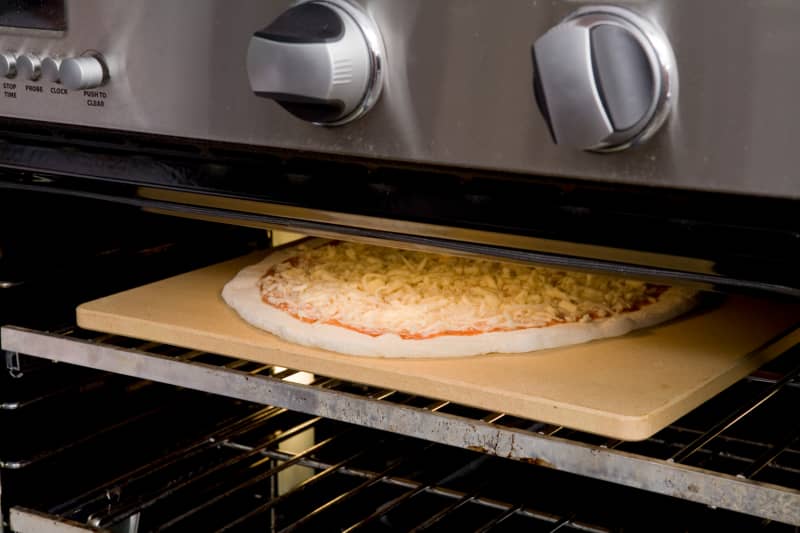
Obviously you can’t alter the shape of your oven—but you can move the stone closer to the top to narrow the gap between the stone and the ceiling. We discovered that the best position for the stone is as close to the top of the oven as possible—4 inches or so from the ceiling.
Cold Fermentation: The Secret to Our Dough
In addition to how we cook the pizza, the dough also plays a role in making great pizza at home. We use a long, slow, cold fermentation for our dough, which has multiple benefits.
It minimizes the size of the carbon dioxide bubbles that form, leading to a chewy rather than a puffy dough. The dough is more flavorful, since at lower temperatures yeast produces less carbon dioxide and more of the initial side products of fermentation: flavorful sugars, alcohol, and acids.
And cold fermentation slows gluten development so the dough stays looser and easier to stretch and shape.

Bread Illustrated
Our first cookbook devoted solely to bread baking highlights more than 100 meticulously tested recipes that will enable you to bake artisan bakery–quality bread at home.
Shop NowStep by Step: How to Make Pizza-Parlor Pizza At Home
If you follow these helpful steps you'll create superior dough and produce perfectly cooked restaurant-worthy pizza.
Step 1: Slowly Add Water to Food Processor

Pulse dry ingredients in food processor. With processor running, slowly add ice water; process until just combined. Let dough rest.
Step 2: Add Oil and Salt

Add oil and salt and process until dough forms satiny, sticky ball that clears sides of bowl.
Step 3: Knead and Form Into Ball

Transfer dough to oiled counter and briefly knead by hand until smooth. Shape into tight ball and place in oiled bowl; cover tightly with plastic and refrigerate for at least 24 hours.
Step 4: Heat Pizza Stone and Shape Dough

One hour before baking, place oven rack with baking stone 4 inches from broiler and heat oven to 500 degrees. Divide dough in half; pat each half into 4-inch round and shape into smooth, tight ball. Let dough rest.
Step 5: Heat Broiler and Make Disk

Heat broiler for 10 minutes. Gently flatten dough ball into 8-inch disk on floured countertop. Gently stretch disk into 12-inch round. Transfer to floured peel and stretch into 13-inch round.
Step 6: Slide Dough on Pizza Stone

Slide topped pizza onto hot baking stone and return oven to 500 degrees. Rotate pizza halfway through baking.
Watch us demonstrate how placing your stone higher up in the oven produces perfectly crisp thin crust pizza.
Recipes That Use This Technique
When you want to make wonderfully crisp pizza at home, try one of the following recipes.

Thin-Crust Pizza
With ovens that reach only 500 degrees and dough that springs back when stretched, it's a challenge to produce parlor-quality pies at home. This recipe changes that.
Get the Recipe
One-Hour Pizza
The ultimate challenge for a pizza master with 30 years of experience? Making a good one in just 60 minutes.
Get the Recipe
Vegan Mushroom Pizza with Cashew Ricotta
This pizza is a knockout—tangy, cooling dollops of homemade cashew ricotta top layers of umami-rich mushrooms for a beautiful lesson in texture and flavor contrasts.
Get the Recipe
Thin-Crust Pizza with Pumpkin, Cashew Ricotta, and Apple-Fennel Slaw
The flavors and aromas of autumn in New England inspire this pizza.
Get the Recipe
Luau Pizza
We give ham and pineapple pizza a Hawaiian twist with this easy, 30-minute pie.
Get the RecipeReady to learn another technique? Choose from our list of 100 Techniques Every Home Cook Can Master.