


Broccoli and pasta make a great team. The combination of mild green florets and noodles is reliable and riffable: You can toss the vegetable with garlic, anchovies, pepperoncini, and orecchiette as they do in Puglia; blitz the whole head to make a green sauce to nestle into tubular pasta; or simply scatter a handful of florets into a pot of macaroni and cheese.
When you’ve already got a pot of water boiling to cook the pasta, blanching the broccoli makes good sense. The method is quick, turns the vegetable an attractive bright green, and softens broccoli’s flavor into mild sweetness, making a versatile base to build upon with other ingredients.
For my version, I took inspiration from pesto. The ingredients in Genoa’s iconic herb sauce—salty aged cheese, toasted pine nuts, punchy garlic, fistfuls of basil—seemed like ideal companions for mild, agreeable broccoli, and the sauce would look lovely with an extra dose of green.
Plus, pureeing them to make a pesto would come with another perk: I could blanch the broccoli stems (without even peeling them first) and blend them into the sauce, sneaking more of the vegetable into the dish and reducing waste.
Sign up for the Cook's Insider newsletter
The latest recipes, tips, and tricks, plus behind-the-scenes stories from the Cook's Illustrated team.
Blanching Makes Broccoli Greener

Raw broccoli is pretty green thanks to the high amount of chlorophyll it contains—but you may have noticed that its color intensifies after blanching, steaming, or quickly sautéing. That’s because raw broccoli contains air within its tissue that scatters the light and makes the color less intense (like viewing something through a hazy window). Cooking broccoli expels that air, making the green chlorophyll more visible. To preserve that bright hue, it’s key to keep the cooking time short: Broccoli gets duller with longer cooking, as its chlorophyll degrades.
After breaking down a few heads of broccoli into stems and florets and blanching the parts separately, I tossed the stems and a few florets into a blender (I’d stir the other florets into the pasta at the end). I added garlic (which I blanched with the broccoli to mellow its flavor), basil, Pecorino cheese, pine nuts, olive oil, salt, and pepper and processed until the mixture was finely chopped.
The resulting sauce was fresh and herbaceous with a savory edge: a promising start. Some anchovy fillets and lemon juice and zest ramped up the complexity, but I still wanted a richer, more satisfying dish. What if I turned my pesto into a cream sauce?
Heavy cream created a sauce with beautiful body, but the dairy flattened the flavors of the delicate pesto and broccoli. I liked the more assertive option of Greek yogurt: It added both craveable richness and tangy, cultured complexity.
There was just one catch—since there’s much more protein in Greek yogurt than in cream and those proteins have been denatured by the yogurt’s acidity, they form clumps when heated, causing curdling.
To be safe, I simply added the yogurt (and some water) to the blender with the rest of the pesto ingredients. Then, I cooked and drained my pasta, returned it to its cooking pot off the heat, and stirred in the sauce and the reserved florets. As I stirred, the residual heat of the pasta and its pot gently warmed the sauce through.
The finishing touch? A smattering of toasty bread crumbs crowning each bowl.

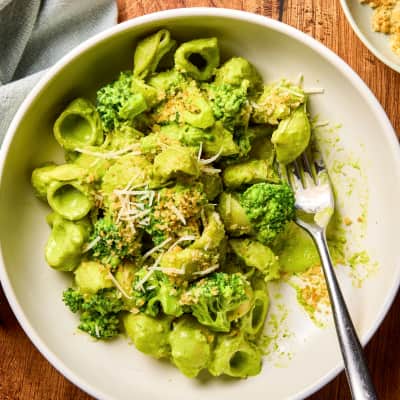
Creamy Broccoli Pasta with Crispy Panko
The most dependable vegetable goes luxe in this lush, herbaceous, bread crumb–topped dish.
Get the Recipe