
My umma (mom), Nam Soon Ahn, starts her day in the kitchen promptly at 5:00 a.m. She moves about briskly in her worn-out house slippers, meticulously preparing Appa’s (Dad’s) breakfast and lunch before he heads off to work, followed by food we’ll eat for dinner and other meals in the weeks to come.
Depending on the day, there might be kimchi to replenish, jeon (savory pancakes) to fry, or pork to braise, and the kitchen fills with a steady hum of utensils clanging against pots and pops and sputters of meats and sauces sizzling on the stove.
I’ve had a front-row seat to this ritual for as long as I can remember—exposure that has become increasingly deliberate on my part as I’ve gotten older.
Sign up for the Cook's Insider newsletter
The latest recipes, tips, and tricks, plus behind-the-scenes stories from the Cook's Illustrated team.
Living in America, I’ve come to fear that essential aspects of what make me Korean, including the tradition of learning firsthand from family how to cook Korean food, will fade as I become more distanced from my roots. So several years ago I started shadowing Umma in the kitchen at our home in Orange County, California, and documenting her cooking on my blog, Ahnest Kitchen.
It’s been a way for me to preserve my identity as well as the recipes and techniques that she learned from her own mother, lest any nuances of those sights, sounds, and smells get lost to time. (Since then, we’ve also collaborated on a cookbook, due out this spring. See below.)
We’ve gone over the proper ratio of rice to fillings for gimbap (seaweed rice rolls), the pleasures of eating LA galbi over onions that have been cooked just beyond raw, and techniques for countless everyday stir-fries like the spicy pork bulgogi I’m imprinting here.
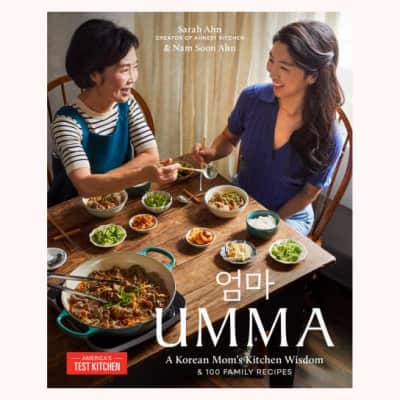
Umma: A Korean Mom's Kitchen Wisdom and 100 Family Recipes
Through recipes and conversations, a Korean mom passes down the flavors, kitchen secrets, and memories behind cherished dishes to her daughter—and now to you.
Shop NowPerilla Leaves

“Perilla” is a broad term for Perilla frutescens, a species of plants in the mint family, the leaves of which grow in
shades of grass green and reddish purple and are used extensively in East Asian cooking, particularly in Korean and Japanese cuisines. Korean perilla (Perilla frutescens var. frutescens), the cultivar widely favored by Korean cooks for everything from ssam (wraps) to stir-fries to kkaennip kimchi (perilla leaf kimchi), features verdant, spade-shaped, saw-toothed leaves with a complex cocktail of aroma compounds that includes the minty, citrusy, green apple, and geranium notes common to all types of perilla in addition to the hints of spice, camphor, apricot, and peach that make this cultivar distinct.
(Note that shiso, widely used in Japanese cooking, is the same species as perilla. However, there are multiple varieties of shiso with distinct characteristics, and they should not be used interchangeably with Korean perilla.)
Shopping and Storage: Perilla leaves are often sold by the bundle. The foliage should be bright green and blemish-free. When possible, choose small to medium (around 3- to 4-inch) leaves, which are not as stiff and chewy as larger ones. Stored in a zipper-lock bag in the fridge, the leaves keep for up to three days.
Meat and Marinade
Bulgogi, a preparation with roots that date back more than 1,000 years, is a go-to for busy Korean cooks because it delivers great return on investment—especially if you can plan ahead.
All you do is soak thin-sliced meat (usually beef or pork) in a highly seasoned marinade and then either sear it in a pan—often as a stir-fry with thin-cut vegetables—or on the grill, or simmer it for a hearty broth-based dish.
The lengthy marinade (anywhere from several hours to a full day) not only seasons the meat but also tenderizes it and helps it cook up juicy and (in dry-heat applications like this) well browned.
Bulgogi Marinade at Work

Marinating the meat not only seasons it deeply but also tenderizes it and helps it cook up juicy (and, in dry-heat applications, well browned). Here’s a snapshot of the key players.
Tenderizers: Ginger, acids (lemon juice, white vinegar, maesil cheong [plum extract syrup]), salt (fish and soy sauces)
Ginger’s protease enzyme zingibain breaks down protein in meat so that it softens. Acids and salts weaken the attraction between the meat’s adjacent muscle fibers, increasing its tenderness and moisture-holding capacity.
Sweeteners: Sugar, maesil cheong
Sugar browns at a relatively low temperature, which means you’re not overcooking your meat while you’re waiting for the surface to develop color.
Fat: Toasted sesame oil
Besides adding distinctly nutty, rich flavor to the surface of the meat, an even coat of toasted sesame oil on the meat encourages uniform browning and also prevents sticking.
Umma uses pork, specifically cushion meat—a flavorful, relatively affordable cut located next to the pork butt on the pig’s foreleg that is commonly sold at Korean markets presliced into ⅛-inch-thick swaths. (Alternatively, you can use pork belly and thin-slice it yourself.) Her marinade is bold, both in its flavors and in its potential for tenderizing the meat.
The abundant fresh ginger, acid (both lemon juice and white vinegar), and salt (fish and soy sauces) work together to boost tenderness and juiciness; sugar and maesil cheong (plum extract syrup) encourage browning, as does toasted sesame oil, which also prevents sticking.
Plenty of gochujang, gochugaru, minced garlic, and black pepper bring the heat. Three hours of marinating will get the job done, but whenever possible, we let it go for 24 to maximize the seasoning and tenderness.
Pork Cushion—and How to Substitute for It
Pork cushion is a triangular, boneless, 2- to 3-pound roast cut from the anterior section of the picnic shoulder on the pig’s foreleg. It’s a well-exercised muscle and thus relatively lean (especially compared with pork butt, which sits just above it) and loaded with connective tissue—traits that make it more economical than pork butt and well suited to the low, slow, tenderizing heat of barbecue. It’s also a standard cut for pork bulgogi, for which it’s commonly sliced thin to shorten the muscle fibers, promoting tenderness, and to minimize the cooking time.
Many Korean markets sell packages of presliced pork cushion for bulgogi, but skinless pork belly makes a good (albeit fattier) substitute. If you can’t find belly presliced, you can buy a slab and slice it yourself.

1. Using sharp chef’s knife, slice pork into 2- to 3-inch-wide pieces. (Depending on size of belly, you should have 2 or 3 evenly sized strips.)

2. Freeze pork on large plate until very firm, 35 to 40 minutes.

3. With meaty side facing up, slice pork crosswise as thin as possible (no thicker than ⅛ inch).
Shoots and Leaves
Tossed in a hot, oiled wok, the thin slabs of pork cook through in minutes. You’ll know it’s almost done when its exuded juices sizzle in the pan and coat the pork. Then, when the meat is about a minute shy of fully cooked, Umma stirs in thin-sliced onion, carrot matchsticks, and scallion lengths, giving the wok contents a quick toss so the vegetables lose their raw edge and soak up some of the pork’s savor while staying crisp.
The last addition to the wok is my favorite: a big handful of perilla leaves—the citrusy, minty, camphoraceous aroma of which goes so well with rich, spicy foods like pork bulgogi.
If you enjoy it as much as I do, wrap up the bulgogi in a lettuce leaf with a scoop of steamed rice and slip a fresh perilla leaf inside the bundle. It’s a way to give a fast meal an extra boost of aroma and freshness.


Maeun Dwaejibulgogi 매운 돼지불고기 (Spicy Pork Bulgogi)
Stir-fried garlicky, sweet-spicy marinated pork is a go-to dinner for Korean families.
Get the Recipe