


Sometimes, a little sogginess is a good thing.
Think of the way piping hot and crispy french fries relax under brown gravy and cheese curds in poutine, or how a golden nest of egg noodles sinks and softens in coconutty khao soi broth, or how marinara seeps into a cutlet’s nooks and crannies in chicken Parmesan.
In nearly every food tradition where there’s a love for frying, it seems that there’s also admiration for that saucier, more yielding version of something that was once crisp.
One of Mexico’s entries into that canon? Chilaquiles, the iconic dish of tortilla chips napped with a warm, bright salsa (roja, verde, or in the variation called “chilaquiles divorciados,” both).
To make them a meal, the coated chips are often garnished with whatever odds and ends are on hand, be that vegetables, leftover shredded chicken or pork, a fried egg, cheese, or crema.
A longstanding pillar of Mexican cooking—some trace its origins all the way back to the Aztecs, citing the dish’s use of the ancient ingredients of tortillas and chiles—chilaquiles can be found throughout the nation in various forms, with cooks swapping in different salsas and toppings depending on local preferences.
It’s a hearty, use-it-up meal that’s typically served in the morning—but once you’ve got the simple formula down, you’ll be tempted to whip up a batch at all times of the day.

We’ve got customers that come every single day to grab chilaquiles for breakfast.
—Orlando Aguirre, owner of San Antonio’s Chilaquil
A Sturdy Chip
Tortilla chips for chilaquiles need to start out crisp and resilient so that they can retain some of that texture after they’re sauced.
When I visited Tu y Yo, a beloved Mexican restaurant in the Boston area that specializes in homey dishes such as this, chef and owner Adolfo Alvarado described the end goal as chips that are “crunchy, but still soaked with flavor.”
Orlando Aguirre, the owner of San Antonio’s Chilaquil, a food truck turned brick-and-mortar restaurant that specializes in the dish, echoed a similar sentiment.
“There should be crispiness at the beginning and softness at the end,” he said.
While softer, more saturated chips are the norm in some regions of Mexico, Aguirre is partial to the more texturally dynamic bowls he grew up with in northern Mexico. So, at Chilaquil, he fries his chips fresh each morning and then quickly tosses them in the salsa before they’re served.
Why DIY Fried Tortilla Chips Are a Must

Chilaquiles is one of the finest examples of the texture we’ve dubbed “crunchewy,” a slightly softened version of something that was once crisp. The relaxed texture of salsa-coated chips is what makes the dish great—but there’s a fine line between crunchewy and flat-out soggy.
For the crispiest chips, it’s best to fry wedges of corn tortillas rather than rely on store-bought tortilla chips. Tortillas are made from fine, smooth masa, which makes their surfaces slick and dense, resulting in a stronger and more waterproof chip. Commercial chips, on the other hand, are made with extruded masa, which gives them a coarser, grainier structure. Because the structure of the bagged chips is looser, there are more places for liquid to enter the chips and get trapped, making them quick to sog out and even break.
To understand the importance of using homemade chips, as Aguirre does, over store-bought tortilla chips, I fried a few wedges of corn tortillas, tossed them with a placeholder salsa, and then evaluated them head-to-head with store-bought chips that I also tossed with the salsa.
I didn’t even need to take a bite of the samples to understand why store-bought isn’t ideal: The chips grew visibly soggy and started to disintegrate not long after they were exposed to the liquid.
This is because most store-bought chips are thinner and less substantial, for one, but also because the structure of the typical tortilla chip is different from that of a tortilla. So, for more waterproof chips, making my own from tortillas was the way to go.
The process of frying the chips was simple and could be done in advance: I cut 6-inch corn tortillas into wedges and then dropped them in batches into hot oil.
After just a couple minutes, the wedges were golden and crispy.
If I were making chips to snack on, I would normally salt them after pulling them from the oil, but I chose to forgo that here—salting the salsa instead would allow me to more accurately control the salt level of the finished dish.
Mexico’s Savory Pantry Staple

It’s many Mexican cooks’ secret weapon: Knorr’s granulated chicken bouillon, an ochre powder that we use here in our tomatillo salsa.
The bouillon (which is also available in cubes, though the granulated version is more popular in Mexico) is a mixture of salt, dehydrated chicken fat, spices, MSG, and other ingredients that’s used as an all-purpose umami booster.
Knorr, which was founded in Germany in the 1800s, first expanded beyond Europe through the work of company consultants who were tasked with designing slightly different versions of the brand’s products to the tastes of different markets.
Today, Knorr powders can be found in pantries around the world, bringing saltiness; a touch of sweetness; and a meaty, umami base note to any dish they’re sprinkled into. In Latin America and Mexico, Knorr boosts color and flavor in sopa seca, arroz con pollo, and all sorts of soups, stews, and sauces.
Ultrasavory Salsa
The verdant building blocks of salsa verde are tomatillos, the petite husked green nightshade ubiquitous in Mexican cooking; green chiles (I used serranos); and cilantro.
The treatment of the tomatillos and chiles can greatly impact the resulting salsa’s flavor. First, I tried the common approach of simply pureeing those ingredients raw with the cilantro and some onion, garlic and salt and then thinning the mixture with water and simmering it on the stovetop. (The simmer heats the salsa to serving temperature and melds the sauce’s flavors.)
The resulting salsa was punchy and herbaceous, but I wanted to boost the complexity even further. So I employed another common technique: Before I pureed the ingredients, I broiled the husked tomatillos and serrano chiles until they developed spotty charring and their skins started to burst. This helped concentrate the flavor of the tomatillos and also gave some smoky, slightly bitter depth to the finished salsa.
I also added some chicken bouillon powder to the pan during the simmering step, a trick many Mexican cooks use to infuse food with extra umami. Just a teaspoon of the powder brought a noticeable, rounding base note to the green sauce.
Keys to a Bright, Balanced Salsa
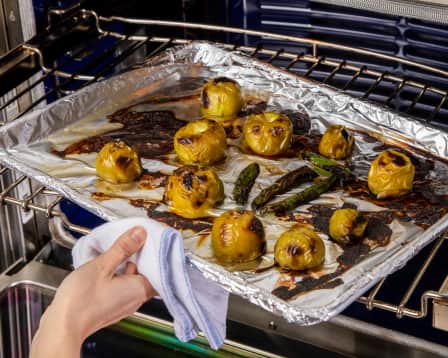
BROIL THE VEGETABLES The broiler spottily chars the tomatillos and serrano chiles, bringing an earthy, smoky quality to the finished salsa.
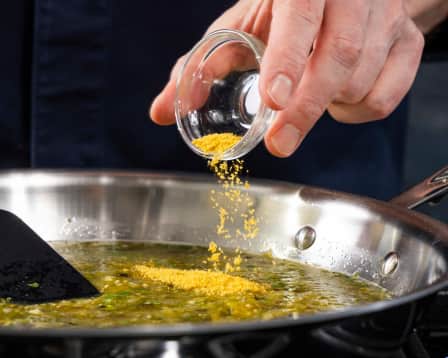
ADD BOUILLON POWDER The MSG and salt of this Mexican pantry staple instantly infuse the salsa with subtle, grounding savor.
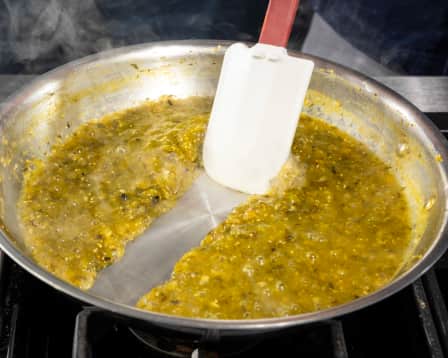
SIMMER A brief simmer on the stove concentrates the salsa’s flavors, gives it more body, and tames the bite of the alliums.
I added the cooled chips and the hot salsa to a large bowl and tossed the components together until the chips were thoroughly moistened.
After pouring the sauced chips onto a platter, I garnished them with crumbles of queso fresco, lush crema, chopped raw white onion, and more fresh cilantro. I took a bite—and then another, and then another.
Each chip was a unique experience of crispness, softness, and different bits of toppings. A meal this dynamic really could be breakfast every day.

Chilaquiles Verdes
Mexico’s chilaquiles verdes, a pile of tortilla chips coated in vibrant tomatillo salsa and sprinkled with an array of garnishes, is a satisfying start to any day.
Get the Recipe
Chilaquiles Verdes for Two
Mexico’s chilaquiles verdes, a pile of tortilla chips coated in vibrant tomatillo salsa and sprinkled with an array of garnishes, is a satisfying start to any day.
Get the Recipe