


Lomo saltado brings together two worlds that are ten thousand miles apart.
At first glance, the dish seems like a classic Chinese stir-fry, starring strips of ultratender beef lacquered in an oyster sauce–based glaze.
But then you notice the tomatoes, the vibrant slices of ají amarillo, and the crispy-gone-soggy, saucy French fries—all key players in the cuisine of Peru.
This mingling of Andean and Chinese ingredients is the perfect representation of chifa, the culinary fusion that emerged when waves of Chinese migrants came to Lima, Peru, starting in the mid-1800s. To cook familiar recipes in their new home, these migrants had to improvise and adapt, applying Chinese cooking techniques to Peruvian ingredients—and a whole canon of now-classic hybrid dishes emerged, from kam lu wantan (a sweet-and-sour stir-fry served with fried wontons) to arroz chaufa (fried rice with bell peppers and often chicken, shrimp, or hot dogs).
Sign up for the Cook's Insider newsletter
The latest recipes, tips, and tricks, plus behind-the-scenes stories from the Cook's Illustrated team.
Lomo saltado is perhaps the most well-known and widely made chifa dish, in part because of how simple and quick it is: Just sear the beef and some onion, add the sauce and simmer it briefly to thicken, and then fold in the tomatoes, chiles, and french fries.
After a garnish of cilantro, the dish is complete, ready to be served alongside garlicky white rice (lomo saltado is always a double-starch affair).
Frozen Fries Soak Up More Sauce

One of the key roles of the french fries in lomo saltado is to sop up the succulent sauce. We first tried store-bought frozen french fries as a convenient option, but soon we realized that convenience wasn’t their only advantage. Ice crystals damage the frozen potato’s cell walls, making it more porous and absorbent when thawed; when we did a side-by-side comparison, we found that the previously frozen fries absorbed 70 percent more sauce than freshly fried ones during a 1-minute dip.
The Beef and Sauce
When making lomo saltado, cooks reach for the most tender cuts they can find, since the beef cooks only briefly. I opted for tenderloin (“lomo” translates to “loin”), the succulent texture of which shined in the dish, but more affordable cuts like sirloin or skirt steak work well, too, as long as they’re cut thin against the grain.
To make sure the beef was thoroughly and evenly seared, I cooked it over high heat in a wok (the traditional vessel for lomo saltado) in two batches, allowing the slices to make as much contact with the hot surface as possible.
While lomo saltado’s flavor profile should be beef-forward, the dish’s sauce plays a key supporting role. It’s made from savory soy sauce and sweet, briny oyster sauce, the latter of which also gives the dish its luster. Several teaspoons of white wine vinegar brings contrasting, palate-cleansing acidity.
Two Cultures, One Dish

“Chifa” (believed to be from “sik faan,” meaning “to eat” in Cantonese) is the term for the part Peruvian, part Chinese cuisine that emerged in the 20th century after several waves of Chinese migration (primarily from the Southern provinces) to the South American nation, first for indentured labor and then for refuge after the Japanese invasion of Manchuria.
Over time, Chinese Peruvians were able to import ingredients they had cooked with in their homeland, and by the mid-20th century, Chinese Peruvian restaurants started appearing around Lima, introducing locals to these new flavor profiles. Lomo saltado is the best-known example of this fusion cuisine: Peruvian staples such as tomatoes; potatoes; and hot, fruity ají amarillos are cooked using the Chinese technique of stir-frying in a wok and seasoned with two essential Chinese condiments, soy sauce and oyster sauce. The dish is typically served with white rice, a staple in both cuisines.
The Vegetables
Lomo saltado typically contains a colorful array of vegetables: chunky pieces of red onion, garlic, tomatoes, ají amarillos, and fried potatoes.
Ají amarillo is an essential chile in Peruvian cuisine; it appears in all kinds of sauces, meat dishes, and ceviches. Hot, with a distinctive edge of tropical fruit, the chile (which is sold fresh and, more commonly in this country, frozen) is traditional in lomo saltado, but if you can’t find it, red Fresnos, jalapeños, or even orange miniature bell peppers can bring the requisite juicy bite.
The vegetables aren’t meant to be soft; they should be nearly as crisp as they are when raw. I cooked the onion and garlic briefly in the wok after the beef to tame their bite but folded in the tomatoes and ají amarillo off the heat for maximum freshness; the sauce softened them ever so slightly.
Finally, the french fries. Quirky as it may seem, fries are a defining feature of lomo saltado (potatoes have long been a fixture of Peruvian cooking; today, fries are particularly beloved). Some recipes simply call for serving the fries on the side to preserve their crispness, but others fold them into the stir-fry at the very end of cooking, which is my preference: The sauce soaks into the fries, softening them and infusing them with all the beefy intensity of the dish.
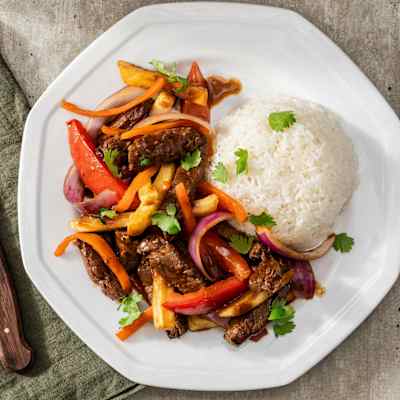
Lomo Saltado (Peruvian Beef Stir-Fry)
Both french fries and rice are served with this quick, colorful beef stir-fry; it's a delicious example of chifa, a fusion of Peruvian and Chinese cuisines.
Get the Recipe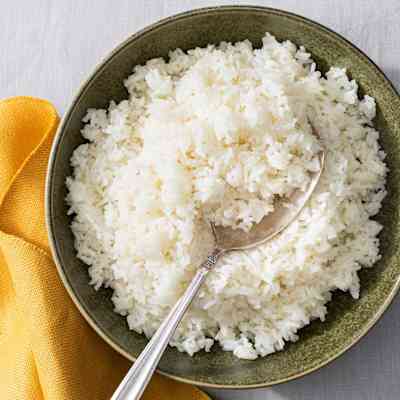
Garlic Rice
This quick, simple rice is the traditional base for Peru’s lomo saltado, a colorful stir-fry of beef, vegetables, and french fries.
Get the Recipe