


To all the shellfish lovers out there: You’ve been overlooking one of the seafood counter’s best catches.
I’m talking about squid, which is universally beloved as fried calamari—but has so much more potential.
Weeknight-dinner potential, in fact, since it’s one of the fastest-cooking proteins you can buy and since one of the best ways to enjoy it is also the easiest and most versatile to prepare: pan searing, where you flash the rings and tentacles in a hot pan just long enough that they pick up flavorful browning but retain their natural tenderness.
Then, throw some seasonings at them; a squeeze of lemon is lovely, or you can go bold with herbs, spices, and sauces, since squid’s clean, briny sweetness jibes with just about anything.
Sign up for the Cook's Insider newsletter
The latest recipes, tips, and tricks, plus behind-the-scenes stories from the Cook's Illustrated team.
In other words, treat squid like shrimp. It’s got a lot of the same appeal and at least as much to offer in terms of convenience and value. The key is to maximize browning while minimizing cooking, which is easy with the following method.
The Fastest-Cooking Seafood

With its torpedo-shaped tube (or “mantle”), pair of fins, eight arms, and two spindly tentacles, a squid’s body is undeniably striking. But its under-the-surface structure is what really distinguishes this cephalopod from other sea creatures—and makes it a superspeedy option for cooking. In particular, a squid’s muscle fibers measure one-tenth the width of those in fish, and that thinness means it cooks through in minutes. And even though squid contain much more collagen than fish, the brief heat exposure prevents its muscles from contracting enough to toughen up, so they retain a pleasantly resilient bite.
5 Reasons to Cook With Squid
- It’s a Great Value: Depending on where you shop and what form you purchase, squid can cost as little as $4 to $5 per pound with nearly all of each specimen being edible.
- There’s Little to No Prep: Unless you’re buying fresh-caught squid, you’re likely to find it cleaned and ready to cook. This means that the head, intestines, ink sac, and clear skeleton (or “pen”) have been removed; the tentacles have been separated; and the thin skin over the body has been peeled away. The squid’s body will be whole or sliced into rings.
- It Cooks Rapidly: No matter how you prepare it—sauté, fry, or grill—squid takes just minutes to turn pleasantly tender but resilient.
- It’s Versatile: Squid’s mild, subtly sweet profile pairs well with most flavorings.
- It’s One of the Most Sustainable Seafood Options: Seafood conservation organizations including Monterey Bay Seafood Watch and the Marine Stewardship Council consider most species of North American squid sustainable (and suggest avoiding squid from Argentina, China, India, and Japan). They grow quickly and reproduce prolifically, and harvesting impacts are generally considered minimal to marine habitat: Fishers catch them either with barbless hooks or with scoop nets. And the National Marine Fisheries Service notes that while squid populations are challenging to track, government regulations and monitoring programs are in place to respond to population changes as needed.
Shopping and Storage Tips
Most squid has been frozen. Unless you get squid direct from a boat, anything you buy has been frozen and is sold either frozen or thawed.
- If you buy frozen: Many markets carry frozen squid packaged in blocks. To use part of a frozen block, break it by wrapping it in a dish towel and pressing it against the edge of a counter.
- If you buy thawed: It should look pristine—moist, shiny, and ivory-colored. Cook it within two days.
Store uncooked squid on ice. Like all seafood, squid deteriorates rapidly. Keep it in the back of the refrigerator, where it’s coldest, in a zipper-lock bag resting on a bed of ice.
Deep Browning on the Double
This method primes squid for a rapid sear.

1. Towel-Dry Blotting the squid between paper towels removes excess moisture.

2. Wait to Season Toss the squid with salt and sugar just before cooking so that there’s little time for the seasonings to draw out its moisture.

3. Don’t Overcrowd the Pan Searing in batches prevents a buildup of moisture in the pan that would thwart browning.
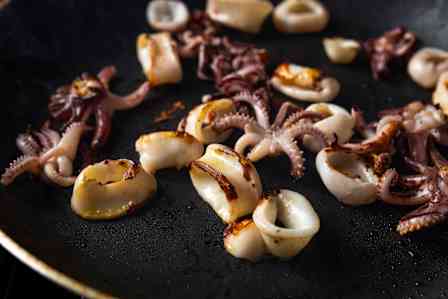
4. Don’t Disturb Let the squid sear untouched for most of the cooking time so that it can develop deep color.

Pan-Seared Squid with Warm Spices, Olives, and Harissa
Versatile pan-seared squid pairs beautifully with bold spices and a jolt of lemon.
Get the Recipe
Pan-Seared Squid with Thai Basil, Fish Sauce, and Ginger
Mint, basil, and toasty chopped peanuts infuse fast-cooking squid with vibrance.
Get the Recipe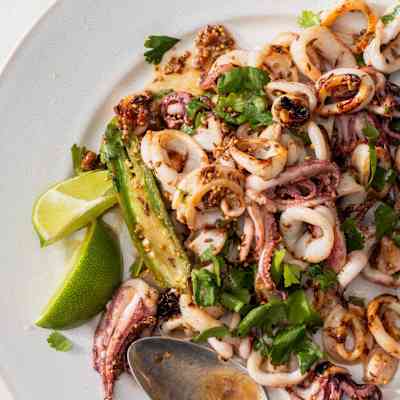
Pan-Seared Squid with Serrano Chile, Whole Spices, and Lime
Season quick-cooking squid with piquant chiles and lime for a dynamic weeknight dinner.
Get the Recipe