


Craving spicy food? Need a quick chicken dinner—or a cheesy, shareable snack? Make buldak.
It means “fire chicken” in Korean, and if the name alone doesn’t spell out that this dish is hot, the sauce’s flame-red color will be a dead giveaway.
In essence, buldak consists of boneless chicken chunks coated in a thick, clingy mixture of gochugaru, Korea’s foundational red chili powder; the fermented red chili paste called gochujang; black pepper; and sometimes fresh chiles, along with a slew of other Korean pantry seasonings.
It’s a classic example of modern Korea’s affection for superspicy food, and it works equally well as an anju (drinking snack) with beer or soju or as a throw-together skillet meal alongside a heap of steamed rice.
Sign up for the Cook's Insider newsletter
The latest recipes, tips, and tricks, plus behind-the-scenes stories from the Cook's Illustrated team.

I heard about [buldak] through friends—how this dish was for anybody who likes spicy.
—Hooni Kim, chef and cookbook author
“I heard about [buldak] through friends—how this dish was for anybody who likes spicy,” said Hooni Kim, the acclaimed chef behind New York City’s Danji and author of My Korea: Traditional Recipes, Modern Flavors (2020), describing his first encounter with the dish when it came onto the scene as bar food in the early 2000s.
What’s less obvious about buldak is that there’s much more going on besides the burn.
The chicken is well seasoned and juicy, especially when buldak is made with thighs. The sauce is spicy, but also deeply savory from the umami-rich gochujang, and plenty sweet to counterbalance the heat.
Tteok, the cuisine’s beloved glutinous rice cakes, are an optional (but excellent) inclusion; seared and then simmered in the sauce, they add satisfying chew and heat-tempering neutrality. And if you’re making cheese buldak, the whole pan gets buried in mozzarella and passed under the broiler until it’s molten and primed for gooey cheese pulls.
Buldak: From Street Food to Bar Food—to the Hottest Instant Ramen

Search “buldak” on social media, and you’ll get an endless stream of ramen footage. Specifically: “spicy chicken” noodles from Samyang, one of Korea’s wildly popular brands of instant ramyeon (the Korean word for ramen), often being slurped up from fiery sauce by hot-chile hedonists publicly testing their heat tolerance for sport.
But if you know buldak in its two original forms—spicy grilled chicken served from street carts and an anju (drinking food) of chicken simmered in a chili sauce—you might wonder how the word became synonymous with noodles. One explanation: a company capitalizing on consumer demand. Koreans’ interest in both ramyeon and spicy food soared during periods of economic downturn in the ’90s and 2000s. The former was inexpensive and convenient; the latter, a source of spark and stress relief. Merging the two was just smart business.
Nowadays, Samyang’s Buldak instant ramyeon rakes in billions. The company produces nearly a dozen flavors (including allegedly dangerous extra-spicy versions that were briefly banned in Denmark) and has largely fueled the global “Spicy Noodle Challenge” on social media.
Chef and author Hooni Kim offered another theory about the Buldak ramyeon boom: hometown pride.
“Koreans are very proud that Buldak has become popular internationally as well,” he said. “Korea’s a small country, so Koreans love it when their products succeed abroad more than when they succeed in their own country.”
It’s the sauce’s mix of bold seasonings and aromatics that makes buldak so flavorful and fast to prepare.
Gochugaru, gochujang, ssal-jocheong (Korean rice syrup that’s thick and shiny like corn syrup but with nutty-malty complexity), soy sauce, oil (sesame and/or neutral vegetable), and minced garlic and ginger are standards—all of it simply stirred together and thinned with water. I kicked up the tang and umami depth of mine by adding mirin and oyster sauce too.
Gochugaru

A cornerstone of Korean cooking, gochugaru refers to the ground dried red chiles that add heat, fruity depth, and vibrant color to countless preparations including gochujang, kimchi and other banchan, marinades, and braises. But within the category, there’s a broad range of style, spiciness, and quality.
- Style: Producers grind the dried chiles into either coarse flakes for seasoning everyday dishes such as banchan and stews or into fine powder that’s used to make gochujang and certain thick sauces.
- Spiciness: Heat level varies from brand to brand and also from harvest to harvest based on the growing conditions, so manufacturers adjust the amount of seeds (where spiciness is concentrated) they include based on the crop’s heat. Note that packages often advertise the spice level, but ratings are not standardized.
- Quality: According to New York City–based chef Hooni Kim, the best gochugaru is made in Korea from Korean-grown chiles (gochu) that have been ripened on the plant and then sun-dried to concentrate their flavor.
“It’s the soil that gives you this really spicy flavor,” he said when we spoke recently about gochugaru. “But along with it comes a deep, sweet, natural flavor that makes the gochugaru taste as good as it does.”
The cooking also happens in one pan, making the whole operation really efficient.
Inspired by famed Korean blogger Maangchi’s recipe, I started by searing some sliced rice cakes. The browned starch added subtly toasty flavor, and I loved the cakes’ crispy-gone-soggy texture once they had simmered in the sauce.
After removing the rice cakes, I seared chicken until cooked through and set it aside. Next, in went a thin-sliced onion and, moments later, slices of jalapeño, which cooked until they were softened but still retained some bite.
Then I returned the rice cakes and chicken to the pan with the vegetables, added the sauce, and simmered everything for a couple minutes to warm through, meld flavors, and fully soften the rice cakes.
Rice Cakes Add Tender Chew

Beneath all the gooey cheese and chicken is a layer of rice cakes that adds great textural contrast. They’re seared to crisp and brown and then simmered in the spicy sauce for a delightfully crisp-turned-soggy effect.
Last, the cheese: I sprinkled 2 cups of preshredded mozzarella (its starchy coating not only prevents it from clumping in the packages but also helps it stay soft and melty post-cooking) over the top.
Just a minute under the broiler turned it into a creamy, bubbly blanket that perfectly offset the heat and bite of everything underneath it.
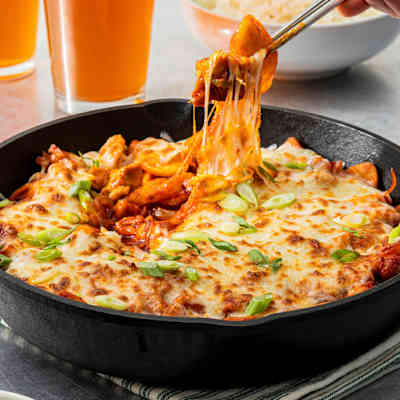
Cheese Buldak (Korean Fire Chicken)
Our version of cheese buldak, or Korean fire chicken, is a spicy, savory-sweet, one-pan drinking snack or quick meal.
Get the Recipe