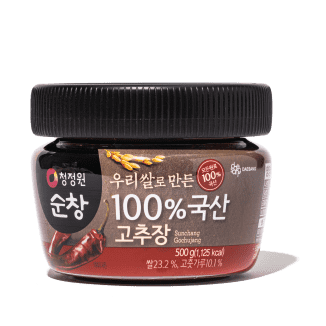
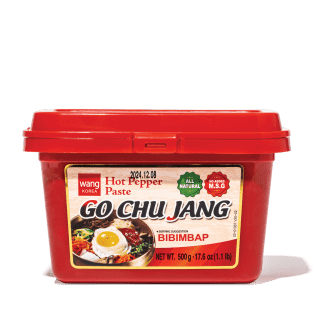


Brilliant red, sweet, spicy-hot, and savory, gochujang is an essential Korean ingredient that enhances the flavors of meats, soups, noodles, vegetables, and sauces. A fermented paste made from Korean red chile peppers (“gochu” means “pepper”; “jang” means “fermented sauce or paste”) plus a handful of other ingredients, it is brimming with umami and adds rich, nuanced flavor and deep crimson color to innumerable dishes, from Korean fried chicken and tteokbokki to bibimbap and more.

“Gochujang is one of the three main jangs in Korea, which are like the mother sauces,” said chef and recipe developer Irene Yoo. “The others are soybean paste (doenjang) and soy sauce (ganjang), and those three are the fermented products that make up the base of a lot of Korean cooking. Gochujang occupies this territory of adding both savory and spice to a dish that is uniquely Korean.”
Gochujang has a long history in Korean culinary tradition. Its specific origins are unclear, but many scholars believe that it came into use in its present form in the 16th century, after Portuguese traders brought chile peppers to Korea. But some historians note that as early as the ninth century, Koreans were making a similar fermented paste with black peppercorns.

In the old days, every Korean family made its own jangs, which would determine how deliciously the family would eat for the coming months or even years.
—Hooni Kim, New York–based chef-owner of Michelin-starred Meju and Little Banchan Shop, in his book, My Korea: Traditional Flavors, Modern Recipes (2020)
How It’s Made
“In the old days, every Korean family made its own jangs, which would determine how deliciously the family would eat for the coming months or even years,” wrote Hooni Kim, New York–based chef-owner of Michelin-starred Meju and Little Banchan Shop, in his book, My Korea: Traditional Flavors, Modern Recipes (2020). “If you have access to high-quality ganjang, doenjang, and gochujang, you’ll be able to cook amazing food.”
All three jangs traditionally begin with meju. These pressed squares of cooked soybeans are tied with stalks of rice straw (which contribute a key bacterium) and hung to air-dry and ferment for months before they are used to make jangs. Traditional gochujang has only a few ingredients, said Sarah Ahn, creator of Ahnest Kitchen and social media coordinator for America’s Test Kitchen.

“It’s typically made by combining gochugaru (Korean red chili powder), rice flour, mejugaru (soy bean powder), and yeotigireum (barley malt powder),” Ahn said. Traditionally the mixture ferments outdoors in huge earthenware pots called onggi for months under the sun.
Today, big-brand manufacturers have figured out ways to speed up or even skip the fermentation steps, and often leave out meju. These products have longer, nontraditional ingredient lists, containing corn syrup, malt syrup and maltodextrin, wheat, garlic, onion, and yeast extract to create the desired sweetness, savoriness, and complexity.
In the national supermarket chain H Mart, which specializes in Korean foods, rows of shelves are packed top to bottom with bright red rectangular plastic tubs of gochujang from major brands in a variety of heat levels and styles, in graduated sizes from tiny to hefty. This is a fairly recent phenomenon in the United States.
“Before, there were like three brands [in a typical Asian market] and we’d pick one,” said Nanam Yoon Myszka, co-owner and chef of Epiphany Farms in central Illinois. “Now there’s a full aisle of gochujang.”

How to Use Gochujang
Gochujang is not a hot sauce or condiment, and it is almost never eaten straight from the container (with the exception of stirring it into bibimbap, where its flavor ties together the array of ingredients), experts said. “Usually you add it when there’s cooking involved,” said Kim. He uses it for marinades and in his restaurant’s popular spicy pork belly sliders.
It’s also typical to add ingredients such as sesame oil, sugar, gochugaru, and vinegar to loosen the texture and balance the flavor of the gochujang and turn it into sauces, including ssamjang, a condiment for lettuce-wrapped meat, and chogochujang (sometimes shortened to “chojang”), a dipping sauce for seafood and sashimi. Many gochujang manufacturers now sell squeeze bottles of gochujang-based sauces made in this way. However, they should not be substituted for gochujang in recipes.

How to Shop
So how do you choose? “It’s up to your preference and how you want to use it,” Myszka said. She cooks with both a “red-tub” consumer brand and traditional fermented gochujang made in Illinois by her Korean mom, who hauls her jars indoors when the Midwest gets too cold.
Yoo has also made her own and buys both artisan and mass-market brands. For tteokbokki, the popular spicy rice cakes, Yoo said, “You want the ‘Heinz-ketchup-classic’ [gochujang] flavor everyone knows and loves, so I would use the red tub. But if I’m making a braised chicken dish, where the gochujang flavor is important, with fewer flavors, I would maybe reach to the artisan ones.”

While most of our lineup was drawn from the most well-known, best-selling Korean-made brands packaged in red plastic tubs at H Mart and other Asian supermarkets, we also bought two traditional artisan-style fermented brands from importer KimCMarket.com. At H Mart we also bought one “premium-style” jarred version of a red-tub supermarket brand. The artisan brands were considerably more expensive (up to six times as much as supermarket tubs), likely because they are made in smaller quantities with traditional ingredients and fermented for months. On the advice of our experts, we chose “medium” heat levels wherever a range was offered (see “What heat level of gochujang should you buy?”). We sampled them first plain and then cooked in tteokbokki.
Bottom line: The results were delicious. While our tasters enjoyed every product in the lineup, we noted a range of differences, just as the experts had described.
Perhaps surprisingly for red chile paste, heat was very rarely our primary impression: Tasters usually found “a good balance of sweet and spicy” and that “heat takes a second to hit and then lingers pleasantly.”
The biggest difference? Sweetness.
Artisan versions were mildly sweet and far more savory than the versions from supermarket brands, with one containing more than twice the sodium of other products in the lineup. Tasters described artisan versions as having “nice complexity, ferment-y aroma and round, full flavors.”
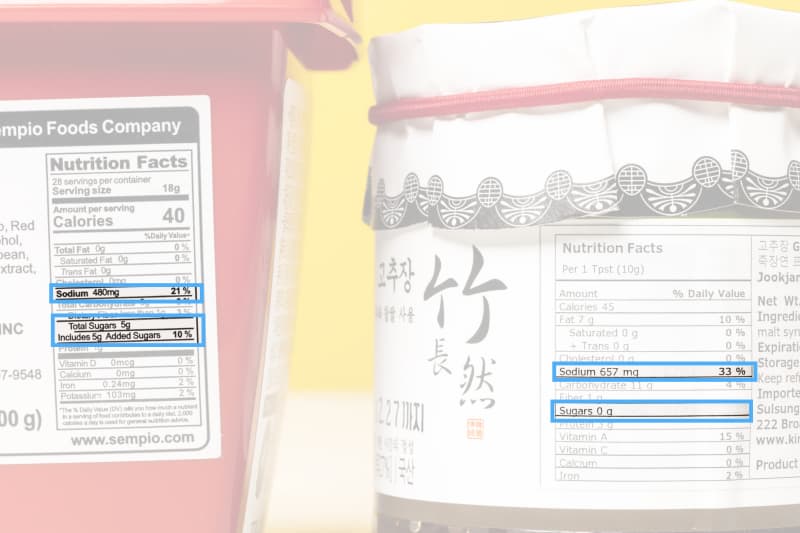
By contrast, the supermarket products were sweeter, with notes like “very sweet, kind of like dried fruit” (or even “gochujang candy” in the one with the highest total added sugar). Comparing ingredient labels bore this out: Artisan products listed much less sugar overall and no added sugars from sweeteners—such as the corn syrup we found in nearly all supermarket products.
As for texture, nearly all had the traditional thick, sticky consistency. Only one was notably “thin” and “runny,” reminding tasters of “sriracha.” (We liked its flavor well enough to ignore the “loose” texture, which didn’t affect our cooking results; we simply simmered it a bit longer to reduce it slightly.)

The Best Gochujang
Our tasters enjoyed all of the gochujang we tasted, so they are all recommended, but we have listed them in the order of our overall preference. Our favorite supermarket product is Wang Gochujang Hot Pepper Paste, which tasters found “deep and savory [with] perfect levels of spice and not too sweet.” Either of the two artisan products or the premium-style supermarket jarred paste would be worth seeking out. Tasters enjoyed the long-fermented Kisoondo Traditional Gochujang for its “almost roasted” flavor with “tons of depth,” and Jookjangyeon Premium Gochujang for its “deep, jewel-like color and flavor that is deep and jammy and rich.”
The Tests
- Taste plain
- Taste in tteokbokki (spicy rice cakes)
How We Rated
- Samples were randomized and assigned three-digit codes to prevent bias.
- Nutritional information was taken from product packaging and standardized for a 1-tablespoon (20-gram) serving size.