
 Buy at Williams Sonoma
 Buy at Amazon
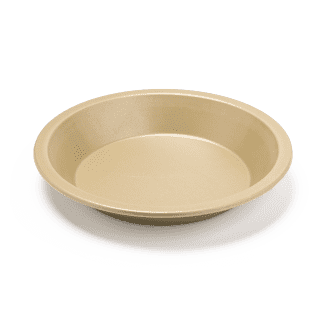
Our favorite pie plates, the Williams Sonoma Goldtouch Pro Nonstick Pie Dish and the USA Pan 9-Inch Pie Pan, are made of thin, lightweight metal. They’re durable and easy to move in and out of the oven. Better still, they brown pie crusts quickly, ensuring crisp, golden pastry that’s never dry. And their sloped sides and flexible metal construction make it easy to cut and extract neat slices of pie.
Looking for a tool to portion and serve that pie? Check out our review of pie servers.

A pie plate is essential to making good pie and quiche. Pie plates are made from a variety of materials and come in different sizes as well. For this review, we focused on pie plates measuring about 9 inches across the top opening of the pie plate, as this is the size that’s most commonly available.
The best pie plates make great pie and quiche—and make it easy to remove slices intact.
What’s the Best Material for a Pie Plate?
There are three main types of pie plates: metal, glass, and ceramic. You can make a great pie with a pie plate of any material, but each type has different thermal characteristics that affect how quickly and evenly your pie or quiche will bake. In particular, the performance of each material is determined by two factors. First, the material’s ability to conduct (versus insulate) heat. Second, its thermal mass, which is determined by the intrinsic heat capacity of the material itself (that is, the amount of heat a material can hold) and the total mass of the material present in the pie plate (how heavy and thick it is).

- Metal: In general, we prefer pie plates made from metal (usually steel or aluminum). Thin, lightweight metal conducts heat better than thicker glass and ceramic do, so pie crust browns more quickly. This makes it less likely that you’ll end up with an underbaked bottom crust, one of the most common problems with double-crust pies. Metal plates have other advantages too. They’re relatively inexpensive, and because they’re so thin and lightweight—generally between 5 and 13 ounces—they’re easy to move in and out of the oven. Metal plates are more flexible than glass and ceramic models, so it’s a touch easier to shimmy a pie server under a pie crust and lift out a slice cleanly. Perhaps most important, they’re quite durable. You can freeze a pie in a metal pie plate and bake it directly from the freezer. And of course, there’s no risk of a metal plate shattering or breaking if you drop it. Metal plates do have a few disadvantages, though. While thin metal plates conduct heat well, they do so somewhat unevenly, so bottom crusts can sometimes brown less uniformly. And many metal pie plates come with nonstick coatings that can scratch and flake off over time. While this minor damage won’t affect the performance of the pan or your health, it’s unsightly. Moreover, we’ve found that metal pans don’t really need a nonstick coating to begin with—they have a natural advantage when it comes to preventing pie dough from sticking (See our FAQ, “Why does pie crust stick more to glass and ceramic pie plates?”), and most pie doughs contain enough fat that the finished crust won’t stick to the metal anyway. If you have a nonstick-coated metal pie plate, we recommend using a pie server with a plastic blade to minimize damage.
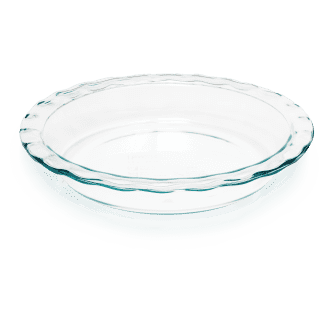
- Glass: Many pie bakers swear by glass pie plates, and there are good reasons for that. Glass pie plates are often inexpensive, and they’re transparent, so it’s easy to monitor the doneness of your crust. They’re heavier than metal plates—the two models we’ve tested weigh between 1.5 and 2.5 pounds—but not so heavy as to be difficult to maneuver. They don’t conduct heat as well as metal plates, so they take longer to brown pie crusts. On the flipside, glass plates are excellent insulators, and because they have greater thermal mass, they maintain heat levels well and release that heat evenly across its surface, resulting in especially uniform browning for a pie’s bottom crust. Just bear in mind that it takes longer for the glass to heat up in the first place, leading to longer baking times—generally adding 10 to 15 minutes more than with pies baked in metal plates. As a result, your crust might get a bit drier and less tender as a result. A few detractors: In the past, we’ve noticed that some crusts seem to stick to glass more than they do to metal. (See our FAQ, “Why does pie crust stick more to glass and ceramic pie plates?”) Glass can also have some durability and use limitations. Obviously, glass plates can break if dropped. And some are susceptible to thermal shock, shattering when their temperature changes dramatically in a short period of time—so you can’t always freeze a pie in a glass plate and bake it directly from the freezer. That said, all three of the glass plates we tested claim to be safe to use in this way. If you own a glass plate, check its manufacturer’s recommendations before freezing and baking a pie in it.

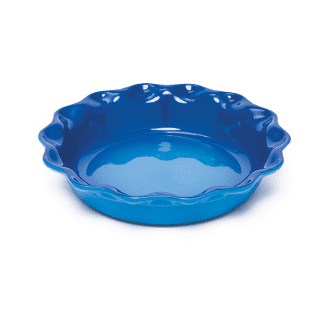
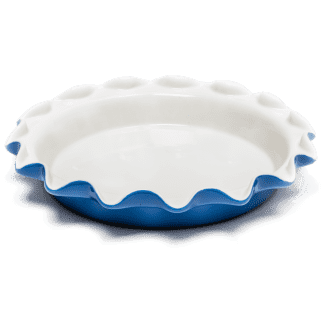
- Ceramic: Ceramic pie plates are the prettiest options on the market, making them an enticing option for some home cooks. (“We eat first with our eyes,” as one pie-loving test cook said.) They can be a little trickier to bake with, though. Ceramic pie plates are even thicker and heavier than glass plates—the models we tested weigh between 2 and 3 pounds—so they can be a bit more of a bear to lift, especially when laden with a full double-crust pie. And because they’re so dense and heavy, they conduct heat the least well of all three materials. All that thermal mass pays off, though: Once they’ve absorbed heat from the oven, they do an excellent job of releasing it steadily across the plate, making for a crust that’s especially evenly browned. But it can take significantly longer to absorb that heat in the first place, so expect the longest baking times for pies set in ceramic plates: In our tests, the thickest, heaviest model took 25 minutes longer than metal models to bake a double-crust apple pie, and the crust was quite dry as a result. And because ceramic pie plates retain so much more heat than other types of pie plates, you have to be careful when baking sensitive quiches or custard pies—the filling will keep cooking for much longer after it’s out of the oven as the ceramic continues to release heat. If you’re willing to tweak recipes slightly for longer cooking times at lower temperatures, however, the results can often be excellent. A few other things to keep in mind with ceramic pie plates: They cost significantly more than other pie plates, and pie crust can stick a little more than we’ve seen with metal plates. Ceramic plates can chip or crack if dropped, and some are susceptible to thermal shock, so you can’t freeze a pie and bake it directly from the freezer. When in doubt, check the manufacturer’s recommendations before freezing and baking.
Regardless of the type of pie plate you choose, a few other factors were essential to our preferences.
What to Look For
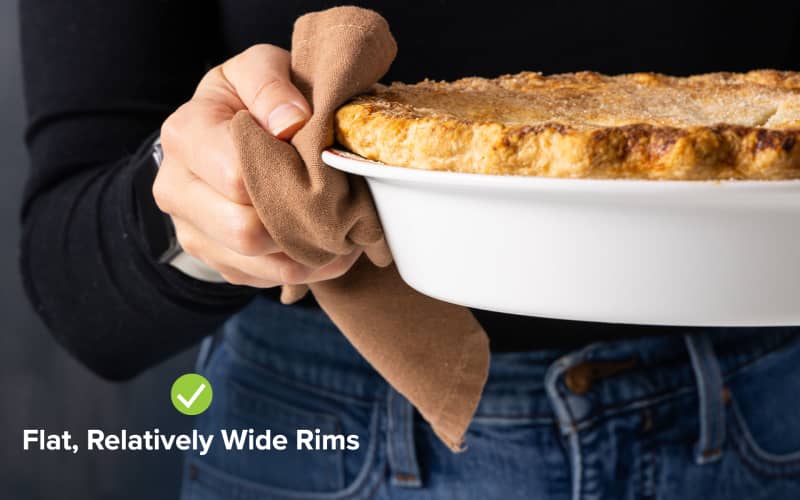
- Flat, Relatively Wide Rims: We preferred models with flat rims measuring at least a half-inch across. These allowed us to execute different types of decorative crimped edges with our pie dough, and the broader these rims were, the more creative latitude we had. (Wider rims were also easier to grab than narrow ones when transporting the pie in and out of the oven.) While we didn’t dislike pie plates that came with fluted edges, they limited the types of crimping we could do to simple wavy edges, making fluted plates less versatile.
- Sloped Sides: We preferred pie plates with sides that sloped in at an angle from the rim. These made it easy to insert a pie server and extract a cleanly cut slice of pie.

- A Moderate Capacity: All the pie plates we tested were approximately the same size, with an interior diameter of about 9 to 9.5 inches; the exact capacity of each model varied depending on the slope and height of the walls, with a low of 4.25 cups for the classic Pyrex glass pie plate and a high of 6 cups for one of the ceramic models. While we were able to make acceptable pies in all the pie plates, our favorite models fell in the middle of the spectrum, with a capacity of about 5.25 cups. Note that wider models (measuring over 9.25 inches in diameter) and taller models (measuring over 1.75 inches in height) may require you to roll the dough a little thinner to cover their larger surface area.


Pie plates with wide, flat rims allow you to crimp your pie crust in a wide variety of styles.
What to Avoid
- Vertical or Steeply Angled Rims: These made it hard to execute certain types of crimping on our pie edges and often encouraged whatever crimps we made to slide downward into the main pie itself.
The Tests
- Bake crumb-crust pie (North Carolina Lemon Pie)
- Bake single-crust pie (Quiche Lorraine) using store-bought crust
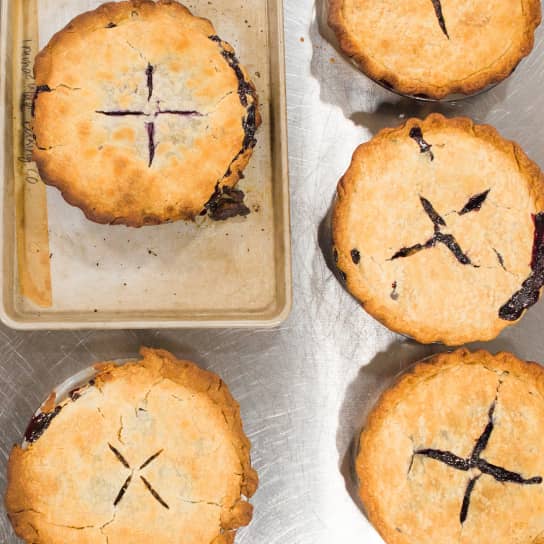
- Bake double-crust pie (Blueberry Pie) using homemade crust
How We Rated
- Performance: We rated the plates on how evenly and quickly they baked different types of pie and quiche.
- Ease of Use: We evaluated the plates on their maneuverability and handling.
- Durability: We rated the plates on how susceptible they were to different types of damage (breaking, warping, scratching).
- Versatility: We evaluated the plates on how easily we were able to produce different types of decorative crimps.