America's Test Kitchen LogoCook's Country LogoCook's Illustrated Logo

Reviews You Can Trust.
See Why.

The Best Cleavers

Cleavers are surprisingly versatile—they can handle everything from light butchery to cubing squash for soup. We tested to find the best.

Headshot of Miye Bromberg
By Miye Bromberg

Last Updated April 29, 2026

Editor&aposs Note:Update, April 2026:

We tested three additional cleavers. Our top choice remains the Global G-12 Meat Cleaver. We have a new Best Buy, the Fuji Cutlery Chinese-Style Cleaver.

What You Need To Know

The best cleavers are durable, easy to handle, and make quick work of light butchery. Our favorite meat cleaver remains the Global G-12 Meat Cleaver. It cuts through bone effortlessly, thanks to its strong, ultrasharp, powerful blade; its handle is long and relatively comfortable for hands of all sizes to hold. Our Best Buy is the Fuji Cutlery Chinese-Style Cleaver. It performs very well at a much lower price point. It’s lighter in weight and easier to wield than our top choice, though it’s also a bit less sharp, powerful, and durable. 

For some kitchen tasks, there’s no tool more perfect than a cleaver. It's made for rough use—its heft and size make it ideal for jobs that might otherwise damage or wear down your chef’s knife, allowing you to chop through whole chickens, whole lobsters, or large squashes with impunity. If you make a lot of stock, for example, a cleaver is a solid investment, as it allows you to expose more of the bone and meat to the water for better flavor extraction. Once you have a cleaver, you might find it handy for other tasks too: mincing raw meat, crushing garlic, bruising lemongrass, cracking open coconuts, and chopping cooked bone-in meat into bite-size pieces. The flat of the blade can even be used like a bench scraper to scoop up chopped items or to flatten and tenderize cutlets.

A cook uses a cleaver to chop through a chicken wingA cook uses a cleaver to chop through butternut squash

We use cleavers to chop through chicken parts when making stock and to cut through dense butternut squash.

For this review, we examined models that ran the gamut from heavy, axe-shaped, Western-style cleavers to Chinese-style cleavers—lighter-weight knives with thinner, more rectangular blades—to hybrid styles that combined attributes from both. And we asked professional cooks and butchers to help us evaluate them.

Article

How to Use a Meat Cleaver

Never used a cleaver before? We have some simple tips to use it safely and effectively.

Learn More

What to Look For

  • Medium Weight: Meat cleavers need to have some heft to them in order to power through flesh and bone. We preferred cleavers in the middle of the weight range, though; those that weighed 14 or 15 ounces were best. These provided enough force to chop bone-in meat and butternut squash but were still light enough to direct effortlessly, allowing us to hit the exact spot we wanted every time. Heavier blades weighing over a pound let gravity do more of the work for them, providing extra power as we chopped. But they were harder to lift repeatedly, which made them more onerous to use for long periods. By contrast, lighter-weight blades were easy to wield but didn’t always have enough power, forcing us to use more muscle to get through bone.
  • Good Balance: We preferred knives whose weight was evenly balanced between the blade and the handle, as we found these easier and more comfortable to wield for long periods.
A cook uses a cleaver to chop through some meat.
We liked cleavers that were well-balanced, with weight equally distributed between handle and blade.
  • Long, Tall, Slightly Curved Blades: We preferred cleavers with blades that were between 6.75 and 7.25 inches long, as these gave us plenty of room to strike larger pieces of chicken or bisect whole butternut squash. Blades that were at least 3 inches tall helped guide the knife straight down through bigger items such as the butternut squash and duck and provided larger surface areas for scooping up chopped food. And we had a small preference for slightly curved blades rather than straight-edged ones; the curved blades allow users to rock back and forth to finish cuts that haven’t been delivered with enough force to get through the food.
  • Sharpness: The sharpness of any blade is determined in part by the angle of the blade on either side of its cutting edge. The narrower the angle, the thinner the cutting edge and the sharper the knife can feel in action—but the more prone that thinner edge can be to chipping or folding. Historically, Western-style cleavers have relatively large edge angles of 20 degrees or more, to help protect the blade against chipping—a bigger concern with cleavers, whose job it is to work through hard bone. While we liked some of the models with these large edge angles well enough, our favorite model had a slightly smaller edge angle of 15 degrees, which made it feel especially sharp and agile. In practice, the sharpness of many of the blades was also determined by a second factor: how well they had been sharpened and honed at the factory or in the shop. Our favorite cleavers were sharp from the get-go and remained so.
A cleaver blade goes through a chicken thigh.
A cleaver blade must be not only powerful but also sharp enough to cut cleanly through food.
  • Moderately Thick Spines: Meat cleavers typically have blades with thicker spines than those seen in most other kitchen knives, with most models measuring 3 to 6 millimeters at their thickest. These thick spines give their blades the extra power and durability they need to make their way through bone. (Thinner blades lacked this power.) That said, we didn’t like cleavers with the very thickest spines, as their blades felt axe-like, wedging into chickens and cracking and tearing butternut squash instead of cleaving it neatly. We preferred those with more moderately thick spines of about 2.5 to 3.3 millimeters, which were thick enough to be powerful and durable, but still felt relatively agile.
Three cleaver blades in profile view, ranging from thinnest to thickest
Cleaver blades have to be moderately thick to be durable and to confer the power needed to chop through flesh and bone. But really thick cleaver blades can be hard to use, and really thin cleaver blades are more fragile, chipping, dulling, and warping more easily.
  • Long, Broad, Grippy Handles: We liked handles measuring at least 4.75 inches in length, as these accommodated both small and large hands easily. And we preferred handles that were neither so thick that we had a hard time keeping our fingers around them nor so narrow that other testers felt they had to clench them tightly to control them: A circumference of 3.25 inches was about right for most people. We generally preferred handles that were made with wood or rubbery plastics, which helped us keep our grip on the cleavers—an important consideration when combining big knives with slippery raw meat. That said, both wood handles and more conventional plastic handles sometimes loosened or even cracked during use—a tendency that diminished their durability.

The Tests:

  • Chop 4 pounds of chicken wings
  • Chop 5 pounds of chicken leg quarters
  • Chop butternut squash into quarters
  • Break down a whole roast duck and chop it into serving-size pieces
  • Ask five test cooks of different hand sizes, dominant hands, and levels of butchering experience to chop 1 pound of chicken parts with each knife
  • Ask two professional butchers to evaluate and test each knife

How We Rated:

  • Performance: We rated each cleaver on how easily and neatly it chopped through raw chicken wings and leg quarters, a whole roast duck, and a butternut squash.
  • Ease of Use: We rated each cleaver on how easy it was to maneuver—how heavy it was and how well balanced.
  • Blade: We rated each cleaver on the design of its blade, characterized by its height, curvature, angle, and thickness at spine and edge.
  • Handle: We rated each cleaver on the design of its handle, as determined by its length, width, affordance, and grippiness.
  • Durability: We rated each cleaver on how well it withstood damage (chipping or dulling of the blade and cracking or loosening of the handle).

Everything We Tested

Good 3 Stars out of 3.
Fair 2 Stars out of 3.
Poor 1 Star out of 3.

Highly Recommended

  • Blade
  • Handle
  • Durability
  • Ease of Use
  • Performance

WinnerGlobal G-12 Meat Cleaver

Our top choice is a stellar performer, though at just 6.25 inches, its blade is a touch shorter than we prefer. Still, its well-balanced weight and very sharp, tall blade made it a pleasure to use, and it sustained relatively little wear and tear during testing. Most testers liked the steel handle, finding it comfortable and surprisingly grippy, though a few testers found it a bit too narrow and one took issue with the ergonomic bumps on its underside.

Model Number: G-12

Weight: 15 oz

Edge Angle: 15°

Blade Height: 3 in

Blade Length: 6.25 in

Handle Length: 5 in

Blade Material : Stainless steel

Handle Material: Stainless steel

Handle Circumference: 3.25 in

Spine Thickness: 3.3 mm

Price at Time of Testing: $179.95

  • Blade
  • Handle
  • Durability
  • Ease of Use
  • Performance

Our top choice is a stellar performer, though at just 6.25 inches, its blade is a touch shorter than we prefer. Still, its well-balanced weight and very sharp, tall blade made it a pleasure to use, and it sustained relatively little wear and tear during testing. Most testers liked the steel handle, finding it comfortable and surprisingly grippy, though a few testers found it a bit too narrow and one took issue with the ergonomic bumps on its underside.

Model Number: G-12

Weight: 15 oz

Edge Angle: 15°

Blade Height: 3 in

Blade Length: 6.25 in

Handle Length: 5 in

Blade Material : Stainless steel

Handle Material: Stainless steel

Handle Circumference: 3.25 in

Spine Thickness: 3.3 mm

Price at Time of Testing: $179.95

Recommended

  • Blade
  • Handle
  • Durability
  • Ease of Use
  • Performance

Suncraft 7" Meat Cleaver

This cleaver was great at cutting through thick bones and dense squash, thanks to its long, slightly curved, well-honed blade. Although the blade’s spine is relatively thick, the sharpness of the blade’s edge ensured that cuts were clean and thorough—the blade never wedged into the food and got stuck halfway through, as with other models with thick blades. The cleaver’s wood handle was long and easy for hands of all sizes to grip. Our main complaint? This cleaver is on the heavy side; while that weight provides extra power with every stroke, the knife can be a bit harder to wield for long periods as a result.

Model Number: n/a

Weight: 1 lb, 4 oz

Edge Angle: Unspecified

Blade Height: 3.6 in

Blade Length: 7 in

Handle Length: 4.9 in

Blade Material: AUS8 Stainless steel

Handle Material: Wood (unspecified)

Handle Circumference: 3.5 in

Spine Thickness: 3.6 mm

Price at Time of Testing: $69.95

  • Blade
  • Handle
  • Durability
  • Ease of Use
  • Performance

This cleaver was great at cutting through thick bones and dense squash, thanks to its long, slightly curved, well-honed blade. Although the blade’s spine is relatively thick, the sharpness of the blade’s edge ensured that cuts were clean and thorough—the blade never wedged into the food and got stuck halfway through, as with other models with thick blades. The cleaver’s wood handle was long and easy for hands of all sizes to grip. Our main complaint? This cleaver is on the heavy side; while that weight provides extra power with every stroke, the knife can be a bit harder to wield for long periods as a result.

Model Number: n/a

Weight: 1 lb, 4 oz

Edge Angle: Unspecified

Blade Height: 3.6 in

Blade Length: 7 in

Handle Length: 4.9 in

Blade Material: AUS8 Stainless steel

Handle Material: Wood (unspecified)

Handle Circumference: 3.5 in

Spine Thickness: 3.6 mm

Price at Time of Testing: $69.95

  • Blade
  • Handle
  • Durability
  • Ease of Use
  • Performance

Victorinox Wood Kitchen Cleaver

This cleaver is one of the heaviest we’ve tested, conferring a fair amount of power with every stroke of its blade, though also proving a bit more fatiguing to lift and maneuver for longer stints. Its long blade spans larger pieces of food easily and is sharp enough that it is able to cut cleanly through food without wedging in, despite its thick spine. We liked its long wood handle, which had a grippy texture that made it easy to grab even when our hands were wet.

Model Number: 5.4000.18

Weight: 1 lb, 4 oz

Edge Angle: 18–20°

Blade Height: 3.6 in

Blade Length: 7 in

Handle Length: 5.5 in

Blade Material: Stainless steel

Handle Material: Wood composite

Handle Circumference: 3.75 in

Spine Thickness: 3.9 mm

Price at Time of Testing: $161

  • Blade
  • Handle
  • Durability
  • Ease of Use
  • Performance

This cleaver is one of the heaviest we’ve tested, conferring a fair amount of power with every stroke of its blade, though also proving a bit more fatiguing to lift and maneuver for longer stints. Its long blade spans larger pieces of food easily and is sharp enough that it is able to cut cleanly through food without wedging in, despite its thick spine. We liked its long wood handle, which had a grippy texture that made it easy to grab even when our hands were wet.

Model Number: 5.4000.18

Weight: 1 lb, 4 oz

Edge Angle: 18–20°

Blade Height: 3.6 in

Blade Length: 7 in

Handle Length: 5.5 in

Blade Material: Stainless steel

Handle Material: Wood composite

Handle Circumference: 3.75 in

Spine Thickness: 3.9 mm

Price at Time of Testing: $161

  • Blade
  • Handle
  • Durability
  • Ease Of Use
  • Performance

Best BuyFuji Cutlery Chinese-Style Cleaver

Made by the Japanese company Tojiro, this inexpensive Chinese-style cleaver had a long, extremely sharp, very slightly curved blade that cut through bone and squash easily. Our complaints were relatively small It’s lighter-weight than we prefer, so we had to use a little more muscle to power through food. And its handle is quite short, so larger hands sometimes felt cramped. Because its blade is on the thinner side, it’s also a bit more prone to chipping. Still, this knife offers excellent value for its price, making it a great entry-level option for those in the market.

Model Number: FA-70

Weight: 11 oz

Edge Angle: Unspecified

Blade Height: 3.4 in

Blade Length: 6.8 in

Handle Length: 3.75 in

Blade Material: Stainless steel

Handle Material: Wood (unspecified)

Handle Circumference: 4 in

Spine Thickness: 2.3 mm

Price at Time of Testing: $50

  • Blade
  • Handle
  • Durability
  • Ease Of Use
  • Performance

Made by the Japanese company Tojiro, this inexpensive Chinese-style cleaver had a long, extremely sharp, very slightly curved blade that cut through bone and squash easily. Our complaints were relatively small It’s lighter-weight than we prefer, so we had to use a little more muscle to power through food. And its handle is quite short, so larger hands sometimes felt cramped. Because its blade is on the thinner side, it’s also a bit more prone to chipping. Still, this knife offers excellent value for its price, making it a great entry-level option for those in the market.

Model Number: FA-70

Weight: 11 oz

Edge Angle: Unspecified

Blade Height: 3.4 in

Blade Length: 6.8 in

Handle Length: 3.75 in

Blade Material: Stainless steel

Handle Material: Wood (unspecified)

Handle Circumference: 4 in

Spine Thickness: 2.3 mm

Price at Time of Testing: $50

  • Blade
  • Handle
  • Durability
  • Ease of Use
  • Performance

Winco 8-inch Chinese Cleaver with Wooden Handle

This cleaver’s very long, very tall, fairly thin blade made it a breeze to maneuver through large butternut squashes and to halve whole ducks, though it sometimes felt a little too big for smaller chicken parts. Because the blade was so thin, its edge felt razor-sharp, but it was also vulnerable to blunting and chipping. And its wooden handle rattled when we chopped, further calling into question its durability. Still, it was generally great at chopping, and we didn’t notice any real decline in sharpness at the end of testing.

Model Number: KC301

Weight: 14 oz

Edge Angle: 25°

Blade Height: 3.5 in

Blade Length: 7.75 in

Handle Length: 4.6 in

Blade Material : Stainless steel

Handle Material: Wood

Handle Circumference: 4 in

Spine Thickness: 2.3 mm

Price at Time of Testing: $10.67

  • Blade
  • Handle
  • Durability
  • Ease of Use
  • Performance

This cleaver’s very long, very tall, fairly thin blade made it a breeze to maneuver through large butternut squashes and to halve whole ducks, though it sometimes felt a little too big for smaller chicken parts. Because the blade was so thin, its edge felt razor-sharp, but it was also vulnerable to blunting and chipping. And its wooden handle rattled when we chopped, further calling into question its durability. Still, it was generally great at chopping, and we didn’t notice any real decline in sharpness at the end of testing.

Model Number: KC301

Weight: 14 oz

Edge Angle: 25°

Blade Height: 3.5 in

Blade Length: 7.75 in

Handle Length: 4.6 in

Blade Material : Stainless steel

Handle Material: Wood

Handle Circumference: 4 in

Spine Thickness: 2.3 mm

Price at Time of Testing: $10.67

Recommended with Reservations

  • Blade
  • Handle
  • Durability
  • Ease of Use
  • Performance

Lamson Products 7.25" Walnut Handle Meat Cleaver

This American-made cleaver recently had some changes made to its construction, with a blade now made from a slightly different steel alloy than when we previously reviewed it. They’ve also improved the build on its wood handle, which no longer has the durability issues we noted previously (the handle once rattled on its rivets). Unfortunately, the company also must have also changed how they sharpen and finish its blade, which now arrives in an extremely dull state, making it particularly hard to use. (We checked two different copies.) Otherwise, this would have been a promising option, with a long blade that handles bigger pieces of food easily and moderate weight for a good balance of power and maneuverability.

Model Number: 33100

Weight: 14 oz

Edge Angle: 20°

Blade Height: 3.7 in

Blade Length: 7.25 in

Handle Length: 5.25 in

Blade Material : 420HC stainless steel

Handle Material: Walnut wood

Handle Circumference: 3.25 in

Spine Thickness: 2.3 mm

Price at Time of Testing: $94.99

  • Blade
  • Handle
  • Durability
  • Ease of Use
  • Performance

This American-made cleaver recently had some changes made to its construction, with a blade now made from a slightly different steel alloy than when we previously reviewed it. They’ve also improved the build on its wood handle, which no longer has the durability issues we noted previously (the handle once rattled on its rivets). Unfortunately, the company also must have also changed how they sharpen and finish its blade, which now arrives in an extremely dull state, making it particularly hard to use. (We checked two different copies.) Otherwise, this would have been a promising option, with a long blade that handles bigger pieces of food easily and moderate weight for a good balance of power and maneuverability.

Model Number: 33100

Weight: 14 oz

Edge Angle: 20°

Blade Height: 3.7 in

Blade Length: 7.25 in

Handle Length: 5.25 in

Blade Material : 420HC stainless steel

Handle Material: Walnut wood

Handle Circumference: 3.25 in

Spine Thickness: 2.3 mm

Price at Time of Testing: $94.99

  • Blade
  • Handle
  • Durability
  • Ease of Use
  • Performance

Kai PRO Cleaver 7-Inch

We had high hopes for this meat cleaver, made by Kai, the same manufacturer as a former winner. For the most part, we liked its handle, which was a good size and shape for most hands, though it was a tad slippery, especially when wet. Its blade was long, tall, and sharp, so it performed serviceably, cleaving chicken parts well. But that same blade also had an incredibly thick spine, wedging into butternut squash instead of cutting through it cleanly. And it was on the heavy side, so it was hard to wield for long stints without our arms and wrists aching.

Model Number: HT7067

Weight: 1 lb, 1 oz

Edge Angle: 16°

Blade Height: 2.75 in

Blade Length: 7 in

Handle Length: 5 in

Blade Material : High-carbon DIN1.4116 steel

Handle Material: High-carbon DIN1.4116 steel

Handle Circumference: 3.25 in

Spine Thickness: 3.5 mm

Price at Time of Testing: $49.93

  • Blade
  • Handle
  • Durability
  • Ease of Use
  • Performance

We had high hopes for this meat cleaver, made by Kai, the same manufacturer as a former winner. For the most part, we liked its handle, which was a good size and shape for most hands, though it was a tad slippery, especially when wet. Its blade was long, tall, and sharp, so it performed serviceably, cleaving chicken parts well. But that same blade also had an incredibly thick spine, wedging into butternut squash instead of cutting through it cleanly. And it was on the heavy side, so it was hard to wield for long stints without our arms and wrists aching.

Model Number: HT7067

Weight: 1 lb, 1 oz

Edge Angle: 16°

Blade Height: 2.75 in

Blade Length: 7 in

Handle Length: 5 in

Blade Material : High-carbon DIN1.4116 steel

Handle Material: High-carbon DIN1.4116 steel

Handle Circumference: 3.25 in

Spine Thickness: 3.5 mm

Price at Time of Testing: $49.93

  • Blade
  • Handle
  • Durability
  • Ease of Use
  • Performance

Mercer Culinary 7" Kitchen Cleave

Built like a battle ax, this cleaver was the heaviest in our testing, with the bulk of its weight in its blade. As a result, it was sometimes hard to aim consistently and to use for long periods of time. Its thick (if relatively sharp) blade was fine for cutting chicken but tended to crack butternut squash and maul delicate roast duck. The handle, while grippy, was too thick for many hands and had a large finger guard that limited its affordance. But this cleaver seemed superdurable—meant to last.

Model Number: M14707

Weight: 1 lb, 5 oz

Edge Angle: 20°

Blade Height: 3.3 in

Blade Length: 7.25 in

Handle Length: 5 in

Blade Material : High-carbon steel

Handle Material: Polypropylene

Handle Circumference: 4 in

Spine Thickness: 4.3 mm

Price at Time of Testing: $58.86

  • Blade
  • Handle
  • Durability
  • Ease of Use
  • Performance

Built like a battle ax, this cleaver was the heaviest in our testing, with the bulk of its weight in its blade. As a result, it was sometimes hard to aim consistently and to use for long periods of time. Its thick (if relatively sharp) blade was fine for cutting chicken but tended to crack butternut squash and maul delicate roast duck. The handle, while grippy, was too thick for many hands and had a large finger guard that limited its affordance. But this cleaver seemed superdurable—meant to last.

Model Number: M14707

Weight: 1 lb, 5 oz

Edge Angle: 20°

Blade Height: 3.3 in

Blade Length: 7.25 in

Handle Length: 5 in

Blade Material : High-carbon steel

Handle Material: Polypropylene

Handle Circumference: 4 in

Spine Thickness: 4.3 mm

Price at Time of Testing: $58.86

  • Blade
  • Handle
  • Durability
  • Ease of Use
  • Performance

Dexter Russell S5387PCP 7" Stainless Cleaver

One of the largest models in our testing, this traditional-looking, blade-heavy cleaver was too big and unwieldy to use comfortably or accurately, wedging (not cutting) through squash and making uneven slices of roast duck. Its blade was relatively sharp but didn’t always feel that way, thanks to its thicker spine. And while we liked the grippiness of its handle, its ergonomic bumps and large bolster limited our grip options. Testers and butchers agreed: Unless you break down whole animals in your spare time, this knife is overkill.

Model Number: S5387PCP

Weight: 1 lb 4 oz

Edge Angle: 20°

Blade Height: 4 in

Blade Length: 7.25 in

Handle Length: 4.5 in

Blade Material : Stain-free high-carbon steel

Handle Material: Polypropylene

Handle Circumference: 4.1 in

Spine Thickness: 3.3 mm

Price at Time of Testing: $38.87

  • Blade
  • Handle
  • Durability
  • Ease of Use
  • Performance

One of the largest models in our testing, this traditional-looking, blade-heavy cleaver was too big and unwieldy to use comfortably or accurately, wedging (not cutting) through squash and making uneven slices of roast duck. Its blade was relatively sharp but didn’t always feel that way, thanks to its thicker spine. And while we liked the grippiness of its handle, its ergonomic bumps and large bolster limited our grip options. Testers and butchers agreed: Unless you break down whole animals in your spare time, this knife is overkill.

Model Number: S5387PCP

Weight: 1 lb 4 oz

Edge Angle: 20°

Blade Height: 4 in

Blade Length: 7.25 in

Handle Length: 4.5 in

Blade Material : Stain-free high-carbon steel

Handle Material: Polypropylene

Handle Circumference: 4.1 in

Spine Thickness: 3.3 mm

Price at Time of Testing: $38.87

  • Blade
  • Handle
  • Durability
  • Ease of Use
  • Performance

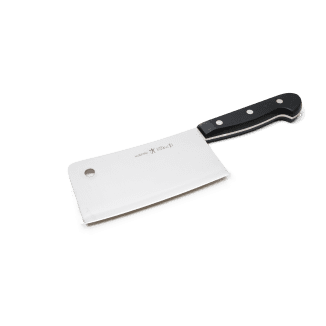
Henckels International 6" Cleaver

This cleaver had a relatively thin, sharp blade and a comfortable (if slightly narrow) handle. If only we could have supersized it! At just 5.75 inches long and weighing just 11 ounces, it felt better suited to butchering quail than chicken. As a result, we struggled a bit to summon the requisite coverage and leverage when breaking down butternut squash or duck. And while sharp, that thin blade was somewhat vulnerable to chipping.

Model Number: 31134-161

Weight: 11 oz

Edge Angle: 17.5°

Blade Height: 2.9 in

Blade Length: 5.75 in

Handle Length: 4.75 in

Blade Material : Stainless high-carbon steel

Handle Material: Polyoxymethylene

Handle Circumference: 3 in

Spine Thickness: 2.5 mm

Price at Time of Testing: $49.95

  • Blade
  • Handle
  • Durability
  • Ease of Use
  • Performance

This cleaver had a relatively thin, sharp blade and a comfortable (if slightly narrow) handle. If only we could have supersized it! At just 5.75 inches long and weighing just 11 ounces, it felt better suited to butchering quail than chicken. As a result, we struggled a bit to summon the requisite coverage and leverage when breaking down butternut squash or duck. And while sharp, that thin blade was somewhat vulnerable to chipping.

Model Number: 31134-161

Weight: 11 oz

Edge Angle: 17.5°

Blade Height: 2.9 in

Blade Length: 5.75 in

Handle Length: 4.75 in

Blade Material : Stainless high-carbon steel

Handle Material: Polyoxymethylene

Handle Circumference: 3 in

Spine Thickness: 2.5 mm

Price at Time of Testing: $49.95

  • Blade
  • Handle
  • Durability
  • Ease of Use
  • Performance

KitchenAid Classic Forged 6-Inch Triple Rivet Cleaver

This inexpensive cleaver did a decent job of chopping chicken parts. But at 6 inches long and 2.7 inches high, the thin, chip-prone blade felt undersized—too small to take on butternut squash or a whole roast duck. Its blade was honed to a 22-degree angle, which meant that it didn’t always feel sharp in action even when it was. Finally, its handle was a little narrow, which cramped larger hands, and a little too slick.

Model Number: KKFTRCLOB

Weight: 11 oz

Edge Angle: 22°

Blade Height: 2.7 in

Blade Length: 6 in

Handle Length: 4.5 in

Blade Material : Stainless steel

Handle Material: ABS plastic

Handle Circumference: 3.1 in

Spine Thickness: 2.5 mm

Price at Time of Testing: $14.98

  • Blade
  • Handle
  • Durability
  • Ease of Use
  • Performance

This inexpensive cleaver did a decent job of chopping chicken parts. But at 6 inches long and 2.7 inches high, the thin, chip-prone blade felt undersized—too small to take on butternut squash or a whole roast duck. Its blade was honed to a 22-degree angle, which meant that it didn’t always feel sharp in action even when it was. Finally, its handle was a little narrow, which cramped larger hands, and a little too slick.

Model Number: KKFTRCLOB

Weight: 11 oz

Edge Angle: 22°

Blade Height: 2.7 in

Blade Length: 6 in

Handle Length: 4.5 in

Blade Material : Stainless steel

Handle Material: ABS plastic

Handle Circumference: 3.1 in

Spine Thickness: 2.5 mm

Price at Time of Testing: $14.98

Discontinued

  • Blade
  • Handle
  • Durability
  • Ease of Use
  • Performance

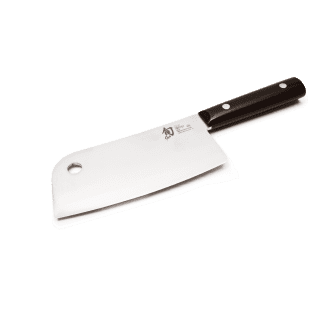
Shun Classic Meat Cleaver

This meat cleaver put grace and beauty into the most barbarous tasks. Its perfectly distributed weight and long, tall, gently curved, razor-sharp blade made for truly effortless chopping. And its long, straight pakkawood handle gave us plenty of grip options, although at times its smooth surface got a little slick. Yes, this cleaver is expensive—but you’ll never need another. Strong and durable, it breezed through testing with minimal wear.

Model Number: DM0767

Weight: 15 oz

Edge Angle: 16°

Blade Height: 3.1 in

Blade Length: 7 in

Handle Length: 4.75 in

Blade Material : High-carbon stainless steel

Handle Material: Ebony pakkawood (wood/plastic composite)

Handle Circumference: 3.25 in

Price at Time of Testing: $149.00

  • Blade
  • Handle
  • Durability
  • Ease of Use
  • Performance

This meat cleaver put grace and beauty into the most barbarous tasks. Its perfectly distributed weight and long, tall, gently curved, razor-sharp blade made for truly effortless chopping. And its long, straight pakkawood handle gave us plenty of grip options, although at times its smooth surface got a little slick. Yes, this cleaver is expensive—but you’ll never need another. Strong and durable, it breezed through testing with minimal wear.

Model Number: DM0767

Weight: 15 oz

Edge Angle: 16°

Blade Height: 3.1 in

Blade Length: 7 in

Handle Length: 4.75 in

Blade Material : High-carbon stainless steel

Handle Material: Ebony pakkawood (wood/plastic composite)

Handle Circumference: 3.25 in

Price at Time of Testing: $149.00

  • Blade
  • Handle
  • Durability
  • Ease of Use
  • Performance

Masui AUS8 Stainless Meat Cleaver 180mm

We loved this well-made, durable, ultra-keen Japanese-made meat cleaver, which effortlessly hewed through everything we put in front of it. Its grippy wood handle was comfortable for hands of all sizes to hold, even when dealing with raw, slippery chicken parts. Two tiny quibbles: Its blade is a touch shorter in height than we prefer, so it isn’t quite as easy to direct through food. And its weight falls toward the tip of the blade.

Model Number: HIRO-CH8A-180T

Weight: 14.5 oz

Edge Angle: 15°

Blade Height: 2.6 in

Blade Length: 7 in

Handle Length: 4.75 in

Blade Material : 7 in

Handle Material: Wenge wood

Handle Circumference: 3.1 in

Price at Time of Testing: $90.00

  • Blade
  • Handle
  • Durability
  • Ease of Use
  • Performance

We loved this well-made, durable, ultra-keen Japanese-made meat cleaver, which effortlessly hewed through everything we put in front of it. Its grippy wood handle was comfortable for hands of all sizes to hold, even when dealing with raw, slippery chicken parts. Two tiny quibbles: Its blade is a touch shorter in height than we prefer, so it isn’t quite as easy to direct through food. And its weight falls toward the tip of the blade.

Model Number: HIRO-CH8A-180T

Weight: 14.5 oz

Edge Angle: 15°

Blade Height: 2.6 in

Blade Length: 7 in

Handle Length: 4.75 in

Blade Material : 7 in

Handle Material: Wenge wood

Handle Circumference: 3.1 in

Price at Time of Testing: $90.00

  • Blade
  • Handle
  • Durability
  • Ease of Use
  • Performance

Messermeister Park Plaza 7" Kitchen Cleaver

This cleaver won over testers with its sharp, clean cuts and long, sturdy, comfortable (if slightly narrow) handle. Lightweight, it was easy to lift, but it required a little extra force to drive through bigger bones. A few testers wished its machete-like blade were a bit taller—it was trickier to direct through a big butternut squash and a whole duck, and we couldn’t scoop as much food up with it. Because the blade was thin, it chipped a little, but this knife still felt keen and capable at the end of testing.

Model Number: 8009-7

Weight: 11 oz

Edge Angle: 20°

Blade Height: 2.5 in

Blade Length: 7 in

Handle Length: 4.75 in

Blade Material : High-carbon stain-free steel

Handle Material: Polyoxymethylene

Handle Circumference: 3.1 in

Price at Time of Testing: $82.50

  • Blade
  • Handle
  • Durability
  • Ease of Use
  • Performance

This cleaver won over testers with its sharp, clean cuts and long, sturdy, comfortable (if slightly narrow) handle. Lightweight, it was easy to lift, but it required a little extra force to drive through bigger bones. A few testers wished its machete-like blade were a bit taller—it was trickier to direct through a big butternut squash and a whole duck, and we couldn’t scoop as much food up with it. Because the blade was thin, it chipped a little, but this knife still felt keen and capable at the end of testing.

Model Number: 8009-7

Weight: 11 oz

Edge Angle: 20°

Blade Height: 2.5 in

Blade Length: 7 in

Handle Length: 4.75 in

Blade Material : High-carbon stain-free steel

Handle Material: Polyoxymethylene

Handle Circumference: 3.1 in

Price at Time of Testing: $82.50

Victorinox Swiss Army Fibrox Pro Restaurant Cleaver

The handle on this cleaver was great—long and grippy. But the thin blade was shaped like a machete’s and was slightly weighted toward the tip, throwing off the cleaver’s balance. It wasn’t very tall, so it was harder to direct downward through butternut squash. Worse, it was inexplicably blunt and became blunter over the course of testing. This cleaver was the lightest one we tested, which meant we had to use more force to drive it home. Still, it did a decent job of chopping through chicken parts.

Model Number: 40590

Weight: 10 oz

Edge Angle: 15°

Blade Height: 2.6 in

Blade Length: 7.25 in

Handle Length: 4.75 in

Blade Material : Stainless steel

Handle Material: Fibrox (Thermoplastic elastomers)

Handle Circumference: 3.5 in

Price at Time of Testing: $54.58

The handle on this cleaver was great—long and grippy. But the thin blade was shaped like a machete’s and was slightly weighted toward the tip, throwing off the cleaver’s balance. It wasn’t very tall, so it was harder to direct downward through butternut squash. Worse, it was inexplicably blunt and became blunter over the course of testing. This cleaver was the lightest one we tested, which meant we had to use more force to drive it home. Still, it did a decent job of chopping through chicken parts.

Model Number: 40590

Weight: 10 oz

Edge Angle: 15°

Blade Height: 2.6 in

Blade Length: 7.25 in

Handle Length: 4.75 in

Blade Material : Stainless steel

Handle Material: Fibrox (Thermoplastic elastomers)

Handle Circumference: 3.5 in

Price at Time of Testing: $54.58

  • Blade
  • Handle
  • Durability
  • Ease of Use
  • Performance

Wüsthof Grand Prix II 6" Cleaver

Testers were divided on this European-style cleaver. Some loved the power and durability afforded by its weighty construction, but others found it awkward and blade-heavy, in part because of an unusually long bolster, which threw off the balance. The blade itself was very sharp, but because it was also very thick and had a large edge angle, it sometimes wedged itself inside butternut squash instead of slicing through cleanly. Some testers also wished the blade were just a bit taller and longer.

Model Number: 4675

Weight: 1 lb 3 oz

Edge Angle: 30°

Blade Height: 2.8 in

Blade Length: 6.25 in

Handle Length: 4.6 in

Blade Material : High-carbon stain-free steel

Handle Material: Polypropylene

Handle Circumference: 3.25 in

Price at Time of Testing: $99.95

  • Blade
  • Handle
  • Durability
  • Ease of Use
  • Performance

Testers were divided on this European-style cleaver. Some loved the power and durability afforded by its weighty construction, but others found it awkward and blade-heavy, in part because of an unusually long bolster, which threw off the balance. The blade itself was very sharp, but because it was also very thick and had a large edge angle, it sometimes wedged itself inside butternut squash instead of slicing through cleanly. Some testers also wished the blade were just a bit taller and longer.

Model Number: 4675

Weight: 1 lb 3 oz

Edge Angle: 30°

Blade Height: 2.8 in

Blade Length: 6.25 in

Handle Length: 4.6 in

Blade Material : High-carbon stain-free steel

Handle Material: Polypropylene

Handle Circumference: 3.25 in

Price at Time of Testing: $99.95

America's Test Kitchen Accolades Badge

Reviews You Can Trust

The mission of America’s Test Kitchen Reviews is to find the best equipment and ingredients for the home cook through rigorous, hands-on testing. We stand behind our winners so much that we even put our seal of approval on them. Have a question or suggestion? Send us an email at atkreviews@americastestkitchen.com. We appreciate your feedback!

The Expert

Author: Miye Bromberg

Miye Bromberg

Deputy Editor, ATK Reviews

Miye is the deputy editor for ATK Reviews. She covers bread, booze, and blades.

Miye Bromberg is the deputy editor for ATK Reviews. Areas of specialization include bread, booze, and blades. A native of New York, she now lives in Kentucky, where she spends her free time thinking about film, tending her garden, and traveling long distances to eat dosas.

Appears In

This item is featured in the following. Click the links to dig in!

*All products reviewed by America’s Test Kitchen are independently chosen, researched, and reviewed by our editors. We buy products for testing at retail locations and do not accept unsolicited samples for testing. We list suggested sources for recommended products as a convenience to our readers but do not endorse specific retailers. When you choose to purchase our editorial recommendations from the links we provide, we may earn an affiliate commission. Prices are subject to change.

Reviews You Can Trust.
See Why.

This is a members' feature.
America's Test Kitchen LogoCook's Country LogoCook's Illustrated Logo