

 Buy at Amazon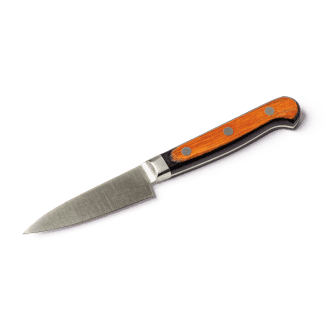
 Buy at Korin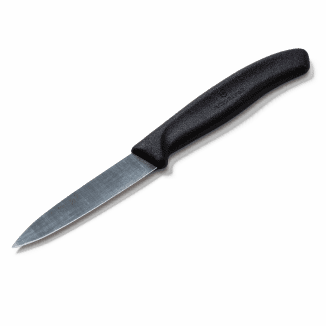
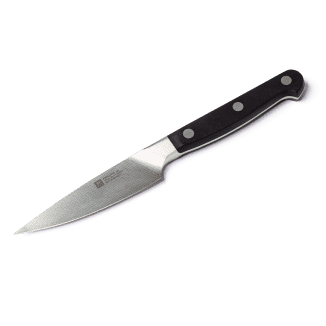
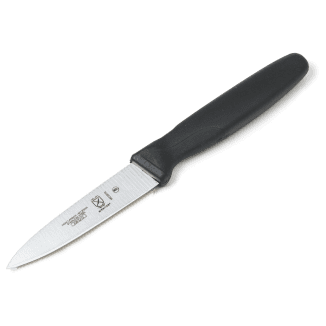
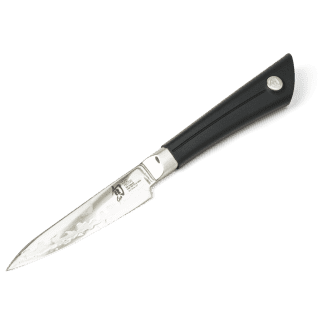
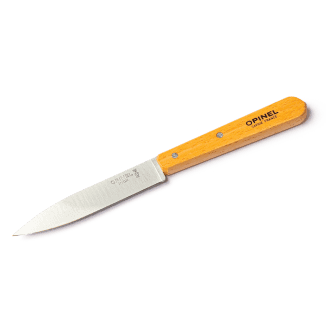
The best paring knives are sharp, nimble, and easy to hold. We think that most people will be happy with our overall winner, the Mercer Culinary Renaissance Paring Knife. Its sharp, fairly narrow blade peels, hulls, slices, and minces beautifully; the handle is comfortable for hands of all sizes to hold. Our Upgrade Pick is the Suisin Inox Paring 3.1" knife. While the price is substantially higher, you get a more luxurious user experience, a beautiful, nicely finished wooden handle, and an exceptionally sharp, hard blade. Our Best Buy is a longtime favorite, the Victorinox Swiss Classic Paring Knife. You won’t find a better value than this inexpensive paring knife, with a relatively sharp, pointy blade and a grippy plastic handle. It looks and feels utilitarian but works well. Finally, if you do a lot of intricate off-the-board tasks (peeling asparagus, de-veining shrimp), you might prefer a bird’s beak paring knife. They’re less versatile than regular paring knives but perform niche, off-the-board tasks exceptionally well.

A good paring knife is one of the three essential knives we think every home cook should have. (Chef’s and serrated are the other two.) We love using paring knives for small, intricate cuts, where bigger knives would feel awkward or oversized. They afford more precision and agility.


We use paring knives for a wide variety of tasks, including checking the doneness of potatoes (left) and segmenting citrus (right).
We use paring knives both on a cutting board—slicing limes and lemons into wedges and mincing shallots and garlic—and off a cutting board, for tasks we perform in hand, such as peeling apples, hulling strawberries, and stemming tomatoes. We use the tip to check the doneness of different foods, poking boiled potatoes to gauge how soft they are, or subtly nicking salmon fillets to see if they’ve cooked through. We even use paring knives for light butchery, making surgical incisions into pork chops we want to stuff, deveining shrimp, and deboning chicken breasts.
What Are the Different Types of Paring Knives?
Paring knives come in a number of styles, each defined by the shape of the blade. Classic paring knives resemble mini chef’s knives: the blade is roughly triangular, with an edge that is lightly curved or sloped and meets the relatively straight spine to form a pointy tip. By contrast, spear-point paring knives have blades that are quite narrow from heel to tip, and resemble, well, spears, with acute, symmetrical points. More rarely, you’ll also see sheep’s-foot paring knives, which resemble mini santoku. These have straight blade edges and spines that have a pronounced downward curve toward the tip, forming a blunt, rounder “foot.”

We didn’t have a distinct preference between the different styles and appreciated models in all three categories. That said, the shape of the blade does determine the kinds of tasks at which each type excels. Like the chef’s knives they resemble, classic paring knives and the one sheep’s-foot-esque paring knife we tested were best for on-the-board tasks: their taller blades elevated our knuckles higher above the board, so they didn’t scrape as much when we minced shallots or garlic, and their sloped or slanted edges let us rock through the cuts. Spear-point paring knives shone brightest with off-the-board tasks, their narrow blades proving especially easy to control when peeling apples or hulling strawberries.

Which type of paring knife is best for you? The good news is that you can’t go too far wrong, as our top choices can do it all. Our winner is something of a hybrid, with a blade that’s triangular (like a classic paring knife) but fairly narrow (like a spear-point paring knife.)
That said, if you have large hands and never plan to peel an apple by hand and exclusively use your paring knife to chop fruit, vegetables, and cheese on a cutting board, you might prefer a more traditional classic model. And if you primarily use your paring knife for off-the-board peeling and hulling or precise incisions, a spear-point model such as our Best Buy might be the way to go.
Do You Need to Buy an Expensive Paring Knife?
Not necessarily. Spending more money on a paring knife will usually get you a few things. First, expensive paring knives are more likely to have a blade that is made from harder steel and is sharpened and honed more finely, which makes for very keen cutting. They may also have handles that are made from nicer materials than plastic (often wood) and are finished more carefully (sanded edges, nicely varnished or oiled surfaces). Overall, options like our Upgrade Pick, the Suisin Inox Paring 3.1" knife, look and feel a bit nicer than your average knife. But we don’t think you need to spend a lot to get a paring knife that’s sharp, nimble, and durable. Our top choice, the Mercer Culinary Renaissance Paring Knife, is all of these things and more and costs about a fifth of what the Suisin model does. Our Best Buy, the Victorinox Swiss Classic Paring Knife, is even less expensive; it’s not the most beautiful knife on the market, but it offers amazing value for your dollar.

What to Look for
- A Sharp Blade: A sharp blade is essential for any knife, but particularly a paring knife, since it performs some of the most fussy, precise tasks in the kitchen. Two main factors determine sharpness. One is edge angle—the angle of the blade on either side of its cutting edge. The narrower the angle, the thinner the cutting edge and the sharper the knife can feel in action. Most of the knives we tested had fairly narrow edge angles of 10 to 20 degrees, which would—in theory—be enough of an angle to make a knife feel sharp. (A few Japanese models had asymmetrical blades, where the two sides of the blade’s bevel are cut at different angles.) In practice, the sharpness of many of the blades came down to a second factor: how well they had been sharpened and honed at the factory or in the shop. The best paring knives were razor-sharp, gliding through tomatoes and paper with nary a hitch.
- A Relatively Short Blade: While paring knives come in a variety of sizes, those with 3- to 4-inch-long blades are most common, comprising the bulk of the models we’ve tested. There’s no wrong size here, just tradeoffs. The longer the blade, the bigger the food it can handle on the cutting board, but the less control you’ll have over that blade for off-the-board tasks. In general, our testers preferred knives with blades on the shorter end of the spectrum; 3 to 3.5 inches gave us a bit more control and precision as we sliced, peeled, and hulled.

- Thin to Moderately Thin Spines: We prefer blades with spines thinner than 1.5 millimeters, as these were able to glide through food especially easily, making the most delicate, precise cuts in shallots and cheese. Blades with thinner spines tended to be thinner overall, too, with the thinnest blades becoming somewhat flexible—which was ideal for peeling the rounded contours of an apple or lemon.
- Light Weight: None of the paring knives we tested was exactly a burden to hold, but we still preferred models that were fairly light, weighing about 20 to 60 grams (0.7 to 2.1 ounces). These were easier to wield for longer periods of time, especially for intricate tasks such as hulling strawberries.
- A Moderately Long, Grippy Handle: We preferred handles of about 4 inches long. Shorter handles were harder for large-handed testers to grip comfortably, and longer handles sometimes bumped into our wrists as we cut. We also preferred wood or textured plastic handles; they were easier to grip, especially with wet or messy foods.

What to Avoid
- A Dull or Poorly Sharpened Blade: A dull blade will crush food instead of slicing it—the worst possible fate when performing the kinds of delicate tasks you use a paring knife for. For this reason, it’s especially important that the knife be properly sharpened at the factory or shop. Some of the knives we tested came out of the box disappointingly blunt, incapable of all but the most basic tasks (cutting cheese or quartering apples).
- Thick Spines: While thick spines can be useful in chef’s knives, conferring extra power, they don’t make sense for paring knives, which excel at intricate tasks. Paring knives with thick spines—1.6 millimeters or greater—wedged into blocks of cheese, apples, and shallots instead of slicing through them smoothly.

Other Considerations
- Knuckle Clearance (Blade Heel Height): As mentioned above, classic paring knives have more triangular blades that taper distinctly from heel to tip. Because the blades are usually taller at the heel than spear-point and sometimes sheep’s-foot knives, they lift your hand higher above the cutting board for slicing and mincing. If you have large hands or work with your paring knife on a cutting board exclusively, you might prefer a more classic model with a heel height greater than 0.75 inch. Spear-point paring knives have blades that are narrow from heel to tip, and most don’t elevate your hand far above the cutting board, though some models have handles that are slightly offset from the blade to help keep your knuckles from dragging. Because they have a slimmer, narrower profile (usually with a heel height shorter than 0.75 inch), spear-point paring knives are best for peeling, hulling, and other off-the-board tasks. Our winner and Upgrade Pick both split the difference between the styles. Both have triangular blades, but moderate heel height, so they can perform both on- and off-the-board tasks well; they just don’t provide quite as much knuckle clearance as some of the more classic paring knives do.

The Tests
- Evaluate sharpness using industrial sharpness-testing machine and paper test at beginning and end of testing
- Mince shallot
- Hull and quarter 5 strawberries
- Peel and segment oranges into supremes
- Peel, quarter, core, and slice apples
- Slice 8-ounce block of cheddar cheese
- Have 5 users with different dominant hands evaluate
How We Rated
- Blade: We evaluated the design of the blade and how it contributed to the knife’s ability to cut foods evenly and precisely.
- Handle: We evaluated the design of the handle and how comfortable it was for hands of different sizes to hold and grip.
- Sharpness: We rated the blades on how sharp they were straight out of the box and how well they retained their edge over the course of testing.

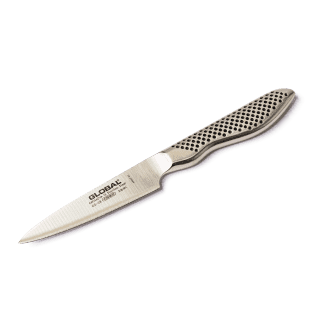
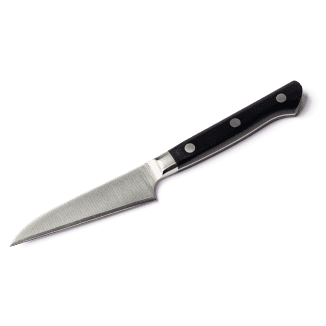
 Buy at Chef Knives To Go