Basil Pesto
By America's Test KitchenPublished on March 11, 2013
Time
25 minutes
Yield
Makes 3/4 cup, enough for 1 pound of pasta
Italian Name:
Pesto alla genovese
Ingredients
Before You Begin
Pounding the basil releases its flavorful oils into the pesto more readily. Basil usually darkens in homemade pesto, but you can boost the green color a little by adding the optional parsley. For sharper flavor, substitute one tablespoon finely grated pecorino Romano cheese for one tablespoon of the Parmesan. The pesto can be kept in an airtight container, covered with a thin layer of oil (1 to 2 tablespoons), and refrigerated for up to four days or frozen for up to one month.
Instructions
- Toast the nuts in a small, heavy skillet over medium heat, stirring frequently, until just golden and fragrant, about 5 minutes; set aside. Add the garlic to the empty skillet and toast over medium heat, shaking the pan occasionally, until fragrant and the color of the cloves deepens slightly, about 7 minutes. Let the garlic cool slightly, then peel, and chop.
- Place the basil and parsley (if using) in a heavy-duty 1-gallon zipper-lock plastic bag. Pound the bag with the flat side of a meat pounder or rolling pin until all the leaves are bruised.
- Process the nuts, garlic, herbs, oil, and 1⁄2 teaspoon salt in a food processor until smooth, stopping as necessary to scrape down the sides of the bowl, about 1 minute. Stir in the Parmesan and season with salt and pepper to taste.


Time
25 minutesYield
Makes 3/4 cup, enough for 1 pound of pastaItalian Name:
Pesto alla genoveseIngredients
Test Kitchen Techniques
Ingredients
Test Kitchen Techniques
Ingredients
Test Kitchen Techniques
Why This Recipe Works
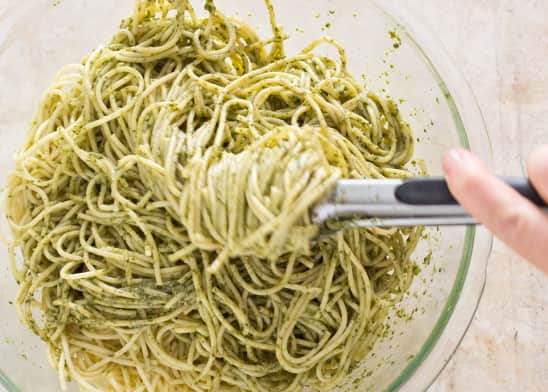
Our goal in developing our pesto recipe was to heighten the basil and subdue the garlic flavors so that each major element balanced the other. We started with plenty of fresh basil, pounded to bruise it and release flavorful oils. To tame the raw garlic edge, we toasted it, toasting the nuts as well to give them flavor. We used a food processor to combine the ingredients in our pesto recipe quickly and easily, then thinned out the mixture with a little pasta water before tossing with the pasta; this allowed for good distribution throughout the pasta, softened the flavors, and highlighted the creaminess of the cheese and nuts.







153 Comments