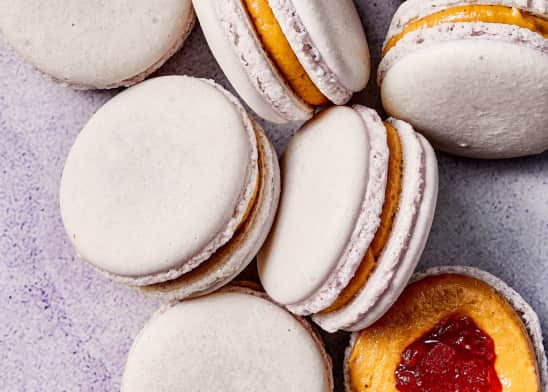
Macarons with Peanut Butter Cream and Jam
By Steve DunnPublished on December 4, 2023
Time
1½ hours, plus 24 hours chilling
Yield
Makes 30 cookies
Ingredients
Macaron Shells
150 grams blanched, finely ground almond flour 150 grams confectioners' sugar ⅛ teaspoon table salt 113 grams egg whites (measure from lightly beaten whites of 4 large eggs), divided⅛ teaspoon cream of tartar 150 grams granulated sugar 60 grams water 3–7 drops gel food coloringPeanut Butter Cream and Jam Filling
¾ cup creamy peanut butter 4 tablespoons unsalted butter 1 cup (4 ounces) confectioners' sugar ¼ cup seedless strawberry jamBefore You Begin
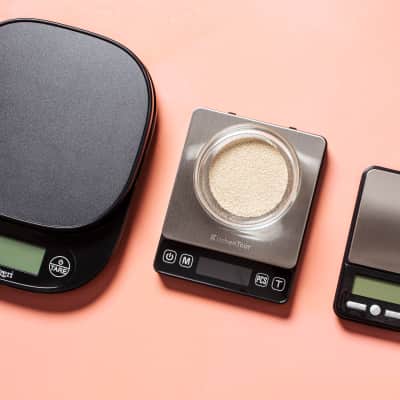
A kitchen scale that weighs in grams is essential for this recipe; you'll also need a large piping bag and ½-inch round tip. A macaron mat—a silicone mat that’s marked with guides for piping—can be used instead of parchment paper. Lightly beating the egg whites makes it easier to obtain a precise measurement. Be sure to use finely ground almond flour; Blue Diamond or Bob's Red Mill products work well. Do not use liquid food coloring as it will add too much water to the batter. Use 3 drops of gel for pastel shells and 7 drops for a more vibrant color. We like strawberry jam here, but feel free to use the jam of your choice. This recipe involves multitasking; read it carefully and make sure to have your ingredients and equipment in place before you begin.
Instructions
- Using pencil and 1½-inch round biscuit cutter as guide, trace thirty 1½-inch circles on each of 2 pieces of parchment (5 evenly spaced rows of 6 circles on each piece of parchment). Spray 2 baking sheets with vegetable oil spray. Place templates pencil side down on baking sheets and smooth to adhere. Sift flour, confectioners' sugar, and salt through fine-mesh strainer into large bowl and set aside.
- Measure 75 grams of egg whites into bowl of stand mixer fitted with whisk attachment (reserve remaining whites). Add cream of tartar. Start mixer on medium-high speed and whip until soft peaks form, 2 to 3 minutes (see "A" in "Making the Shells"). Turn mixer to lowest speed and let run while you make sugar syrup.
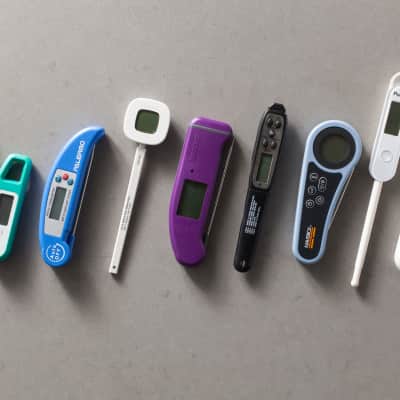
- Using heatproof spatula, gently stir sugar and water together in small saucepan. Cook over medium-high heat, without stirring, until sugar dissolves. Continue to cook, checking temperature frequently, until sugar syrup reaches 245 degrees, 4 to 5 minutes.
- When syrup reaches 245 degrees, quickly remove pan from heat; adjust mixer speed to medium; and carefully pour syrup into whites in thin, steady stream (avoid hitting whisk; aim for side of bowl just above whites; see "B" in "Making the Shells"). Add food coloring; increase speed to medium-high; and continue to whip until meringue is just shy of stiff peaks (very tip of peak should bend to 2 or 3 o'clock), 3 to 5 minutes (see "C" in "Making the Shells").
- Transfer meringue and reserved 38 grams egg whites to almond flour mixture. Using large rubber spatula, stir to incorporate. Turning bowl, stir and smear batter against sides of bowl, scraping sides and bottom frequently until batter loosens and flows from spatula in slow, wide stream for 8 to 10 seconds and reincorporates into batter within about 30 seconds (see "D" in "Making the Shells"). (To test consistency, place spoonful of batter on prepared sheet and let sit for 1 minute. If batter spreads into flat, smooth-topped disk, continue with recipe; if it remains domed, continue stirring, taking care not to overmix, and retest.)
- Transfer batter to pastry bag fitted with ½-inch round tip. Hold bag perpendicular to sheet and about ½ inch above sheet. Using template as guide, pipe batter into 1½-inch-wide disks, keeping bag still as batter flows from tip. To finish each disk, use quick flick of your wrist to cut off batter stream (see "E" in "Making the Shells"). Rap sheets firmly on counter 6 times to release air bubbles. Let rest until shells form skin that can be touched gently with your finger without marring surface, about 20 minutes ("F" in "Making the Shells"). While shells dry, adjust oven rack to lower-middle position and heat oven to 325 degrees.
- Bake 1 sheet of shells for 13 minutes. To test for doneness, place your finger gently on top of 1 shell and move it side to side; if center feels loose and jiggly, continue to bake, checking every minute, until firm. Transfer sheet to wire rack and bake remaining shells. Let shells cool completely on sheets. While shells cool, make filling.
- Microwave peanut butter and butter in medium bowl until butter is melted, about 40 seconds. Using rubber spatula, stir in sugar until combined. Cool to room temperature. Transfer to pastry bag fitted with ½-inch round or star tip.
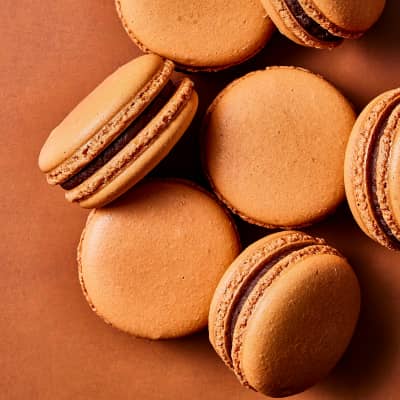
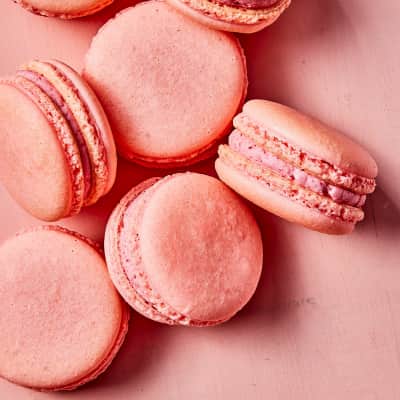
- Gently peel shells from parchment (see "G" in "Making the Shells"). (If shells don't release cleanly, place sheets in freezer for 10 minutes.) Holding 1 upturned shell in your hand, pipe ring of peanut butter cream on top, leaving ⅛-inch border. Spoon ½ teaspoon jam inside peanut butter ring. Place second shell on top of filling, pressing gently until filling spreads to edges. Repeat with remaining shells, filling, and jam. Arrange cookies on clean parchment-lined sheet and wrap well. Refrigerate for at least 24 hours or up to 1 week or freeze for up to 2 months. Bring to room temperature before serving.
for the macaron shells
for the peanut butter cream and jam filling
to assemble


Time
1½ hours, plus 24 hours chillingYield
Makes 30 cookiesIngredients
Macaron Shells
Peanut Butter Cream and Jam Filling
Test Kitchen Techniques
Ingredients
Macaron Shells
Peanut Butter Cream and Jam Filling
Test Kitchen Techniques
Ingredients
Macaron Shells
Peanut Butter Cream and Jam Filling
Test Kitchen Techniques
Why This Recipe Works
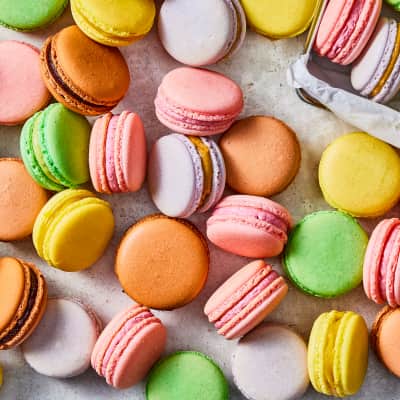
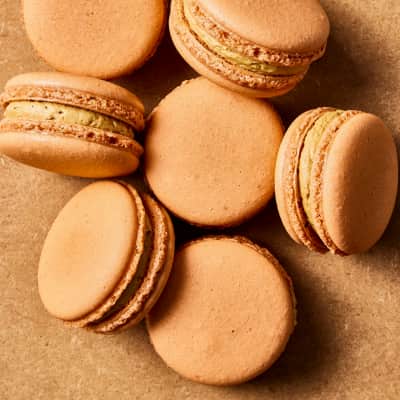
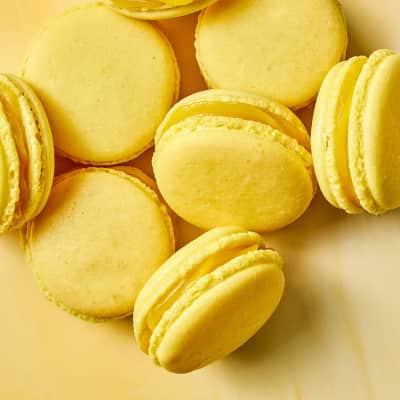
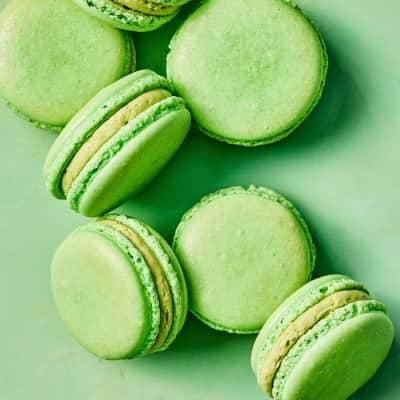
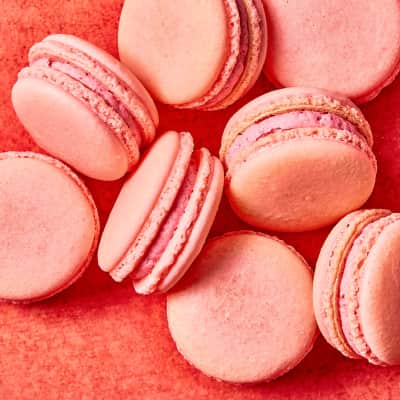
Few confections have captured the world's attention quite like Parisian macarons, the cookie comprised of two colorful almond meringues (“shells”) sandwiched around a luscious filling. These small treasures have become a rite of passage for home bakers. For our version, we started by sifting finely ground almond flour together with confectioners' sugar to eliminate lumps and ensure the smoothest shells. Our next step was to prepare an Italian meringue, a remarkably sturdy type that we found afforded the baker lots of control during macaronage, the process of mixing the dry ingredients together with the meringue. The goal of macaronage is to partially deflate the batter by eliminating the largest air bubbles. Once the batter reached the proper consistency, we piped it into rounds and then let the shells rest for 20 minutes. While the shells sat, a skin formed that prohibited steam from escaping through the top during baking; instead the steam was forced out along the perimeter of the base, forming the macaron's hallmark ruffled “foot.” We also discovered that even the slightest puff of air trapped under the parchment could impact the even rise of the cookie; that's why we stuck the parchment to the sheet with vegetable oil spray. To fill the shells, we offer a multitude of choices, including this peanut butter cream with a dollop of jam.
Want more? Read the whole story


8 Comments