America's Test Kitchen LogoCook's Country LogoCook's Illustrated LogoAmerica's Test Kitchen LogoCook's Country LogoCook's Illustrated Logo

Gua Bao with Braised Pork Belly, Seasoned Daikon, and Hoisin-Soy Sauce

By Steve Dunn

Published on August 6, 2024

Time

3¾ hours, plus 1½ hours rising

Yield

Serves 6 to 8
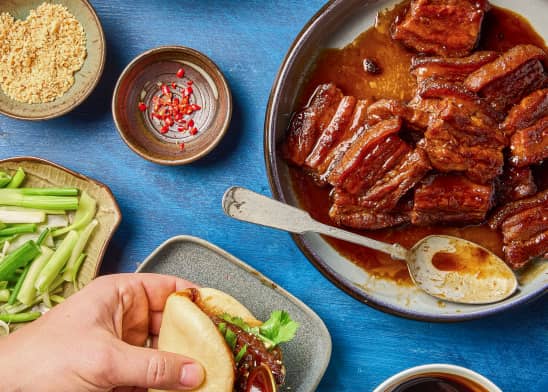
Gua Bao with Braised Pork Belly, Seasoned Daikon, and Hoisin-Soy Sauce

Ingredients

BRAISED PORK BELLY

1 (2-pound) skin-on center-cut fresh pork belly, about 1½ inches thick1 tablespoon vegetable oil 3 cups water ¼ cup Shaoxing wine or dry sherry3 tablespoons hoisin sauce 3 tablespoons soy sauce 3 tablespoons oyster sauce 3 tablespoons packed brown sugar 3 whole dried arbol chiles 3 garlic clove, smashed and peeled2 star anise pods 1 (1-inch) piece ginger, peeled and cut into thirds

SEASONED DAIKON

8 ounces daikon radish, peeled, halved lengthwise, and sliced crosswise ⅛ inch thick1 tablespoon sugar ½ teaspoon table salt

HOISIN-SOY SAUCE

¼ cup hoisin sauce 1 tablespoon soy sauce

BAO

2½ cups (12½ ounces) all-purpose flour 1 tablespoon sugar 1¾ teaspoons instant or rapid-rise yeast 1 teaspoon baking powder ½ teaspoon table salt 1 cup warm whole milk (100 degrees)2 tablespoons vegetable shortening ¼ teaspoon plus 2 tablespoons vegetable oil, divided
1¼ cups fresh cilantro leaves and stems, trimmed3 scallions, halved lengthwise and cut into 2-inch pieces⅓ cup dry-roasted peanuts, chopped2 Thai chiles, stemmed, seeded, and minced (optional)

Before You Begin

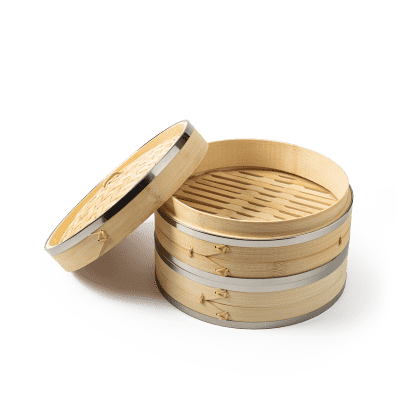
This recipe requires a bamboo steamer basket; a steamer insert can be used, but the buns will need to be steamed in several batches. Be sure to ask for a flat, rectangular section of skin-on pork belly with roughly equal amounts of meat and fat. We prefer to use a chopstick for shaping and moving the buns, which relaxes the dough so the buns maintain their shape when steamed, but you can also use a bamboo skewer. We strongly recommend that you measure the flour for the bao by weight. An equal amount of lard or vegetable oil can be substituted for the shortening, though the buns will not be as tender and fluffy if made with vegetable oil. Two percent low-fat milk can be used instead of whole milk. We recommend making the pork belly and garnishes before preparing the buns.

Instructions

  1. FOR THE PORK BELLY: Using sharp chef's knife, slice pork into ¾-inch-wide strips. Cut strips crosswise to make 16 evenly sized pieces (2 to 2½ inches long). Heat oil in Dutch oven over medium-high heat until shimmering. Add pork in single layer (if needed, wait for some pieces to render fat and shrink before adding remainder) and cook until golden brown, 15 to 20 minutes, flipping pieces halfway through cooking.
  2.  Meanwhile, combine water, Shaoxing wine, hoisin, soy sauce, oyster sauce, and sugar in bowl.
  3. Add water mixture, arbols, garlic, star anise, and ginger to pot with pork. Bring to boil over high heat, then adjust heat to maintain vigorous simmer. Cover and cook, stirring occasionally and adjusting heat as necessary to maintain vigorous simmer, until pork is tender and fork inserted into meat meets little resistance, about 1 hour.
  4. Off heat, use slotted spoon to transfer pork to bowl. Pour liquid into fat separator and let settle for 5 minutes; discard solids. Return defatted liquid to pot and cook over medium heat until reduced to 1 cup, about 15 minutes. Stir in pork, cover, and keep warm until ready to serve. (Braised pork belly can be refrigerated for up to 2 days. To reheat, cook over low heat in covered Dutch oven until warmed through.)
  5. FOR THE SEASONED DAIKON: Toss daikon, sugar, and salt together in bowl. Cover and refrigerate until ready to use. (Daikon can be refrigerated for up to 24 hours.)
  6. FOR THE HOISIN-SOY SAUCE: Combine hoisin and soy sauces in small bowl.
  7. FOR THE BAO: Using stand mixer fitted with dough hook, mix flour, sugar, yeast, baking powder, and salt on low speed until combined, about 30 seconds. Add milk and shortening and continue to mix until no dry flour remains and dough has formed ball around hook, about 2 minutes longer. Increase speed to medium-low and knead until dough is smooth and pulls away from sides of bowl, 5 minutes.
  8. Transfer dough to counter and knead briefly to form smooth ball. Grease medium bowl with ¼ teaspoon oil. Place dough in bowl and roll in oil to coat. Arrange dough in bowl seam side down and cover. Let rise until doubled in volume, about 1 hour.
  9. While dough rises, cut sixteen 4-inch squares of parchment paper. Divide squares evenly between 2 rimmed baking sheets (8 squares per sheet). Place remaining 2 tablespoons oil in small bowl.
  10. Transfer dough to counter. Press dough gently but firmly to expel all air. Knead briefly to form smooth ball. Using bench scraper or chef's knife, cut dough in half. Return half of dough to bowl and cover.
  11. Roll remaining dough into 8-inch log. Cut log into 8 equal portions (about 1⅓ ounces each) and cover. Using your fingertips, pat 1 portion to ¼-inch-thick disk (keep remaining portions covered). Fold edges toward center and pinch to form ball. Turn ball pinched side down and round to form smooth sphere. Cover and repeat with remaining 7 portions.
  12. Roll 1 dough ball into 6-inch oval. Transfer to small cutting board or plate and brush lightly with oil. Lightly brush chopstick with oil and lay it horizontally across center of oval. Fold oval in half over chopstick to form bun. Using chopstick, lift dough (it should drape evenly over both sides) and transfer to parchment square. Gently pull out chopstick, leaving bun folded. Repeat with remaining dough balls. Cover buns and let rise until slightly puffy, about 30 minutes. Repeat steps 11 and 12 with remaining dough, placing buns on second prepared sheet.
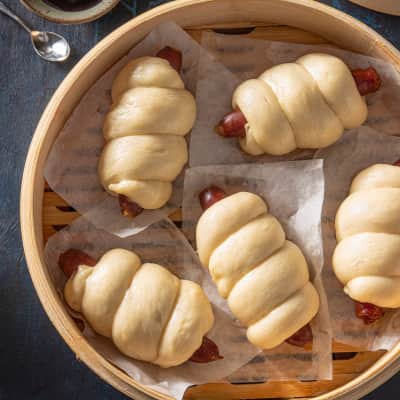
  13. Meanwhile, bring 4 cups water to boil in 14-inch flat-bottomed wok or 12-inch skillet. Arrange first batch of buns, on parchment squares, in two 10-inch bamboo steamer baskets (4 buns per basket). Stack baskets and cover. Reduce heat to maintain simmer and set steamer in wok. Steam buns for 10 minutes (do not uncover, as buns might collapse; small wisps of steam should escape from beneath lid during cooking). Off heat, remove steamer from wok and let rest, covered, for 5 minutes. Transfer buns, still on parchment, to wire rack. Steam remaining buns.
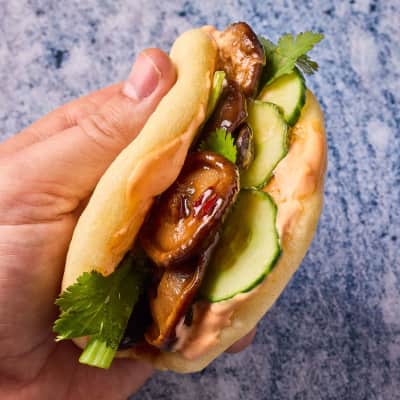
  14. To serve, place slice of pork inside bun. Garnish with seasoned daikon; hoisin-soy sauce; cilantro; scallions; peanuts; and Thai chiles, if using. Serve immediately.
  15. STORAGE AND REHEATING: Bao can be kept covered at room temperature for up to 3 hours or refrigerated for up to 3 days. To serve, resteam (on parchment squares) for 2 to 3 minutes. Alternatively, bao can be frozen for up to 1 month. Arrange cooled bao (on parchment squares) in zipper-lock bag. To serve, steam from frozen (on parchment squares) until warmed through, 7 to 8 minutes.

Gua Bao with Braised Pork Belly, Seasoned Daikon, and Hoisin-Soy Sauce

Save

Time

3¾ hours, plus 1½ hours rising

Yield

Serves 6 to 8

Ingredients

BRAISED PORK BELLY

1 (2-pound) skin-on center-cut fresh pork belly, about 1½ inches thick
1 tablespoon vegetable oil
3 cups water
¼ cup Shaoxing wine or dry sherry
3 tablespoons hoisin sauce
3 tablespoons soy sauce
3 tablespoons oyster sauce
3 tablespoons packed brown sugar
3 whole dried arbol chiles
3 garlic clove, smashed and peeled
2 star anise pods
1 (1-inch) piece ginger, peeled and cut into thirds

SEASONED DAIKON

8 ounces daikon radish, peeled, halved lengthwise, and sliced crosswise ⅛ inch thick
1 tablespoon sugar
½ teaspoon table salt

HOISIN-SOY SAUCE

¼ cup hoisin sauce
1 tablespoon soy sauce

BAO

2½ cups (12½ ounces) all-purpose flour
1 tablespoon sugar
1¾ teaspoons instant or rapid-rise yeast
1 teaspoon baking powder
½ teaspoon table salt
1 cup warm whole milk (100 degrees)
2 tablespoons vegetable shortening
¼ teaspoon plus 2 tablespoons vegetable oil, divided
1¼ cups fresh cilantro leaves and stems, trimmed
3 scallions, halved lengthwise and cut into 2-inch pieces
⅓ cup dry-roasted peanuts, chopped
2 Thai chiles, stemmed, seeded, and minced (optional)

Test Kitchen Techniques

Ingredients

BRAISED PORK BELLY

1 (2-pound) skin-on center-cut fresh pork belly, about 1½ inches thick
1 tablespoon vegetable oil
3 cups water
¼ cup Shaoxing wine or dry sherry
3 tablespoons hoisin sauce
3 tablespoons soy sauce
3 tablespoons oyster sauce
3 tablespoons packed brown sugar
3 whole dried arbol chiles
3 garlic clove, smashed and peeled
2 star anise pods
1 (1-inch) piece ginger, peeled and cut into thirds

SEASONED DAIKON

8 ounces daikon radish, peeled, halved lengthwise, and sliced crosswise ⅛ inch thick
1 tablespoon sugar
½ teaspoon table salt

HOISIN-SOY SAUCE

¼ cup hoisin sauce
1 tablespoon soy sauce

BAO

2½ cups (12½ ounces) all-purpose flour
1 tablespoon sugar
1¾ teaspoons instant or rapid-rise yeast
1 teaspoon baking powder
½ teaspoon table salt
1 cup warm whole milk (100 degrees)
2 tablespoons vegetable shortening
¼ teaspoon plus 2 tablespoons vegetable oil, divided
1¼ cups fresh cilantro leaves and stems, trimmed
3 scallions, halved lengthwise and cut into 2-inch pieces
⅓ cup dry-roasted peanuts, chopped
2 Thai chiles, stemmed, seeded, and minced (optional)

Test Kitchen Techniques

Ingredients

BRAISED PORK BELLY

1 (2-pound) skin-on center-cut fresh pork belly, about 1½ inches thick
1 tablespoon vegetable oil
3 cups water
¼ cup Shaoxing wine or dry sherry
3 tablespoons hoisin sauce
3 tablespoons soy sauce
3 tablespoons oyster sauce
3 tablespoons packed brown sugar
3 whole dried arbol chiles
3 garlic clove, smashed and peeled
2 star anise pods
1 (1-inch) piece ginger, peeled and cut into thirds

SEASONED DAIKON

8 ounces daikon radish, peeled, halved lengthwise, and sliced crosswise ⅛ inch thick
1 tablespoon sugar
½ teaspoon table salt

HOISIN-SOY SAUCE

¼ cup hoisin sauce
1 tablespoon soy sauce

BAO

2½ cups (12½ ounces) all-purpose flour
1 tablespoon sugar
1¾ teaspoons instant or rapid-rise yeast
1 teaspoon baking powder
½ teaspoon table salt
1 cup warm whole milk (100 degrees)
2 tablespoons vegetable shortening
¼ teaspoon plus 2 tablespoons vegetable oil, divided
1¼ cups fresh cilantro leaves and stems, trimmed
3 scallions, halved lengthwise and cut into 2-inch pieces
⅓ cup dry-roasted peanuts, chopped
2 Thai chiles, stemmed, seeded, and minced (optional)

Test Kitchen Techniques

Why This Recipe Works

Gua bao is a popular street food in Taiwan that's become even more common in the United States. We made our bao with a combination of yeast, baking powder, and vegetable shortening to give the buns superior tenderness and loft. All-purpose flour, milk, and modest amounts of sugar and salt delivered a tender bun with a well-balanced flavor that paired well with a savory filling. For our Americanized filling, we braised pork belly with deeply savory ingredients such as soy sauce and hoisin sauce. Fresh ginger, garlic, and dried chiles provided aromatic complexity and depth. Texturally contrasting garnishes such as daikon, scallions, and cilantro offered crispness, crunch, and freshness. Like most braises, the pork belly freezes beautifully, so it can be made well in advance of serving. Similarly, the bao, once fully cooled, can be frozen and easily reheated (from frozen) in a steamer in just 7 to 8 minutes. The sauces, seasoned vegetables, and fresh garnishes can be prepped hours in advance, and when paired with quickly reheated buns and fillings, yield a make-ahead star that tastes every bit as good as it did when freshly made.

Want more? Read the whole story

Before You Begin

This recipe requires a bamboo steamer basket; a steamer insert can be used, but the buns will need to be steamed in several batches. Be sure to ask for a flat, rectangular section of skin-on pork belly with roughly equal amounts of meat and fat. We prefer to use a chopstick for shaping and moving the buns, which relaxes the dough so the buns maintain their shape when steamed, but you can also use a bamboo skewer. We strongly recommend that you measure the flour for the bao by weight. An equal amount of lard or vegetable oil can be substituted for the shortening, though the buns will not be as tender and fluffy if made with vegetable oil. Two percent low-fat milk can be used instead of whole milk. We recommend making the pork belly and garnishes before preparing the buns.

Instructions

  1. FOR THE PORK BELLY: Using sharp chef's knife, slice pork into ¾-inch-wide strips. Cut strips crosswise to make 16 evenly sized pieces (2 to 2½ inches long). Heat oil in Dutch oven over medium-high heat until shimmering. Add pork in single layer (if needed, wait for some pieces to render fat and shrink before adding remainder) and cook until golden brown, 15 to 20 minutes, flipping pieces halfway through cooking.
  2.  Meanwhile, combine water, Shaoxing wine, hoisin, soy sauce, oyster sauce, and sugar in bowl.
  3. Add water mixture, arbols, garlic, star anise, and ginger to pot with pork. Bring to boil over high heat, then adjust heat to maintain vigorous simmer. Cover and cook, stirring occasionally and adjusting heat as necessary to maintain vigorous simmer, until pork is tender and fork inserted into meat meets little resistance, about 1 hour.
  4. Off heat, use slotted spoon to transfer pork to bowl. Pour liquid into fat separator and let settle for 5 minutes; discard solids. Return defatted liquid to pot and cook over medium heat until reduced to 1 cup, about 15 minutes. Stir in pork, cover, and keep warm until ready to serve. (Braised pork belly can be refrigerated for up to 2 days. To reheat, cook over low heat in covered Dutch oven until warmed through.)
  5. FOR THE SEASONED DAIKON: Toss daikon, sugar, and salt together in bowl. Cover and refrigerate until ready to use. (Daikon can be refrigerated for up to 24 hours.)
  6. FOR THE HOISIN-SOY SAUCE: Combine hoisin and soy sauces in small bowl.
  7. FOR THE BAO: Using stand mixer fitted with dough hook, mix flour, sugar, yeast, baking powder, and salt on low speed until combined, about 30 seconds. Add milk and shortening and continue to mix until no dry flour remains and dough has formed ball around hook, about 2 minutes longer. Increase speed to medium-low and knead until dough is smooth and pulls away from sides of bowl, 5 minutes.
  8. Transfer dough to counter and knead briefly to form smooth ball. Grease medium bowl with ¼ teaspoon oil. Place dough in bowl and roll in oil to coat. Arrange dough in bowl seam side down and cover. Let rise until doubled in volume, about 1 hour.
  9. While dough rises, cut sixteen 4-inch squares of parchment paper. Divide squares evenly between 2 rimmed baking sheets (8 squares per sheet). Place remaining 2 tablespoons oil in small bowl.
  10. Transfer dough to counter. Press dough gently but firmly to expel all air. Knead briefly to form smooth ball. Using bench scraper or chef's knife, cut dough in half. Return half of dough to bowl and cover.
  11. Roll remaining dough into 8-inch log. Cut log into 8 equal portions (about 1⅓ ounces each) and cover. Using your fingertips, pat 1 portion to ¼-inch-thick disk (keep remaining portions covered). Fold edges toward center and pinch to form ball. Turn ball pinched side down and round to form smooth sphere. Cover and repeat with remaining 7 portions.
  12. Roll 1 dough ball into 6-inch oval. Transfer to small cutting board or plate and brush lightly with oil. Lightly brush chopstick with oil and lay it horizontally across center of oval. Fold oval in half over chopstick to form bun. Using chopstick, lift dough (it should drape evenly over both sides) and transfer to parchment square. Gently pull out chopstick, leaving bun folded. Repeat with remaining dough balls. Cover buns and let rise until slightly puffy, about 30 minutes. Repeat steps 11 and 12 with remaining dough, placing buns on second prepared sheet.
  13. Meanwhile, bring 4 cups water to boil in 14-inch flat-bottomed wok or 12-inch skillet. Arrange first batch of buns, on parchment squares, in two 10-inch bamboo steamer baskets (4 buns per basket). Stack baskets and cover. Reduce heat to maintain simmer and set steamer in wok. Steam buns for 10 minutes (do not uncover, as buns might collapse; small wisps of steam should escape from beneath lid during cooking). Off heat, remove steamer from wok and let rest, covered, for 5 minutes. Transfer buns, still on parchment, to wire rack. Steam remaining buns.
  14. To serve, place slice of pork inside bun. Garnish with seasoned daikon; hoisin-soy sauce; cilantro; scallions; peanuts; and Thai chiles, if using. Serve immediately.
  15. STORAGE AND REHEATING: Bao can be kept covered at room temperature for up to 3 hours or refrigerated for up to 3 days. To serve, resteam (on parchment squares) for 2 to 3 minutes. Alternatively, bao can be frozen for up to 1 month. Arrange cooled bao (on parchment squares) in zipper-lock bag. To serve, steam from frozen (on parchment squares) until warmed through, 7 to 8 minutes.

Gift This Recipe

Enjoyed this dish? Let others know by sharing it as a gift recipe.

This is a members' feature.