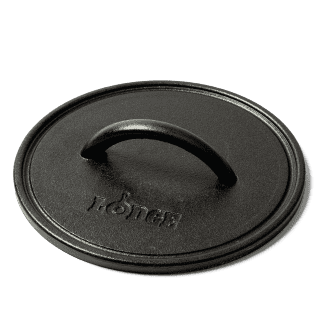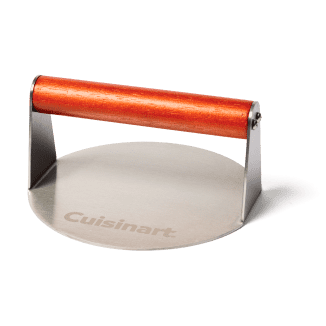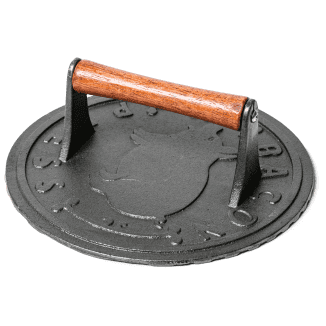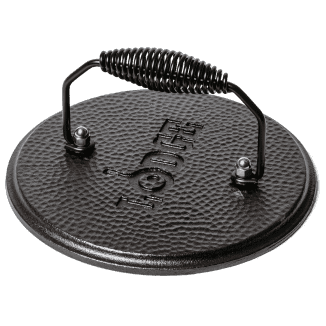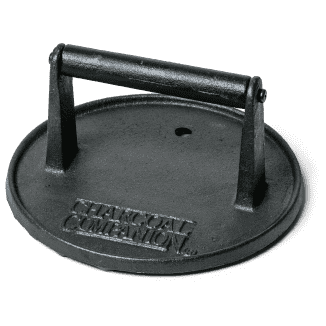
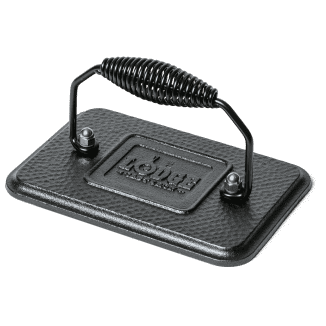


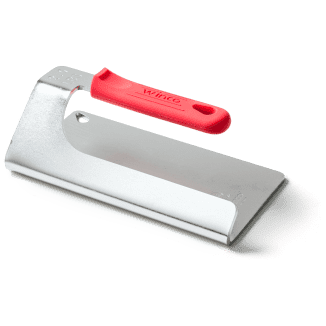
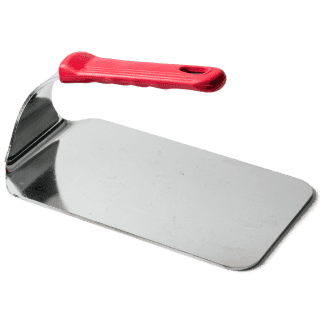
The best grill presses are easy to use and let you sear and brown all kinds of foods well. Our top choice is the Lodge Rectangular Cast Iron Grill Press 6.75" x 4.5". It’s perfect for smashing burgers, searing thick steaks and salmon fillets, and producing perfectly browned panini. And its tall handle keeps your hands a safe distance from spatters and the heat of the pan. If you’d like a stainless-steel option, we also like the Winco Steak Weight with Red Silicone Sleeve, NSF. It’s a little lighter and a bit more slippery than our top choice, but it performs well, requires no extra care, and can be thrown in the dishwasher for cleaning.

Grill presses, sometimes called bacon presses, burger presses, or steak weights, are heavy metal disks or rectangles that are placed on top of food as it cooks in a skillet or on a griddle. These weights press food against the cooking surface, preventing the food from curling or buckling as it cooks and ensuring that it browns evenly and completely. In diners, it’s common for professional short-order cooks to use grill presses to pin down bacon, grilled cheese and other sandwiches, steaks, and more on the flat-top grills from which the presses get their name.

They’re also the tool of choice for making crispy smashed burgers. But a good grill press’s uses go far beyond diner fare. They’re ideal for ensuring that any food you cook in a skillet or griddle gets that perfect sear. Pan-roasted vegetables, fish fillets, and meats of all kinds really benefit from that extra weight. If you have never quite gotten the skin on your salmon as crisp as you’d like, have wanted a photoshoot-worthy steak with a thick crust that’s brown from edge to edge, or have just been looking for the best Skillet-Roasted Broccoli of your life, you should invest in a grill press.
What’s the Best Material for a Grill Press?
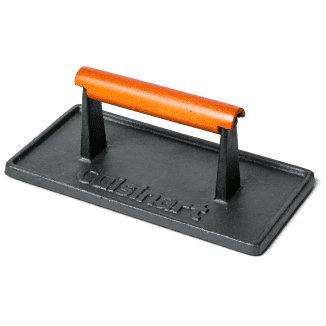
It depends. Grill presses can be made from either stainless steel or cast iron, and each type has advantages. Stainless-steel models require no seasoning or maintenance and can even be thrown in the dishwasher for cleaning. They usually weigh less than cast-iron models—most of the stainless presses we’ve tested clocked in under 2 pounds. Their surfaces can be a touch slippery, though, making them a little harder to keep on top of irregularly shaped food such as fillets of fish or broccoli florets. Cast-iron models usually come preseasoned, but they do require some care to maintain; the finish can erode and rust if you leave them wet, so you’ll need to dry and oil them after use. They’re usually heavier—over 2 pounds—and really shine when you put that heft to use, smashing burgers or weighing down thick steaks and panini made with crusty bread, though many can handle more delicate food just as well. Most have a slightly rough texture that helps them grip food, so they stay on top more securely. And because heavy cast iron retains more heat than lighter stainless steel, you can even preheat them on the range before putting them on your food—a trick that allows you to grill your sandwich or steak from both sides at once.

We have a slight preference for models made from cast iron, but you can’t go wrong with either type. Ultimately, the choice of which to get depends on whether you’re willing to perform occasional maintenance on your press or you prefer not to think about it.
What to Look for
- Moderate Size: In general, it’s a good idea to use a press that’s at least as big as the food you’re cooking; the press can’t weigh down food it doesn’t touch. We liked presses with a surface area of about 30 square inches—roughly the size of a paperback book. This was large enough to hold down most sandwiches, steaks, and pieces of fish and to smash quarter-pound burgers.

- Moderate Weight: Models that weighed 1.5 to 2.5 pounds were the most versatile—these presses were heavy enough to hold down everything from softer grilled cheese sandwiches to thick steaks without damaging them.
- Flat Surfaces: We had a slight preference for presses with flat surfaces over those with ridged or studded surfaces. Smooth presses were easier to clean and didn’t significantly alter the appearance of any food we made with them. By contrast, ridged and studded presses sometimes put their mark on the softer foods we made, digging little divots and grooves into delicate salmon and soft grilled cheese sandwiches and preventing these foods from browning as evenly when we flipped the foods afterward. They made attractive grill marks on food when we preheated them, but we preferred the uniformly colored, deep-brown crusts and crispy, crunchy exteriors created by smooth presses.
When preheated, presses with smooth surfaces such as the one here made uniformly brown grilled cheese sandwiches. Presses with textured surfaces “branded” sandwiches, which we didn’t always like.
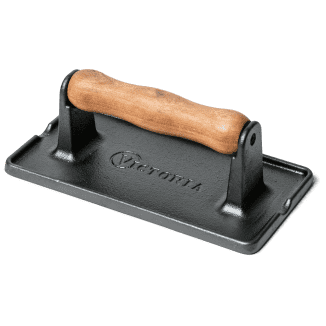
- Large, Tall Handles: We liked presses with big handles that rose at least 2 inches above the cooking surface; these were easy to grab and kept our hands a safer distance from the heat. Smaller handles that sat lower were a bit harder to grab with a dish towel or pot holder and brought our fingers closer to the hot cooking surface.
What to Avoid
- Large Size: Although large presses of 40 square inches or more—about the size of a salad plate—could sometimes hold down two or more pieces of food at a time, they didn’t always perform very well when they did, delivering wan, wet salmon fillets, steaks, and burgers. Why? The larger presses acted like lids, trapping heat and steam above and between the pieces of food, inhibiting the food’s ability to brown before it was cooked through. We also had difficulty balancing some of the largest presses on more irregularly shaped pieces of food like salmon fillets. Unless you regularly cook single large pieces of food, we think you’re better off with a smaller press.
- Light or Heavy Weight: Models that weighed less than 1.5 pounds were great at pressing delicate grilled cheese sandwiches, but they didn’t always produce a good sear on more substantial foods, sometimes allowing salmon fillets to buckle in the hot skillet and leaving parts of their skin flabby. We also had to use more force to smash burgers with them, since the press itself did less of the work for us. Presses weighing more than 3.5 pounds were too heavy: Though they were great at smashing burgers into crisp patties, these models compressed the rounded flesh of salmon fillets and squashed grilled cheese sandwiches, pushing the melting cheese out.
Other Considerations
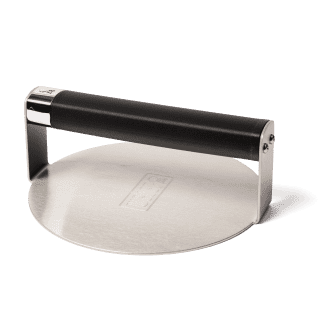
- Shape: In our testing, round and rectangular presses were equally successful, at least in theory. Most of our top-rated models were rectangular, though our preferences weren’t informed by their shape but rather their overall size, weight, and ease of handling. Many of the round models we tested were larger than we prefer or had other issues that prevented us from fully recommending them.
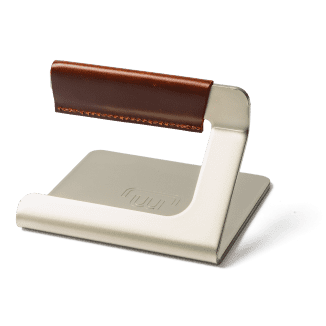
- Handle Covers: Some stainless-steel models come with silicone or leather sheaths on their handles. These helped protect our hands against the handle’s heat, but they had to be removed and cleaned after every use, as they often picked up food spatters. Ultimately, we didn’t have a strong preference for or against them.
The Tests
- Use when cooking bacon
- Use when cooking grilled cheese sandwiches and panini
- Use when searing salmon fillets
- Use when searing steaks
- Use when smashing and searing burgers
- Wash and dry after every use according to manufacturer’s instructions
How We Rated
- Ease of Use: We evaluated the presses on how easy they were to lift and maneuver.
- Performance: We rated the models on how well they pressed different types of food and on the appearance of the foods after pressing.
- Durability/Cleanup: We evaluated the models on how easy they were to clean and how well they stood up to heat and repeat use.
 Buy at WebstaurantStore