

Do you know the muffin man? Well, forget him. Around these parts it’s the muffin woman. Or at least that’s what I’ve been calling myself after making 10 batches of muffins, 10 batches of cupcakes, and 10 batches of single-serve frittatas in a single week.
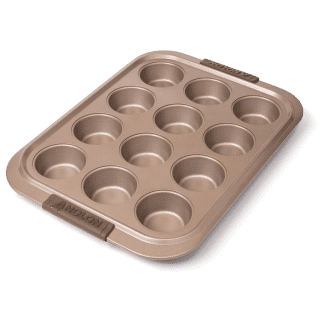
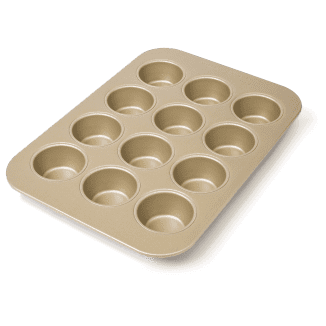
I was testing muffin tins. The top two models from our prior testing had been discontinued, so it was time for a fresh look. We also wanted to examine a trend: Gold-colored pans have dominated our recent testings of rectangular baking pans, loaf pans, round cake pans, and square cake pans. Gold pans beat out darker and lighter pans in each category by easily releasing baked goods that had just the right amount of browning. With gold muffin tins now on the market, we wondered if the trend would continue.
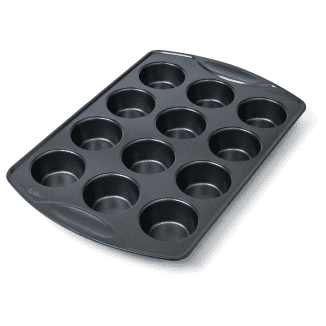
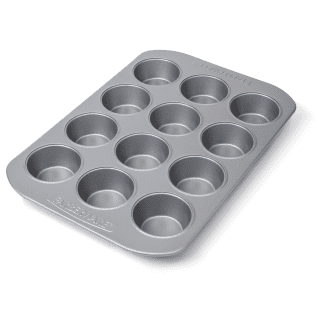
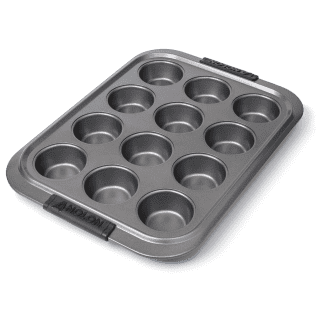
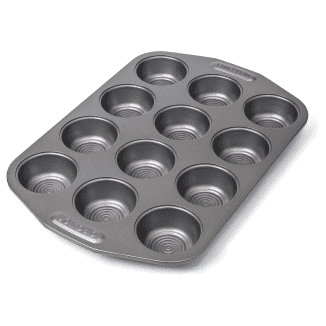
To find out, we chose ten 12-cup muffin tins. Three were gold or bronze, three were light or medium silver, and four were dark. In the past we’ve focused on nonstick muffin tins because easy release is key with tender muffins. But this time we included one without a nonstick coating; instead it had a very shallow snakeskin pattern etched into it, ostensibly to help with release.
We evaluated each muffin tin on its durability, release, handling, and the browning of the baked goods it produced. There were no issues with wear and tear, and only one model had a problem with release—the one without a nonstick coating. Its textured pattern left us prying out muffins with a knife. We’ll stick with nonstick.

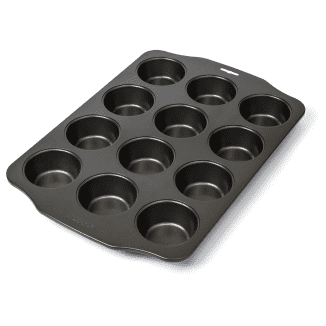
We noticed an interesting trend regarding the color of the muffin tins: In general, lighter models produced lighter-colored baked goods and darker ones made darker-colored baked goods. And the gold (or bronze) muffin tins produced browning that was neither too dark nor too light.
To understand why, we looked at the way heat works. In an oven, heat radiates out in waves. When the waves hit a pan, its atoms and molecules move faster, which heats everything up. But different materials absorb heat waves at different rates. In general, darker objects absorb more heat waves than lighter objects because lighter objects reflect some of the waves. You’ve probably experienced this when wearing dark clothes on a sunny day—black absorbs heat waves, so you feel hotter. If you were wearing white, you’d likely feel cooler because lighter fabric reflects some of the waves and absorbs less heat.
So the muffins from darker muffin tins were darker and had thicker crusts because they’d been subjected to more heat. And muffins from lighter muffin tins were paler and softer because they had been subjected to less heat. The gold muffin tins produced evenly browned muffins (and frittatas and cupcakes) with tender crusts.

Muffin tin color also affected the shape of the baked goods. Because dark models conduct heat faster, the sides of their baked goods set faster, leaving the rest of the batter to rise upward, sometimes into oddly conical or bulbous shapes. Light- and medium-colored models, on the other hand, made more-consistent, appealingly shaped baked goods because their sides set more slowly, in step with the rest of the batter, allowing a more controlled rise and resulting in more normal shaping.
The shape of the muffin tins was also hugely important. We included only models that had some sort of handle or extended rim, as experience has taught us that without a spot to grab, maneuvering a hot muffin tin can feel like slow dancing in middle school—you never know where to put your hands.
Muffin tins with handles seemed promising because they had clear, dedicated spots to hold on to. But the handles were often too small; we repeatedly dented the tops of muffins with our oven mitts. It became clear that oversize rims were better. Models with a broad rim on all sides were the easiest to handle and facilitated one-handed maneuvering. For models with only handles, we sometimes had to reach far into the oven, risking a burnt forearm or elbow, to grip the handle and rotate the muffin tin.
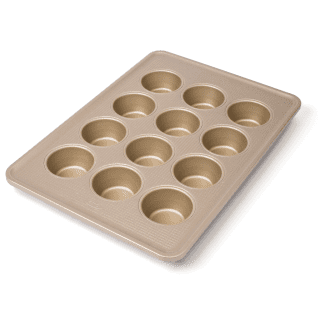
The muffin tin with the biggest rim was downright luxurious to move around. It also had a gold nonstick finish that made perfectly browned baked goods. Those factors made the OXO Good Grips Non-Stick Pro 12-Cup Muffin Pan our clear winner.
The Tests
- Make one batch of Muffin Tin Frittatas
- Make one batch of Easy Birthday Cupcakes
- Make one batch of Basic Muffins
- Wash muffin tins by hand 10 times
- Scrub each individual cup 25 times with an abrasive sponge
- Run a paring knife around each cup 25 times
How We Rated
- Release: We coated muffin tins lightly with vegetable oil spray before each test and rated how well they relinquished their contents after baking.
- Browning: We evaluated the color of the baked goods produced by each muffin tin; we awarded the most points to those that were an even golden brown.
- Food Shape: We evaluated the shape of the baked goods produced by each muffin tin; we awarded the most points to those that were tall, with crisp edges and consistent shapes.
- Handling: Wearing our winning oven mitts, we moved the muffin tins in and out of the oven and rotated them halfway through baking; we rated them on how comfortable, easy, and secure they were to hold and move.
- Nonstick coating
- Gold finish
- Wide rim on all four sides
 Buy at Williams Sonoma