Reviews You Can Trust.
See Why.
Mini Bundt Pans
Manufacturers have shrunk the Bundt. Do any perform as well as their full-sized counterparts?
Top Pick

- Design
- Release
- Cake Appearance
WinnerNordic Ware Platinum Anniversary Bundtlette Pan
 Buy at Amazon
This pan, from the manufacturer of the original Bundt pan in 1950 (as well as our favorite full-size Bundt pan), exceeded expectations with its superior design and results. Its mini cakes had tall, defined ridges and an elegant stature. The cakes’ gently filigreed edges browned nicely, and the pan’s handles made for easy (and safe) transfer in and out of the oven.
Model Number: 86237
Capacity: Tray-style, six 3/4-cup molds
Material: Nonstick cast aluminum
Price at Time of Testing: $40
- Design
- Release
- Cake Appearance
This pan, from the manufacturer of the original Bundt pan in 1950 (as well as our favorite full-size Bundt pan), exceeded expectations with its superior design and results. Its mini cakes had tall, defined ridges and an elegant stature. The cakes’ gently filigreed edges browned nicely, and the pan’s handles made for easy (and safe) transfer in and out of the oven.
Model Number: 86237
Capacity: Tray-style, six 3/4-cup molds
Material: Nonstick cast aluminum
Price at Time of Testing: $40
Sign up for the Well-Equipped Cook newsletter
Shop smarter with our ATK Reviews team's expert guides and recommendations.
What You Need to Know
Reflecting a recent miniaturizing trend in bakeware, manufacturers have shrunk the Bundt. Miniature Bundt pans come in two styles: single-cup molds and trays of six. We baked cakes in two singletons and in two tray models ranging in price from $3.75 to $40. Since all were nonstick and released cakes effortlessly, picking a winner came down to ease of handling and the visual appeal of the cakes. Both tray-style pans featured handles that made flipping out the cakes easier than flipping from the singleton pans. As the little cakes sat cooling on racks, we focused on looks. Only the cakes from the tray-style models had well-defined ridges. Since the main purpose of a Bundt pan is to produce cakes with a distinctive scalloped surface, we had no problem choosing a favorite, a mini version of our winning full-size Bundt pan.
Everything We Tested
Highly Recommended
- Design
- Release
- Cake Appearance
WinnerNordic Ware Platinum Anniversary Bundtlette Pan
This pan, from the manufacturer of the original Bundt pan in 1950 (as well as our favorite full-size Bundt pan), exceeded expectations with its superior design and results. Its mini cakes had tall, defined ridges and an elegant stature. The cakes’ gently filigreed edges browned nicely, and the pan’s handles made for easy (and safe) transfer in and out of the oven.
Model Number: 86237
Capacity: Tray-style, six 3/4-cup molds
Material: Nonstick cast aluminum
Price at Time of Testing: $40
- Design
- Release
- Cake Appearance
This pan, from the manufacturer of the original Bundt pan in 1950 (as well as our favorite full-size Bundt pan), exceeded expectations with its superior design and results. Its mini cakes had tall, defined ridges and an elegant stature. The cakes’ gently filigreed edges browned nicely, and the pan’s handles made for easy (and safe) transfer in and out of the oven.
Model Number: 86237
Capacity: Tray-style, six 3/4-cup molds
Material: Nonstick cast aluminum
Price at Time of Testing: $40

- Design
- Release
- Cake Appearance
Wilton Excelle Elite 6-Cup Mini Fluted Tube Pan
This tray-style pan has wide, flat handles that make moving it in and out of the oven a breeze, rendering it an excellent choice. But while the cakes that it turned out were nicely shaped, with well-defined ridges, they were slightly squatter and broader than those from the Nordic Ware Platinum Anniversary Bundtlette Pan.
Model Number: 2105-445
Capacity: Tray-style, six 1-cup molds
Material: Nonstick steel
Price at Time of Testing: $21.49
- Design
- Release
- Cake Appearance
This tray-style pan has wide, flat handles that make moving it in and out of the oven a breeze, rendering it an excellent choice. But while the cakes that it turned out were nicely shaped, with well-defined ridges, they were slightly squatter and broader than those from the Nordic Ware Platinum Anniversary Bundtlette Pan.
Model Number: 2105-445
Capacity: Tray-style, six 1-cup molds
Material: Nonstick steel
Price at Time of Testing: $21.49
Recommended
- Design
- Release
- Cake Appearance
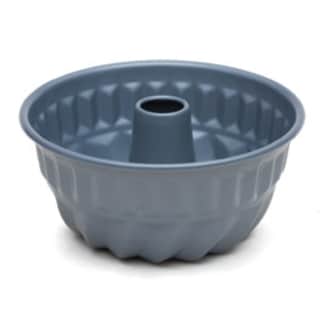
Fox Run Preferred Nonstick 4-Inch Mini Fluted Pan with Center Tube
This single-cup pan produced cakes with ridges that weren’t quite as well defined as our winner’s, but they were attractive nonetheless, plus the cakes released easily from the pan. If you prefer a singleton pan, this is a very inexpensive option.
Model Number: F4443
Capacity: Single cake mold, 1 cup
Material: Nonstick heavy-gauge steel
Price at Time of Testing: $3.75
- Design
- Release
- Cake Appearance
This single-cup pan produced cakes with ridges that weren’t quite as well defined as our winner’s, but they were attractive nonetheless, plus the cakes released easily from the pan. If you prefer a singleton pan, this is a very inexpensive option.
Model Number: F4443
Capacity: Single cake mold, 1 cup
Material: Nonstick heavy-gauge steel
Price at Time of Testing: $3.75
Recommended with Reservations

- Design
- Release
- Cake Appearance
Harold Imports Nonstick 4.5-Inch Mini Bundt Pan
This pan was easy to use and released well (thanks to its springform design) but it didn’t produce the classic domed, ridged Bundt cake. Its design gave us the tube shape of an angel food cake, with a faint fluted pattern on top. But if the classic look isn’t important to you, it’s a decent option.
Model Number: 43614
Capacity: Single cake mold, 1 cup
Material: Nonstick tin
Price at Time of Testing: $7.20
- Design
- Release
- Cake Appearance
This pan was easy to use and released well (thanks to its springform design) but it didn’t produce the classic domed, ridged Bundt cake. Its design gave us the tube shape of an angel food cake, with a faint fluted pattern on top. But if the classic look isn’t important to you, it’s a decent option.
Model Number: 43614
Capacity: Single cake mold, 1 cup
Material: Nonstick tin
Price at Time of Testing: $7.20

Reviews You Can Trust
The mission of America’s Test Kitchen Reviews is to find the best equipment and ingredients for the home cook through rigorous, hands-on testing. We stand behind our winners so much that we even put our seal of approval on them. Have a question or suggestion? Send us an email at atkreviews@americastestkitchen.com. We appreciate your feedback!
*All products reviewed by America’s Test Kitchen are independently chosen, researched, and reviewed by our editors. We buy products for testing at retail locations and do not accept unsolicited samples for testing. We list suggested sources for recommended products as a convenience to our readers but do not endorse specific retailers. When you choose to purchase our editorial recommendations from the links we provide, we may earn an affiliate commission. Prices are subject to change.
Reviews You Can Trust.
See Why.