

After weeks of testing the waters, we realized there’s a better way to poach shrimp. Then we upgraded the “cocktail” with fresh takes on the dipping sauce.
Why This Recipe Works
Shrimp cocktail is a splurge, whether you’re popping crustaceans at a raw bar or poaching a batch yourself. Each bite should feel like luxury: plump, snappy, well-chilled meat with clean, oceanic sweetness that gleams on your palate.
Nailing that profile is all about poaching the shrimp just right. First, the water must be judiciously seasoned to underscore the shrimp’s natural brininess. Second—and more challenging—the shrimp must reach, but not exceed, their ideal doneness. That’s hard to do well, because small, lean shrimp go from raw to rubbery in an instant and because it’s impossible to monitor the temperature of so many pieces.
Read on to learn how I overcame those hurdles and devised a different approach that I call “cold-start poaching,” as well as other tweaks that make shrimp taste moist and well seasoned.

The results, I promise, are worth the splurge.
—Steve Dunn, senior editor, Cook's Illustrated
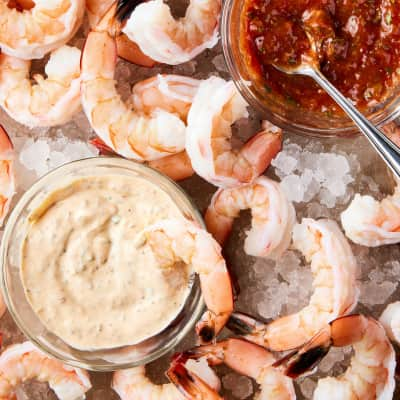
Anatomy of a Perfect Cocktail Shrimp

Our 5 Key Discoveries
Discovery 1: Briefly Soak the Shrimp in a Superconcentrated Brine

Most recipes simply add raw shrimp to a pot of hot water. But because shrimp can overcook in a flash even with the most careful approach, I wanted to build in some protection by salting or brining them.
I found that the brine seasoned the shrimp more quickly and evenly than salting did, especially when I made it superconcentrated: 2 tablespoons each of salt and sugar dissolved in 4 cups of water. (Adding sugar to the mix gives the shrimp more complexity.)
Discovery 2: Use Some of the Brine for Poaching

Poaching in a combination of the concentrated salt-sugar brine and more lightly salted water enhances the seasoning effects of the brine rather than diluting it as plain water would.
Discovery 3: 140 Degrees Is the Sweet Spot
According to food science writer Harold McGee, poached shrimp tastes best when cooked to 140 degrees. I came to the same conclusion after running a series of sous vide tests: I cooked batches of jumbo (16–20) shrimp to temperatures ranging from 120 to 160 degrees and measured the moisture loss of each batch. I found they tasted ideal at 140 degrees—they were juicy, tender, and just resilient enough to swipe through cocktail sauce.
Moisture loss at different target temps

Discovery 4: “Cold-Start Poach” the Shrimp
Sous vide is great for poaching; just bring the water to 140 degrees and cook the shrimp for 45 to 60 minutes. But I wanted to consistently hit that target without relying on sous vide. I tried 3 different methods: traditional poaching, steaming, and cold-start poaching. Cold-start poaching produced perfectly cooked shrimp every time.
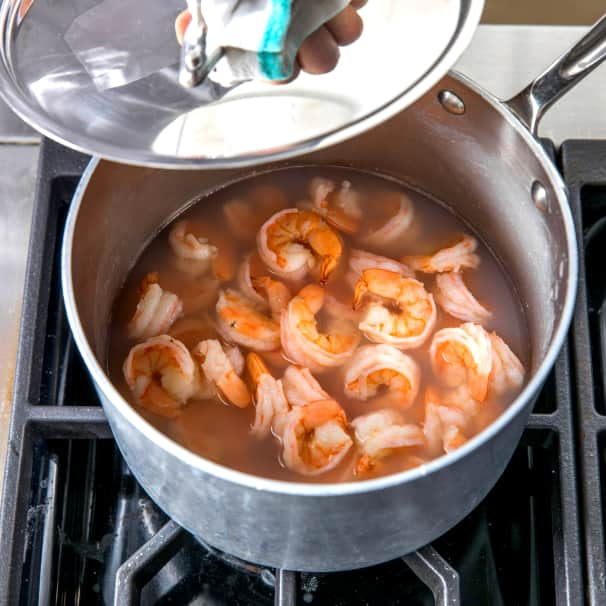 Cold-Start Poaching Cold-Start Poaching | 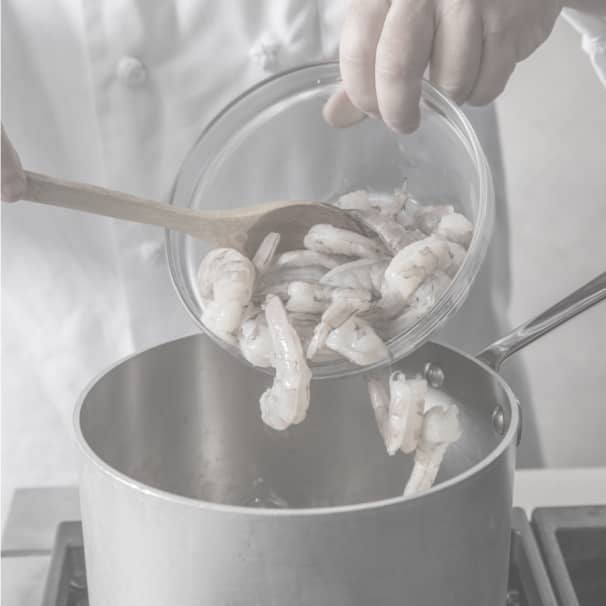 Traditional Poaching Traditional Poaching | 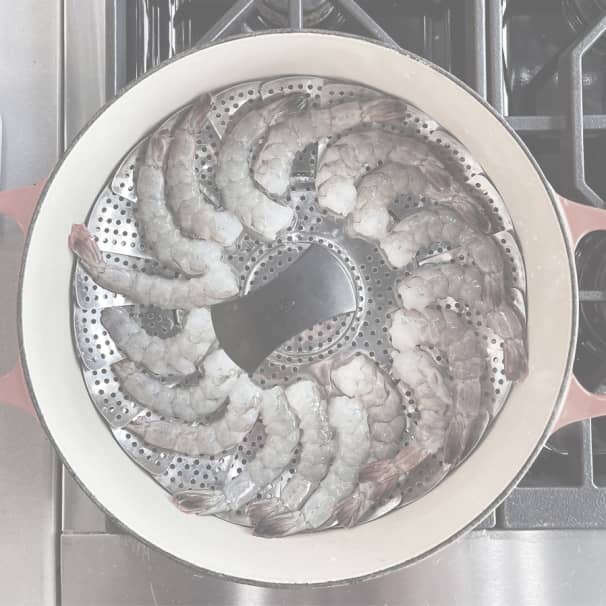 Steaming Steaming |
|---|---|---|
Method Combine shrimp with cold water and heat just until water hits a target temperature that won’t overcook the shrimp. | Method Cook shrimp in simmering water. | Method Cook shrimp in steamer basket over a few inches of boiling water. |
Pros Shrimp heat gently and evenly and never overcook | Pros Fast | Pros Fast |
Cons None | Cons
| Cons
|
Cold-start poaching produced perfectly cooked shrimp every time.
—Steve Dunn, senior editor Cook's Illustrated
Discovery 5: Temp the Water, Not the Shrimp
Since it’s fussy to take the temperature of shrimp as they cook, we temp the water instead. Provided you use the prescribed amount of shrimp and water, the shrimp will reach 140 degrees when the water hits 160 degrees.

The Perfect Shrimp Deserves the Perfect Sauce
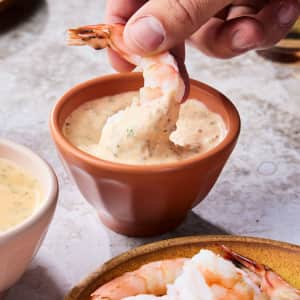
Classic cocktail sauce hits every point of contrast for clean-tasting poached shrimp, but it’s not the only way to enjoy them.


We're the flagship brand behind America's Test Kitchen's rigorous and scientific recipe development process. We make recipes that work—no hit or miss, no drama. Our recipes have been prodded, tweaked, and perfected until they're failproof in any kitchen.





111 Comments