America's Test Kitchen LogoCook's Country LogoCook's Illustrated Logo

Reviews You Can Trust.
See Why.

The Best Petty and Utility Knives

With a blade that’s halfway between that of a chef’s knife and that of a paring knife, a petty knife or utility knife is the perfect blade for medium-size kitchen prep tasks. Which is best?

Headshot of Miye Bromberg
By Miye Bromberg

Last Updated October 18, 2024

Editor&aposs Note:Update, October 2024

Our favorite petty knife, the Tojiro 150mm Petty R-2 Powder Steel, has been discontinued. The Togiharu PRO Petty 5.9” is now our top overall choice.

What You Need To Know

  • Test sharpness at the beginning and ending of testing, using industrial sharpness-testing machine
  • Slice tomatoes
  • Slice blocks of cheese
  • Mince shallots
  • Mince parsley
  • Quarter mushrooms
  • Break down half chicken
  • Debone chicken breast
  • Slice cooked skin-on chicken breast
  • Test with large-handed users

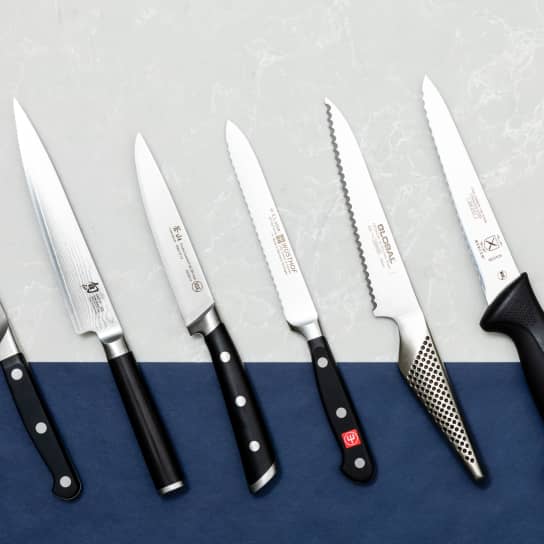
We love our chef’s and paring knives; we rely on them for most cutting tasks in the kitchen. But occasionally we find ourselves wishing we had a knife that split the difference between these two workhorses—a midsize knife with more power and coverage than the paring knife but more precision and control than the chef’s knife. That’s where petty and utility knives come in. While both of these knives come in a variety of lengths, they’re most commonly found with a blade in the 5- to 6-inch range, almost exactly halfway between that of a paring knife and that of a chef’s knife. Historically, the two knives had very different origins, shapes, and advantages. Over the years, however, distinctions between petty and utility knives have blurred somewhat (see “Petty Knives versus Utility Knives: What’s the Difference?”). In practice, both terms refer to any midsize prep knife.

Curious to know which of these knives was best for home cooks, we bought 10 petty or utility knives, priced from about $28 to about $215, and put them through their paces, using them to slice tomatoes; mince shallots and parsley; quarter mushrooms; break down chickens and debone chicken breasts; and slice salami, firm cheese, and cooked skin-on chicken breasts.

Petty and utility knives were great for finesse tasks that are performed with the tip of the blade, such as mincing shallots or quartering mushrooms.

Most Knives Performed Well

We found a lot to like about these knives, and we think most home cooks would, too. They particularly excelled at finesse tasks performed with the tip of the blade—they were fantastic for mincing shallots precisely and for quartering mushrooms quickly and cleanly. The blades of most of the knives were very thin and very sharp, so they sliced the cooked chicken breasts beautifully, without shattering or pulling on the crispy skin, allowing for perfect presentation. We were especially impressed with the way the knives allowed us to break down half chickens and debone chicken breasts. Because their blades are smaller and narrower than those of chef’s knives, they were more agile and responsive, helping us to maneuver nimbly between joints and ably trimming away slippery skin and fat. And while their blades are stiffer than those of our favorite flexible boning knives, they also did a great job of hewing close to the bone as we removed chicken breasts, leaving very little meat behind. These thin, hard blades are a bit fragile, though; on hard materials such as bones, they can (and did) chip. With this in mind, we recommend using a pair of shears or a chef’s knife to do any heavier-duty butchery, such as removing the backbone or halving a bone-in chicken breast.

Thin and sharp, the blades on most of the knives we tested did a beautiful job of slicing chicken breasts without ripping or tugging on the crispy skins.

Minor Differences In Sharpness

A few factors determined how well the knives handled and performed. First, sharpness. In previous knife reviews, we’ve found that the sharpness of a knife is determined not only by the edge angle of the blade but also by the extent to which the blades are sharpened at the factory or by hand. To find out which knives were sharpest, we used an industrial sharpness-testing machine to evaluate each blade at the beginning of testing. Judging by the results, edge angle wasn’t the most important factor in sharpness here. The sharpest knife had one of the largest edge angles (18 degrees), yet it was extraordinarily keen in hand, slicing through tomatoes almost on contact. Most of the knives arrived razor-sharp, though a few were a little less so than we liked; we demoted these slightly.

To find out which knives were sharpest, we used an industrial sharpness-testing machine to evaluate each blade at the beginning of testing.

Weight And Blade Design Matter

Because these knives are built for careful, controlled tasks, we preferred lightweight models, which took less effort to use and direct; models weighing more than 4 ounces felt a bit more cumbersome. We also kept the design of each blade in mind. We liked blades that were thin from spine to edge, as they sliced more cleanly, and with less effort, than blades that had thicker spines, which occasionally wedged into food, making less even cuts. And we slightly preferred knives with blades measuring 6 inches long or less, since they offered a little more control on fine-detail tasks such as mincing shallots than those that were a bit longer. Many of the blades had straight edges, following the traditional petty-knife style; others were slightly curved, per the traditional utility-knife style (see “Petty Knives versus Utility Knives: What’s the Difference?”). We don’t think one style is better than the other. If you prefer to rock through your cuts, you might want a curved blade; a straight edge is better for those who like to cut in a more straight up-and-down motion.

When choosing a knife, consider the handle, which can be just as critical to your preferences as the blade.

Handle Length And Material Also Matter

On the other end, we considered the handles. We liked handles that measured at least 4.25 inches long, as they provided enough room for most folks to grip the knives comfortably, though cooks with bigger hands might prefer knives with handles closer to a 5-inch length. And we also appreciated handles that were made of wood or grippy plastic; these were easier to grip than slick plastic handles, especially when slippery or wet.

A Note About Clearance

While testing, we noted something odd about most of the knives. All the knives sailed through fine-detail tasks performed toward the tip of the blade. But when we chopped parsley or sliced cheese and salami—tasks performed on a cutting board using the middle or heel of the blade—there wasn’t always a lot of room underneath the handles for our fingers. With some of the models, there was less than half an inch of clearance, so we ended up scraping our knuckles or adjusting our grip slightly to accommodate them. We preferred models that had at least 0.6 inches of clearance, and more was better, especially for large-handed testers, as they gave most hands a bit more space while chopping.

  • Sharp, thin blade measuring 6 inches long or less in length
  • Handle measuring at least 4.25 inches in length, with at least 0.6 inches in clearance underneath

The Best Petty Or Utility Knife: The Togiharu PRO Petty 5.9”

It was hard to choose a single winner—we think any of our five highest-ranked models would be a fantastic addition to your knife collection. But if we had to pick just one, it would be the The Togiharu PRO Petty 5.9”. With a straight-edged blade that was just less than 6 inches long and thin from spine to edge, it was the sharpest knife when it arrived, cutting foods effortlessly and with amazing precision. This knife felt great in our hands; it was lightweight, and its handle was long enough for hands of most sizes to grip comfortably. And it provided just enough clearance under the handle for us to chop parsley and shallots without scraping our knuckles. For more great knives—including a less expensive Best Buy option, a splurge purchase, and a pick for larger hands—consult the chart below.
Everything We Tested

Good 3 Stars out of 3.
Fair 2 Stars out of 3.
Poor 1 Star out of 3.

Highly Recommended

  • Sharpness
  • Performance
  • Ease of Use

Best OverallTogiharu PRO Petty 5.9”

This petty knife had a perfect blade that was agile and incredibly sharp. It made quick work of every task, and felt great in our hands as well. Our one small quibble: its handle can be a little slick when wet.

Model Number: HTO-PROPE-150

Materials: 440 16Cr. molybdenum stain-resistant steel, POM (polyacetal resin)

Weight: 2⅞ oz

Blade length: 6.1 in

Spine thickness: 1.4 mm

Knuckle clearance: 0.6 in

Handle length: 4.25 in

Price at Time of Testing: $126.00

  • Sharpness
  • Performance
  • Ease of Use

This petty knife had a perfect blade that was agile and incredibly sharp. It made quick work of every task, and felt great in our hands as well. Our one small quibble: its handle can be a little slick when wet.

Model Number: HTO-PROPE-150

Materials: 440 16Cr. molybdenum stain-resistant steel, POM (polyacetal resin)

Weight: 2⅞ oz

Blade length: 6.1 in

Spine thickness: 1.4 mm

Knuckle clearance: 0.6 in

Handle length: 4.25 in

Price at Time of Testing: $126.00

  • Sharpness
  • Performance
  • Ease of Use

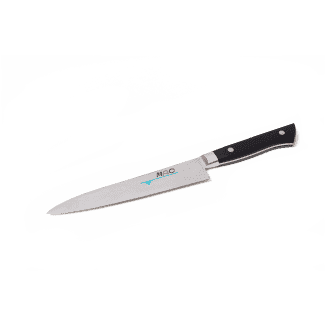
Best BuyMAC PKF-60 Pro Utility 6"

Very sharp and thin-spined, this knife sailed through food cleanly and precisely. We liked it almost as much as our winner; its blade is just a hair longer, giving us a bit less control, and there’s a tiny bit less clearance for your knuckles under the handle. But these are really minor quibbles; this is a great knife, and larger-handed testers will appreciate that its handle has a little extra room for them to grip.

Model Number: PKF-60

Materials: Carbon/chromium/molybdenum steel blend, Pakkawood

Weight: 2⅞ oz

Blade length: 6.0 in

Spine thickness: 1.4 mm

Knuckle clearance: 0.5 in

Handle length: 4.4 in

Price at Time of Testing: $71.99

  • Sharpness
  • Performance
  • Ease of Use

Very sharp and thin-spined, this knife sailed through food cleanly and precisely. We liked it almost as much as our winner; its blade is just a hair longer, giving us a bit less control, and there’s a tiny bit less clearance for your knuckles under the handle. But these are really minor quibbles; this is a great knife, and larger-handed testers will appreciate that its handle has a little extra room for them to grip.

Model Number: PKF-60

Materials: Carbon/chromium/molybdenum steel blend, Pakkawood

Weight: 2⅞ oz

Blade length: 6.0 in

Spine thickness: 1.4 mm

Knuckle clearance: 0.5 in

Handle length: 4.4 in

Price at Time of Testing: $71.99

  • Sharpness
  • Performance
  • Ease of Use

Best SplurgeOUL 150mm Wa Petty Ginsanko - Walnut Octagon

Hand-forged in Sakai, the capital of Japanese knife-making, this gorgeous premium petty knife was ultrasharp and capable, slicing and mincing foods beautifully. Its walnut handle was longer than most and felt warm and responsive in our hands; because it had a little grippiness to it, it was also easy to hold when wet. It’s just a touch heavier than our top picks, and its spine is a little thicker, so it occasionally wedged into food a tiny bit.

Model Number:

Materials: Ginsanko steel, walnut wood

Weight: 3⅜ oz

Blade length: 6.1 in

Spine thickness: 2.3 mm

Knuckle clearance: 0.6 in

Handle length: 4.9 in

Price at Time of Testing: $212.00

  • Sharpness
  • Performance
  • Ease of Use

Hand-forged in Sakai, the capital of Japanese knife-making, this gorgeous premium petty knife was ultrasharp and capable, slicing and mincing foods beautifully. Its walnut handle was longer than most and felt warm and responsive in our hands; because it had a little grippiness to it, it was also easy to hold when wet. It’s just a touch heavier than our top picks, and its spine is a little thicker, so it occasionally wedged into food a tiny bit.

Model Number:

Materials: Ginsanko steel, walnut wood

Weight: 3⅜ oz

Blade length: 6.1 in

Spine thickness: 2.3 mm

Knuckle clearance: 0.6 in

Handle length: 4.9 in

Price at Time of Testing: $212.00

  • Sharpness
  • Performance
  • Ease of Use

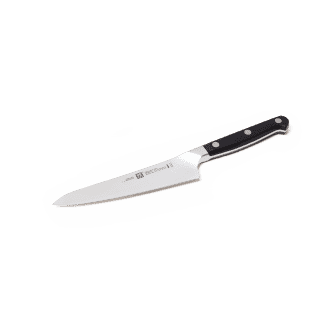
Best for Large-Handed CooksZwilling Pro 5.5-Inch Ultimate Prep Knife

This “prep” knife had a slightly curved blade that allowed us to rock through each slice, rather than cut in a more up-and-down motion, as with our other top choices. And it did a great job with all the foods; its relatively short blade made it very easy to control. While a touch slippery, its handle is on the longer side for these types of knives and provides lots of clearance underneath, making it an excellent choice for large-handed cooks. 

Model Number: 38400-143

Materials: Stainless steel, polypropylene

Weight: 3⅛ oz

Blade length: 5.5 in

Spine thickness: 1.4 mm

Knuckle clearance: 0.75 in

Handle length: 4.5 in

Price at Time of Testing: $69.95

  • Sharpness
  • Performance
  • Ease of Use

This “prep” knife had a slightly curved blade that allowed us to rock through each slice, rather than cut in a more up-and-down motion, as with our other top choices. And it did a great job with all the foods; its relatively short blade made it very easy to control. While a touch slippery, its handle is on the longer side for these types of knives and provides lots of clearance underneath, making it an excellent choice for large-handed cooks. 

Model Number: 38400-143

Materials: Stainless steel, polypropylene

Weight: 3⅛ oz

Blade length: 5.5 in

Spine thickness: 1.4 mm

Knuckle clearance: 0.75 in

Handle length: 4.5 in

Price at Time of Testing: $69.95

Recommended

  • Sharpness
  • Performance
  • Ease of Use

Misono Handmade Molybdenum Petty 5.9”

This lightweight petty knife performed most tasks very well. Although it wasn’t as keen as some, it was still fairly sharp at the outset, making precise cuts. A few minor issues kept it from the top tier. Its blade is a tad longer than we prefer, so it isn’t quite as easy to control; its handle is a little shorter than we prefer, so bigger hands might feel cramped. And the knife’s tang sticks out a touch from the handle, feeling rough against our palms; we wish it were finished a bit more smoothly. Still, it was capable of great finesse, making it pleasant to use.

Model Number: HMI-MOPE-150

Materials: Stainless high-carbon molybdenum steel, composite wood

Weight: 2⅝ oz

Blade length: 6.1 in

Spine thickness: 1.4 mm

Knuckle clearance: 0.6 in

Handle length: 4 in

Price at Time of Testing: $71.46

  • Sharpness
  • Performance
  • Ease of Use

This lightweight petty knife performed most tasks very well. Although it wasn’t as keen as some, it was still fairly sharp at the outset, making precise cuts. A few minor issues kept it from the top tier. Its blade is a tad longer than we prefer, so it isn’t quite as easy to control; its handle is a little shorter than we prefer, so bigger hands might feel cramped. And the knife’s tang sticks out a touch from the handle, feeling rough against our palms; we wish it were finished a bit more smoothly. Still, it was capable of great finesse, making it pleasant to use.

Model Number: HMI-MOPE-150

Materials: Stainless high-carbon molybdenum steel, composite wood

Weight: 2⅝ oz

Blade length: 6.1 in

Spine thickness: 1.4 mm

Knuckle clearance: 0.6 in

Handle length: 4 in

Price at Time of Testing: $71.46

  • Sharpness
  • Performance
  • Ease of Use

Victorinox Swiss Army Fibrox Pro 6" Chef's Knife

This miniaturized chef’s knife—which is also our favorite knife for older children—performed well. While not the sharpest, it was still reasonably keen, cutting cleanly and evenly. And most of us loved its grippy plastic handle, which was easy to hold even when wet. Measuring 5 inches long and positioned at an angle to the blade, the handle is great for larger hands, providing plenty of knuckle clearance when chopping. Still, a few testers found the handle a bit outsize and out of balance with the blade. It’s not the best option for detail work; its blade is on the long side and thus a touch harder to control, and the angle at which the handle is set put our arms in a slightly awkward position when we worked at the tip of the blade.

Model Number: 5.2003.15

Materials: Thermoplastic polyimide, stainless steel

Weight: 2¾ oz

Blade length: 6.25 in

Spine thickness: 1.4 mm

Knuckle clearance: 0.6 in

Handle length: 5 in

Price at Time of Testing: $28.00

  • Sharpness
  • Performance
  • Ease of Use

This miniaturized chef’s knife—which is also our favorite knife for older children—performed well. While not the sharpest, it was still reasonably keen, cutting cleanly and evenly. And most of us loved its grippy plastic handle, which was easy to hold even when wet. Measuring 5 inches long and positioned at an angle to the blade, the handle is great for larger hands, providing plenty of knuckle clearance when chopping. Still, a few testers found the handle a bit outsize and out of balance with the blade. It’s not the best option for detail work; its blade is on the long side and thus a touch harder to control, and the angle at which the handle is set put our arms in a slightly awkward position when we worked at the tip of the blade.

Model Number: 5.2003.15

Materials: Thermoplastic polyimide, stainless steel

Weight: 2¾ oz

Blade length: 6.25 in

Spine thickness: 1.4 mm

Knuckle clearance: 0.6 in

Handle length: 5 in

Price at Time of Testing: $28.00

Recommended with Reservations

  • Sharpness
  • Performance
  • Ease of Use

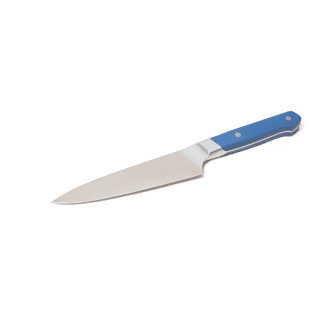
Misen Utility Knife

This knife was the heaviest model we tested; while a few testers liked its solid build, others found it cumbersome, missing the airy, nimble feel of many of the other models. While still perfectly serviceable, it was the least sharp of all the knives when tested fresh out of the box; its relatively thick spine made it feel a bit duller at times, wedging into mushrooms and salami instead of cutting smoothly and evenly. A fairly long handle with good clearance underneath gave large hands a bit more space; we only wish that the handle had been finished a bit more nicely, as the tang stuck out and felt rough against our palms.

Model Number: Utility Knife

Materials: Thermoplastic polyamide, stainless steel

Weight: 4⅝ oz

Blade length: 5.6 in

Spine thickness: 1.7 mm

Knuckle clearance: 0.7 in

Handle length: 4.6 in

Price at Time of Testing: $45.00

  • Sharpness
  • Performance
  • Ease of Use

This knife was the heaviest model we tested; while a few testers liked its solid build, others found it cumbersome, missing the airy, nimble feel of many of the other models. While still perfectly serviceable, it was the least sharp of all the knives when tested fresh out of the box; its relatively thick spine made it feel a bit duller at times, wedging into mushrooms and salami instead of cutting smoothly and evenly. A fairly long handle with good clearance underneath gave large hands a bit more space; we only wish that the handle had been finished a bit more nicely, as the tang stuck out and felt rough against our palms.

Model Number: Utility Knife

Materials: Thermoplastic polyamide, stainless steel

Weight: 4⅝ oz

Blade length: 5.6 in

Spine thickness: 1.7 mm

Knuckle clearance: 0.7 in

Handle length: 4.6 in

Price at Time of Testing: $45.00

  • Sharpness
  • Performance
  • Ease of Use

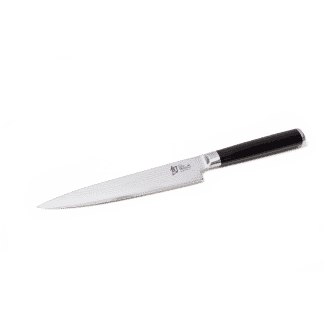
Shun Classic Utility Knife

With a long, narrow, sharp blade, this model was great for tasks performed at the tip and slightly off the cutting board—maneuvering around joints and bones while breaking down a half chicken, for example. But its length made it a touch harder to control. And larger hands will have trouble holding it; the handle is short, and there is very little clearance under it, so even smaller-handed testers banged their knuckles when chopping parsley or slicing salami on the cutting board.

Model Number: DM0701

Materials: VG Max steel, Pakkawood

Weight: 2¾ oz

Blade length: 6.2 in

Spine thickness: 1.6 mm

Knuckle clearance: 0.4 in

Handle length: 4 in

Price at Time of Testing: $104.95

  • Sharpness
  • Performance
  • Ease of Use

With a long, narrow, sharp blade, this model was great for tasks performed at the tip and slightly off the cutting board—maneuvering around joints and bones while breaking down a half chicken, for example. But its length made it a touch harder to control. And larger hands will have trouble holding it; the handle is short, and there is very little clearance under it, so even smaller-handed testers banged their knuckles when chopping parsley or slicing salami on the cutting board.

Model Number: DM0701

Materials: VG Max steel, Pakkawood

Weight: 2¾ oz

Blade length: 6.2 in

Spine thickness: 1.6 mm

Knuckle clearance: 0.4 in

Handle length: 4 in

Price at Time of Testing: $104.95

  • Sharpness
  • Performance
  • Ease of Use

Wüsthof Classic 6" Utility Knife

This utility knife had an especially long and narrow blade, and because it was one of the sharpest we tested, it was capable of making beautiful, clean cuts. It was great for slicing through the joints when we broke down half chickens, though because the blade was so long, it was harder to control for fine detail work such as mincing shallots, and it felt oversize when deboning the chicken breasts. It was also hard for even smaller hands to hold comfortably. It was somewhat heavy, and while the handle itself was relatively long, there was very little clearance underneath it, so our knuckles bumped up against the cutting board whenever we chopped parsley or sliced cheese.

Model Number: 4522-7/16

Materials: Stainless steel, polyoxymethylene (POM)

Weight: 4 oz

Blade length: 6.3 in

Spine thickness: 1.6 mm

Knuckle clearance: 0.3 in

Handle length: 4.75 in

Price at Time of Testing: $90.00

  • Sharpness
  • Performance
  • Ease of Use

This utility knife had an especially long and narrow blade, and because it was one of the sharpest we tested, it was capable of making beautiful, clean cuts. It was great for slicing through the joints when we broke down half chickens, though because the blade was so long, it was harder to control for fine detail work such as mincing shallots, and it felt oversize when deboning the chicken breasts. It was also hard for even smaller hands to hold comfortably. It was somewhat heavy, and while the handle itself was relatively long, there was very little clearance underneath it, so our knuckles bumped up against the cutting board whenever we chopped parsley or sliced cheese.

Model Number: 4522-7/16

Materials: Stainless steel, polyoxymethylene (POM)

Weight: 4 oz

Blade length: 6.3 in

Spine thickness: 1.6 mm

Knuckle clearance: 0.3 in

Handle length: 4.75 in

Price at Time of Testing: $90.00

Discontinued

  • Sharpness
  • Performance
  • Ease of Use

Tojiro 150mm Petty R-2 Powder Steel

Lightweight, and with a medium-size handle, this petty knife felt great in our hands, maneuvering nimbly around chicken joints and bones and making quick work of mushrooms and shallots. It sported the sharpest blade straight out of the box; thin, keen, and just the right length, it was capable of producing near-surgical incisions. One tiny quibble? The plastic handle was just a touch slick when wet.

Model Number:

Materials: R-2 stainless steel, wood composite

Weight: 2⅞ oz

Blade length: 5.9 in

Spine thickness: 1.4 mm

Knuckle clearance: 0.6 in

Handle length: 4.25 in

Price at Time of Testing: $117.00

  • Sharpness
  • Performance
  • Ease of Use

Lightweight, and with a medium-size handle, this petty knife felt great in our hands, maneuvering nimbly around chicken joints and bones and making quick work of mushrooms and shallots. It sported the sharpest blade straight out of the box; thin, keen, and just the right length, it was capable of producing near-surgical incisions. One tiny quibble? The plastic handle was just a touch slick when wet.

Model Number:

Materials: R-2 stainless steel, wood composite

Weight: 2⅞ oz

Blade length: 5.9 in

Spine thickness: 1.4 mm

Knuckle clearance: 0.6 in

Handle length: 4.25 in

Price at Time of Testing: $117.00

America's Test Kitchen Accolades Badge

Reviews You Can Trust

The mission of America’s Test Kitchen Reviews is to find the best equipment and ingredients for the home cook through rigorous, hands-on testing. We stand behind our winners so much that we even put our seal of approval on them. Have a question or suggestion? Send us an email at atkreviews@americastestkitchen.com. We appreciate your feedback!

The Expert

Author: Miye Bromberg

Miye Bromberg

Deputy Editor, ATK Reviews

Miye is the deputy editor for ATK Reviews. She covers bread, booze, and blades.

Miye Bromberg is the deputy editor for ATK Reviews. Areas of specialization include bread, booze, and blades. A native of New York, she now lives in Kentucky, where she spends her free time thinking about film, tending her garden, and traveling long distances to eat dosas.

Appears In

This item is featured in the following. Click the links to dig in!

*All products reviewed by America’s Test Kitchen are independently chosen, researched, and reviewed by our editors. We buy products for testing at retail locations and do not accept unsolicited samples for testing. We list suggested sources for recommended products as a convenience to our readers but do not endorse specific retailers. When you choose to purchase our editorial recommendations from the links we provide, we may earn an affiliate commission. Prices are subject to change.

Reviews You Can Trust.
See Why.

This is a members' feature.
America's Test Kitchen LogoCook's Country LogoCook's Illustrated Logo