
 Buy at Amazon
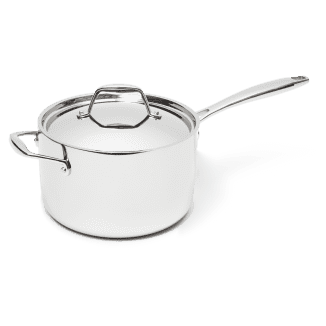


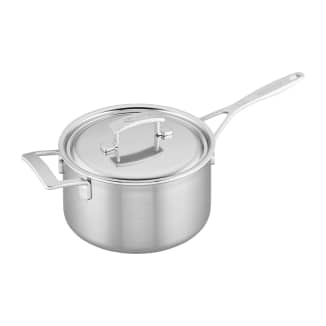
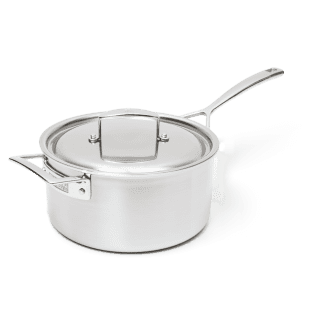
Our favorite saucepan is the All-Clad D3 Stainless 4-Qt Sauce Pan and has been for decades. With its fully clad construction, this all-purpose pot makes perfect soup and custard. It’s also durable and comfortable to lift and maneuver. For a less expensive option, try the Tramontina Tri-Ply Clad 4 Qt. Saucepan. It performs nearly as well as our favorite but is less durable and has a slightly smaller cooking surface.
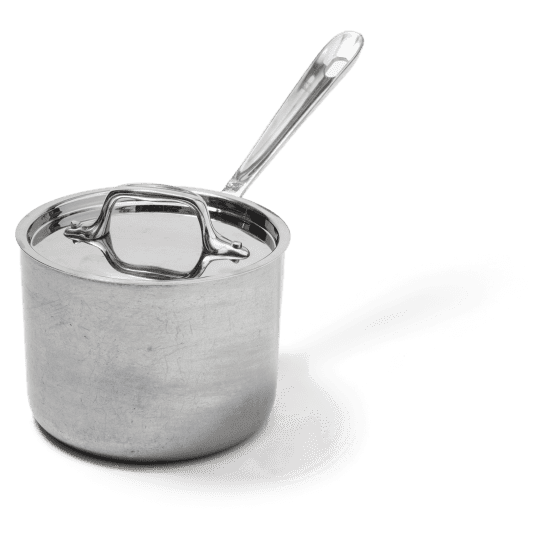
If you’re looking for a slightly smaller saucepan, useful for cooking rice, boiling water, heating leftovers, or cooking recipes for one or two, we also like the smaller versions of our favorites, the All-Clad D3 Stainless 2-Qt Sauce Pan and the Tramontina Gourmet Stainless Steel Induction-Ready Tri-Ply Clad Covered Saucepan, 2 Quart.

Meet the Unsung Workhorse of the Kitchen: The 4-Quart Saucepan
Dutch ovens get all the attention, but a great saucepan belongs in every kitchen.
Learn MoreCookware doesn’t get much simpler than a saucepan: It’s basically a steep-sided bowl with a handle and a lid. But it also doesn’t get more important, since this is the vessel you’ll use to prepare everything from soups and sauces to pasta and grains to custards and puddings. And when it comes to performance, we’ve found that the differences between models can be surprisingly significant.

What Size Saucepan Should You Get?
We think that a stainless-steel saucepan with a capacity of 4 quarts is the best all-purpose size for most cooks. It’s a little less than half the size of our favorite Dutch oven, giving you a handy medium-size vessel in which to make a wide variety of foods.
Consider a 2-quart saucepan if you cook for one or two people or just want a smaller but still durable saucepan that will let you warm up leftovers, make small batches of soup or rice, or heat milk or water.
Are Expensive Saucepans Worth the Money?
Yes, up to a point. Over the decades, we’ve tested dozens of saucepans in a wide range of prices. We’ve found that less expensive saucepans are often less well-made and less durable, warping or denting more easily or having handles that loosen over time. They can be too heavy or poorly balanced, making them difficult to lift and maneuver, or too lightweight, making them prone to warping. And they have other design flaws that make them perform less well.
Our favorite saucepan costs more but is worth the investment. It performs better than cheaper models, is easy to handle, and is much more durable—it will last a lifetime if you treat it right, saving you money in the long run. In our opinion, you don’t have to spend more than what our top choice costs—fancier, more expensive five-ply models won’t perform better and will be heavier and more ponderous to use.
There are good options if you’re willing to sacrifice some durability and ease of handling, though. Our Best Buy is about half the price of our favorite and performs nearly as well, though it’s more vulnerable to damage.
What to Look For
- Fully Clad Construction: We prefer saucepans that are “fully clad,” meaning that the cooking surface and walls are made of three or more layers of bonded metal, such as two layers of nonreactive, moderately heat-conductive stainless steel sandwiching one layer of highly heat-conductive aluminum. This construction is engineered to heat evenly and reasonably quickly.

- Straight Sides: Saucepans with straight sides are easy to see into, so you can tell if your butter is browning or your onions are properly softened.
- Broad Cooking Surfaces: We liked pans that gave us plenty of room to cook on; for 4-quart saucepans, this meant a surface diameter of at least 7.5 inches.

- Moderate Weight and Even Balance: We liked pans that weren’t too heavy, especially since we often need to tilt them for controlled pouring or keep them aloft with one hand while scooping or scraping out food with the other. Pans that weighed more than 4 pounds without their lids were hard to lift and maneuver when laden with food. But good balance was even more important than weight: The Le Creuset saucepan we tested, for example, weighed about 10 ounces less than the All-Clad model but felt off-balance and was thus more cumbersome to tilt and pour from.
- Main Handles That Are Easy to Grip and Stay Cool: The best handles had angled shapes of moderate breadth that let us lock in a secure grip. Our favorites also stayed cooler on the stove, letting us skip pot holders.
- Large Helper Handles: These secondary handles made it easier to move and maneuver the saucepan.
- Tightly Fitting Stainless-Steel Lids with Large, Looped Handles: We liked lids that fit into pans snugly, as these kept steam from escaping, ensuring evenly cooked rice pilaf. And we preferred stainless-steel lids, as they were more durable than glass ones.

- Great Durability: The best saucepans resisted warping when we subjected them to thermal shock, heating them and then plunging them into ice water. They also didn’t dent and their handles remained tightly affixed even after we banged them against a concrete block three times.
What to Avoid
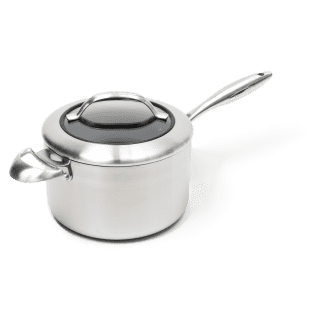
- Disk-Bottom Pans: With these saucepans, metal layers are found only in a disk attached to the bottom of the pan, which is otherwise constructed of a single layer of stainless steel. While disk-bottom pans are cheaper than fully clad models, we’ve found that they heat more erratically, allowing food to scorch.
- Flared or Bulging Sides: These made it harder to see into the pan, so we couldn’t monitor cooking progress as easily.
- Narrow Cooking Surfaces: Smaller cooking surfaces limit the volume of food you can cook at a time or force you to crowd your food so that it steams instead of browning properly.
- Heavy Weight and/or Poor Balance: Heavier saucepans were unwieldy and hard to maneuver, especially when laden with food. But pans with poor balance were even more cumbersome, making us struggle to pour custard or drain beans easily.
- Narrow or Round Main Handles: These were hard to grip securely. Narrow handles cramped our hands, and round handles slipped in our grasp, rotating suddenly and dangerously as we were pouring out boiling water, steaming-hot pilaf, and molten custard.
- Small Lid Handles: Small and knob-like handles were harder for us to grasp, especially when our hands were sheathed in oven mitts or protected by pot holders.
- Poor Durability: Only a few pans came away from our abuse tests unscathed, with many models denting when we whacked them on a concrete block or warping when we heated them and plunged them into ice water.
Bogus Bells and Whistles
These features came with more problems than perks.

Slim or Round Handles
Slipped our grasp as we lifted and poured

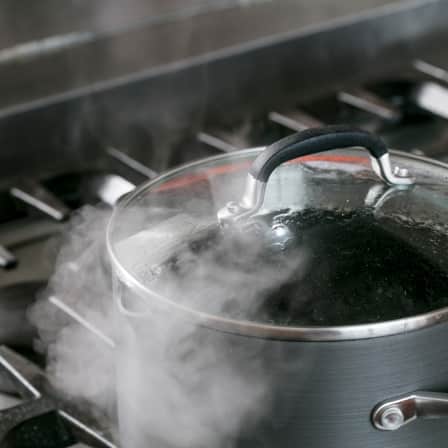
Glass Lids
Steamed up and blocked the visibility they promised
Pour Spouts
Made pouring messy and leaked steam so that rice cooked unevenly
Minor Flaws
- Glass Lids: These are less durable than stainless-steel lids and steam up quickly during use, limiting the visibility that they promise.
- Pour Spouts: We’ve found that these actually make it harder to pour foods neatly. They also allowed steam to leak out when we used the saucepan with its lid, resulting in unevenly cooked rice pilaf.
The Tests (Large):
- Make Crème Anglaise
- Make Rice Pilaf
- Make Blanched Green Beans
- Make browned butter
- Have five users evalaute
- Wash by hand after each test
- Bang against a concrete ledge 3 times
- Heat to 500°F on the stove, then plunge into bucket filled with ice
The Tests (Small):
- Make browned butter
- Make mashed potatoes for one
- Sauté onions
- Boil 1 quart of water
- Make Easy-Peel Hard-Cooked Eggs
- Make Fluffy White Rice for Two or Three
- Wash by hand after each test
- Bang against a concrete ledge 3 times
- Heat to 500°F on the stove, then plunge into bucket filled with ice
How We Rated
- Cleanup: We rated the saucepans on how easy they were to clean.
- Durability: We evaluated the saucepans on how well they resisted warping, dents, and other damage.
- Ease of Use: We rated the saucepans on how easy they were to lift, maneuver, and transport.
- Performance: We evaluated the saucepans on how well they cooked different foods.

 Buy at Made In Cookware