


The best chef’s knives for kids are easy, safe, and comfortable for children at different stages of development to use. The Victorinox Fibrox 6" Chef’s Knife is our top choice for older kids age 12 to 13. It’s the smaller version of our favorite chef’s knife under $75 and boasts a grippy handle and sharp blade. The Opinel Le Petit Chef Knife & Finger Guard Set is our pick for younger kids age 8 to 9. It has a sharp, slightly shorter blade and a comfortable wooden handle with a finger hole that encourages kids to adopt a safe grip.

Learning proper knife skills empowers young kids to take a bigger role in the kitchen, but standard-size chef’s knives are too big for little hands. We wanted to know which knives were best for kids of different ages, so we surveyed the market for the top options. Before we gave the knives to the kids to test, we adults wanted to make sure they were safe to use. We put them through a round of basic tasks: slicing ripe tomatoes and blocks of cheddar cheese; dicing carrots, celery, and onion; and mincing parsley. Two knives performed so poorly that we eliminated them from the running. Both were serrated and incredibly dull. The other knives were sharp and comfortable. With four strong contenders—three straight and one serrated—we recruited a panel of 12 young cooks to test the knives. Some had cooking experience, and others had never held a knife before. The kids approved of all four knives, but they liked some better than others.


We recruited 12 young cooks to test the knives with an assortment of ingredients.
What to Look for
- Sharp, Straight-Edged Steel Blade: Both adults and children liked knives that were sharp enough to easily cut through soft tomatoes, semisoft cheese, and crisp vegetables. We also preferred straight-edged blades to serrated ones as they offered a smoother cutting motion and less resistance when slicing food. And we liked steel blades, which were sharper than plastic blades.

- Moderate Blade Length: We preferred knives with blades that were 4 to 6 inches long, as they were the right length for handling the kinds of small foods we’d expect children to be able to cut. In general, older children with bigger hands were better able to handle knives with longer blades. By contrast, younger kids with smaller hands handled the knives with shorter blades better.
- Relatively Thin Spine: We preferred blades with thinner spines measuring 1.3 to 1.7 mm thick, as these glided effortlessly through food, resulting in more effective cutting.

- Moderate Handle Length: We preferred handles measuring 4 to 5 inches in length. These accommodated a variety of hand sizes. Smaller handles were fine for smaller, younger hands, but cramped bigger ones.
Nice to Have
- Rounded Tip: Most knives have a sharp tip that can pose a safety risk to young or inexperienced users. Several blades we tested had rounded tips that minimized the problem of accidental nicks while cutting.

What to Avoid
- Dull Blades: Simply put, dull blades won’t get the job done. They damage food instead of cutting it cleanly and put the user at risk of injury. (Dull blades require more force to cut food and can slip and slice the user more easily.)
- Plastic Blades: Our initial lineup included one plastic blade, but its poor showing meant we did not feel comfortable testing it with kids. We found this blade to be dull, and, as a result, dangerous and ineffective.
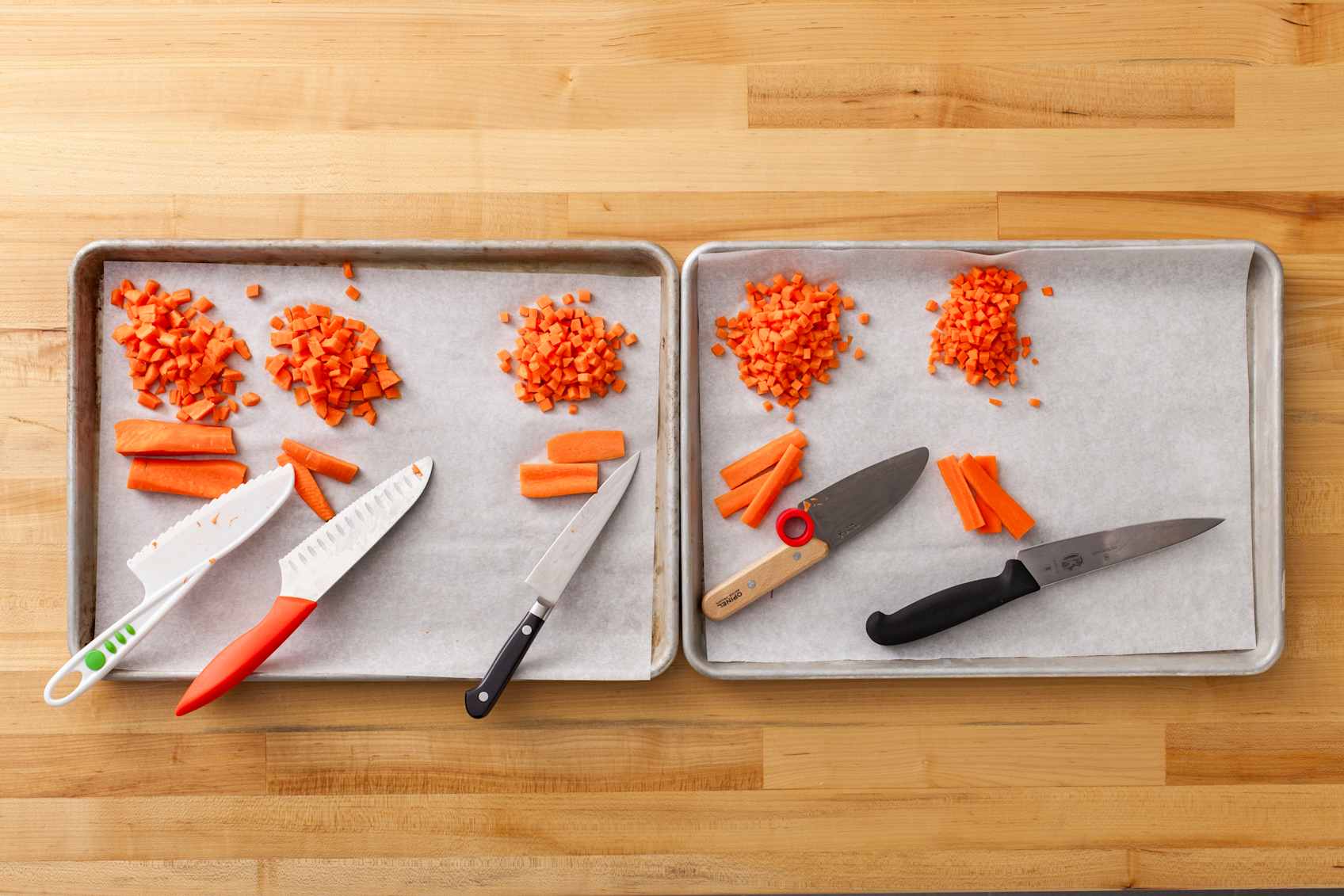

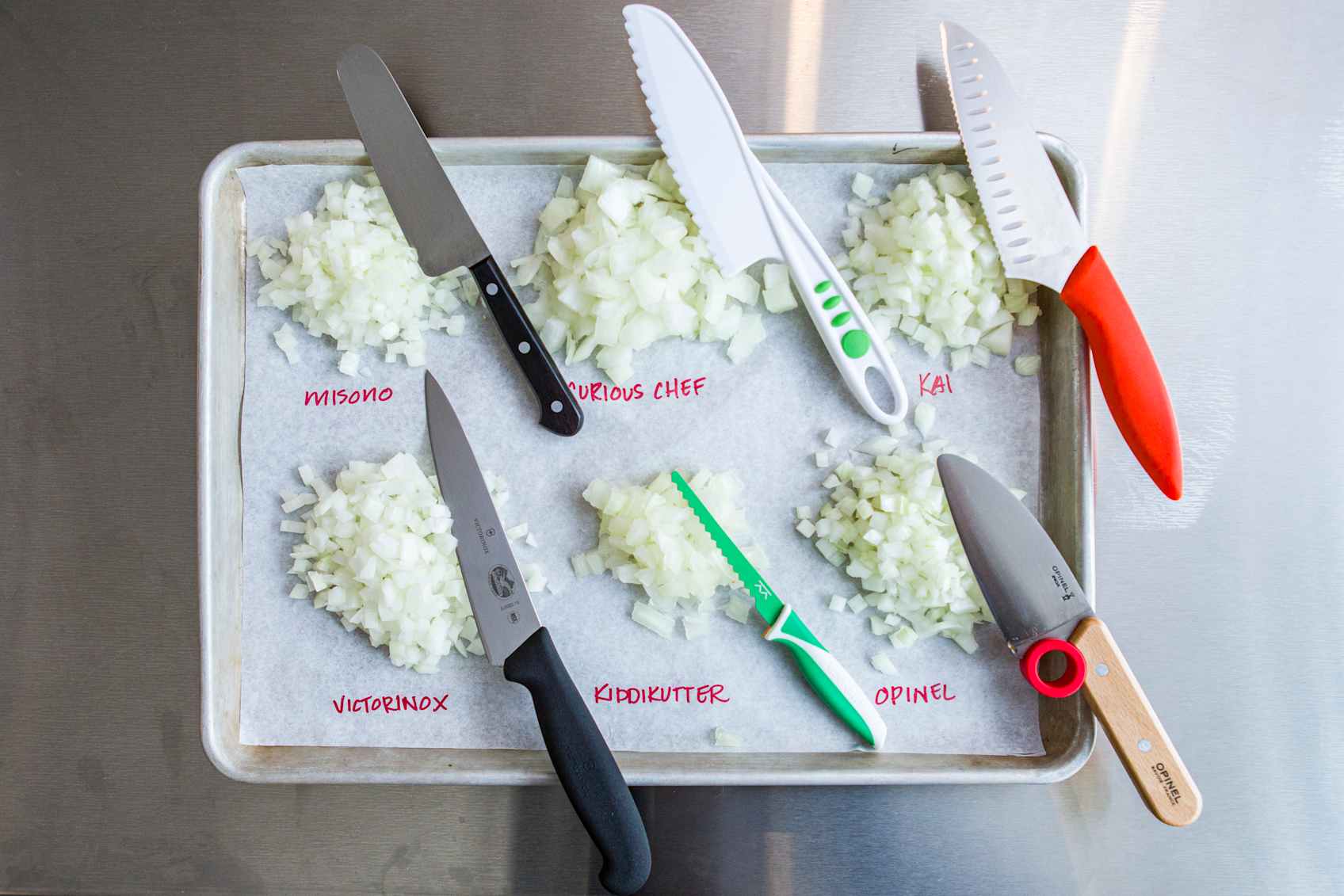

- Short Blades: Models with blades shorter than 4 inches could not cut through even small produce such as tomatoes.
- Thick Spines: Knives with thicker spines made it feel like we were driving a wedge into food, requiring extra effort and force to use throughout testing.
The Tests
- Evaluate blades’ initial sharpness using paper test
- Slice tomatoes to evaluate initial sharpness
- Dice onion
- Dice stalk of celery
- Dice carrot
- Slice block of cheddar
- Mince parsley
- Have panel of children ages 8 to 13 chop celery
How We Rated
- Performance: We evaluated the knives on their out-of-the-box sharpness and ability to cut a variety of foods.
- Ease of Use: Adults and children rated the knives on how comfortable they were to hold and use, considering the weight, balance of blade and handle, and handle shape.