

 Buy at Amazon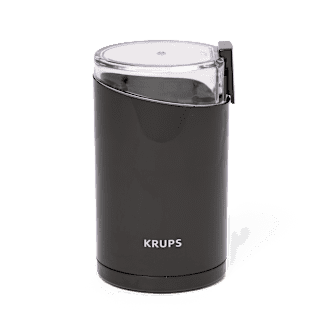
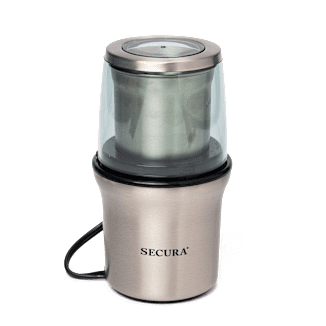
A blade grinder offers the quickest and easiest way to prepare ground spices and fresh spice blends or spice rubs. It can also grind coffee. The Cuisinart Spice and Nut Grinder emerged as the winner. Powerful and consistent, it delivered evenly and finely ground spices and coffee. The Krups Coffee and Spice Grinder is our Best Buy; it reliably ground small, relatively uniform spices like peppercorns or coriander seeds and worked well with coffee. However, it lacked the ability to tackle trickier ingredients, such as big, sturdy cinnamon sticks and thin, papery nori sheets.

We often buy ground spices, but there are several reasons why you might want to purchase whole spices and grind them at home instead. Whole spices stay fresher longer than ground spices, making them a more economical option. Freshly ground spices also impart more fragrance and aroma than preground spices. Finally, whole spices are versatile. You can buy one jar of cumin seeds, for example, and use the whole seeds in biryani one day and grind the seeds for beef stir-fry the next. You can also make spice blends—like garam masala, dukkah, furikake, and five-spice powder—in the quantities you need, when you need them, and you can adjust the ratios to suit your tastes. Grinding at home also allows you to customize grind size, from coarse to fine.


For the most fragrant spice blends, make them at home with whole spices.
One option is to use a mortar and pestle or molcajete; these manual tools can also be used for sauces and spice pastes, though most are bulky and sometimes require a bit of elbow grease to use. Electric grinders, also known as blade grinders, are lightweight and compact, and they’re easy to use, lift, and store.
How Does a Blade Grinder Work?
A blade grinder consists of three parts: a base (which houses the motor), a grinding bowl with small blades, and a lid. To operate it, you either press down a button on the lid or hold down the lid itself; the longer you press down, the longer it grinds and the finer the spices become. The grinding bowl can typically accommodate up to a cup of spices or coffee beans. For reference, one cup of coffee beans is enough to make 10 cups (one average full-size pot) of drip coffee.


Depending on the model you’re using and what you’re grinding, you may find that whole spices get stuck and aren’t being broken down effectively. Often, all you need to do is pick up the grinder and shake it gently while it’s running. For best grinding results, fill it to above the blades (or the minimum fill line in the bowl).
Most of the blade grinders we’ve tested over the years have been fairly simple appliances. More recently, we’ve come across models that promise a little extra, such as detachable grinding bowls for easy cleanup and cordless grinders. We tested these newcomers against old-school, no-frills versions to see which ones deserved a place in our kitchens. Throughout testing, we focused on what we believe to be the best use of these tools: grinding spices. However, blade grinders are also popular for coffee, so we used each model to grind coffee beans too. We then passed the ground spices through a lab-grade sieve to separate the coarse pieces from the fine ones to evaluate performance; for coffee, we sifted the ground coffee using a specialty tool to separate the medium pieces from coarse and fine pieces.

Can You Use a Blade Grinder for Coffee?
Coffee beans contain thousands of aromatic compounds and oils that disperse quickly when released. That’s why we always recommend grinding the beans right before brewing. While we and industry professionals recommend using a burr grinder for precise and repeatable results, we see why some people opt for a blade grinder instead. You can get a good blade grinder for about $50 or even less, while good-quality burr grinders often cost $200 or more. A blade grinder is also much smaller and more compact than a bulky burr grinder, making it a convenient option for small kitchens and trips.
After grinding coffee in each model, we passed the grounds through a Kruve Sifter—a handheld particle separator used by coffee professionals in competitions—to separate out the large pieces (or “boulders”) and littlest pieces (“fines”) from the rest of the ground coffee (called “medium pieces”). Too many fines makes bitter coffee; too many boulders, weak coffee. A higher percentage of medium pieces means more evenly extracted, flavorful coffee. The blade grinders produced between 27 and 44 percent medium pieces. (For comparison, our favorite burr grinders averaged upwards of 60 percent.) In side-by-side tastings, we’ve found little to no difference between samples of drip coffee made using coffee grounds prepared with a high-quality blade grinder and those prepared with a burr grinder. However, blade grinders are inexact; you must keep a close eye on the beans as they whir around the grinder and pause the appliance when they’re at just the right coarseness for your brewing method.
What to Look for
- Long, Low Blades: The blades were most effective when they were spinning as closely as possible to the bottom and sides of the bowl, where nothing escaped their reach. We found that the most effective blades were 5 to 6.5 millimeters high with tips no more than about 4 millimeters from the wall. These models had no issue quickly grinding peppercorns, coriander seeds, and cumin seeds. When we sifted the ground spices through a lab-grade sifter, we found that these models produced more evenly and finely ground spices than those with short, tall blades. With long, low blades, it was also easier to produce evenly ground coffee for a balanced extraction of flavorful coffee.
- A Big, Clear Lid: To achieve the right coarseness, timing is key. We liked when we could monitor the progress of our ingredients inside the grinders. A big, transparent lid helps achieve that goal. Some models had frosted lids that obscured our view. Some were too dark for us to see inside.

- Large, Comfortable Button: Depending on the volume and density of the spices you’re grinding, it could take up to 30 seconds to make a spice blend. With most grinders, you activate the motor by holding down the lid. Some models were button-activated, where you press down on a button on their lids. We preferred lid-activated models and models with big buttons because they were easy to hold down and didn’t tire our hands.

- A Wide Bowl: The grinding bowls all accommodated about a cup of spices or coffee beans, but they came in different shapes. We preferred those with wide openings, which allowed us to easily and quickly pour in an entire cup of whole spices without spilling any onto the counter. It was also easier to reach into wide bowls with a towel and wipe them clean.
Nice to Have
- A Detachable Grinding Bowl: We liked models with detachable grinding bowls. This feature allowed us to pop out just the bowl (with fixed blades) and clean it thoroughly in the sink. To clean models with fixed bowls, you can either grind dry white rice (see FAQs below for more info) or wipe down the interior of the bowl with a pastry brush or clean towel. Both worked fine but were a bit more finicky than simply rinsing the bowl. All the detachable bowls are dishwasher-safe, too, though we recommend hand-washing plastic items.
What to Avoid
- High, Short Blades: Some blades were too short, and large pieces of spices or coffee beans passed between the tips of the blades and the wall of the grinding bowl. Other blades were too high to cut through the spices and coffee beans effectively, resulting in uneven grounds.

- A Deep, Narrow Grinding Bowl: With grinding bowls that were both deep and narrow, it was hard to transfer spices without spilling. When we started grinding, we noticed that spices got trapped at either the top or bottom of the bowl, where they couldn’t engage with the blades. Lightweight ingredients, such as nori sheets, got stuck at the top of the bowl and remained intact while only those at the bottom were pulverized effectively; they wouldn’t budge even when we gave the grinder a few shakes. A deep, narrow design also made cleaning harder, as we had to reach deeper into the bottom to clear out the debris.

- Loose-Fitting Lids: We liked models that had fully sealed bowls that kept all of the contents in the bowl where they belonged. The worst had lids that didn’t tightly cover the top of the grinding bowl. In one model, there was a gap between the top of the bowl and the lid, allowing grounds to fly up and gather in a tiny space between the exterior of the grinding bowl and the interior of the lid. When we removed the lid, spices puffed out and made a mess.
- A Flimsy, Skinny Button: Holding down a button for 10 or even 30 seconds can be tiring. Models with a small button exhausted our hands because we had to exert a lot of pressure on one tiny piece of real estate; the button on one model was particularly wobbly, so we had trouble holding it down.
- Grind peppercorns coarsely
- Grind peppercorns to medium coarseness
- Grind peppercorns finely
- Make garam masala and then sift through a lab-grade sieve to monitor uniformity
- Make furikake
- Grind coffee beans for 15 seconds and then sift through Kruve sifter and calculate the percentage of medium pieces
- Winners only: Coarsely grind pistachio and peanuts
- Clean between uses and evaluate for stains and odors
How We Rated
- Performance: We evaluated each grinder’s ability to grind a variety of spices and coffee evenly.
- Ease of Use: We assessed how easy it was to operate each grinder.
- Cleanup: We noted whether the grinders were easy to clean and whether they retained odors.