
 Buy at Amazon
 Buy at Goldilocks
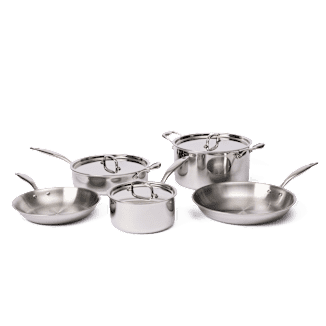
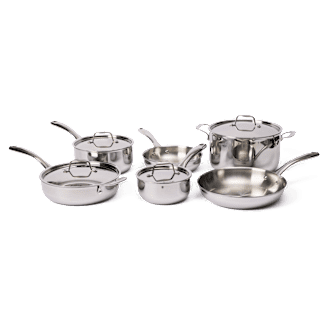
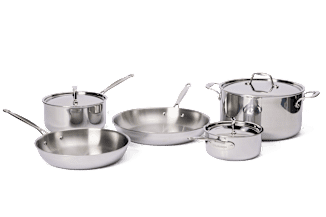
We tested only “fully clad” stainless-steel cookware sets—with pans made rim-to-rim of three or more bonded layers of steel and aluminum. Our co-winners are the All-Clad D3 Stainless 3-ply Bonded Cookware Set, 10 Piece Set and the Made In 10-Piece Stainless Cookware Set. Both provide an excellent selection of sturdy, well-shaped pans that cook beautifully and would be an asset to any kitchen. Our Best Buy is the Goldilocks Cookware Set Plus, with eight pieces. This set wasn’t quite as durable as our top choices but matched their performance and contained especially good sizes, at a fraction of the price.

Cookware sets are appealing. They seem to offer value and convenience: everything you could need in a single purchase, for a lower price than you’d pay for all the pieces separately. That’s why they’re go-to gifts for weddings and graduations, for setting up new apartments or homes, or for upgrading all your cookware in one fell swoop. A good set might be all you need or serve as a core that you build on later.

The Problem with Cookware Sets
In spite of these attractions, we usually recommend buying cookware piece by piece, beginning with a few essential pans and adding items as you know more about what you want to cook and as your budget allows. We’ve also learned over the years that many cookware sets suffer from a variety of flaws. We found many types of cookware sets that we deliberately didn’t include in this review. Here’s what we skipped:
- Too many pieces with nonstick coatings. While we love nonstick skillets for fish, eggs, and other delicate foods, you don’t need nonstick coatings on a stockpot or a saucepan. Nonstick coatings aren’t very durable. Pans that need to be replaced every few years are not a bargain.
- Misleading “cookware” counts. Lids and utensils count as “pieces.” When half of that “20-piece” set isn’t cookware, you’re not getting the arsenal of tools you hoped for.
- Pans and utensils you don’t need. Unusual pieces such as “everyday pans” or dual-handled “chef’s pans” are not what we’d generally consider essential. Even classic pans waste space if they’re not ones you’ll use. We also avoided big cookware sets of 15 or 20 pieces that contained more spatulas, tongs, and spoons than pots and pans.
Is a Cookware Set Worth the Money?
Yes, you can save money by buying a cookware set. When we compared the prices of sets to the prices of the individual pieces in it, on average we saved 20 percent by buying the set. With pricier sets, the savings could be hundreds of dollars. But savings don’t mean much if you won’t use all the pieces, lack storage space, or lack the budget for a good set.
What Are the Most Essential Pieces of Cookware?
The most essential, versatile pans come down to just a few key pieces. For maximum flexibility, we like larger pan sizes so that you can cook smaller or larger portions as needed.
- 12-inch skillet
- 4-quart saucepan
- Cast-iron Dutch oven or lightweight Dutch oven
- Add the following over time: a stockpot, a smaller saucepan, a cast-iron skillet, and/or a ceramic nonstick skillet.

What’s the Best Material for a Cookware Set?
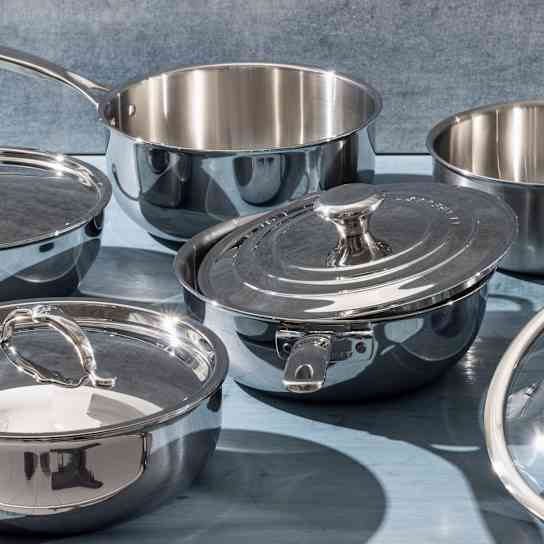
You can find sets made of many materials, including plain or enameled cast iron, anodized aluminum, copper, nonstick-coated metal, stainless steel, and more. Cast iron is terrific in a skillet or Dutch oven, but a full set could be cumbersome and very pricey if enameled. Copper is high-performance but an enormous investment. The dark surface of anodized aluminum makes browning hard to monitor; it also wears off over time. Cookware with glass lids or handles with silicone or other embedded materials are relatively fragile. We chose to focus on sets made of fully clad stainless steel. Cladding combines the best properties of each material—aluminum’s rapid heat transfer and responsiveness and steel’s slower heat transfer and greater heat retention—so that food cooks evenly and browns beautifully. Our test kitchen is stocked with fully clad steel pans that are used daily and remain in excellent condition after decades of use. Stainless steel has no coating to wear off. It’s nonreactive, so you don’t have to worry about off-flavors. You never have to season it. And you can perpetually restore its shine by simple scouring.

What to Look for
- Useful Selection: Most sets came with two skillets, two saucepans, and a stockpot, plus two or three lids. The best had these versatile pans in sizes we find useful. A few sets added a sauté pan or saucier.

- Functional Pan Shapes: We prefer cookware with wide, open shapes so that you can spread out food for even cooking and light interiors that help you monitor cooking progress. We like skillets with a generous flat cooking surface, gentle curves, and low, flared sides to encourage evaporation and browning. We prefer saucepans with straight walls for good visibility and access; sauté pans with broad cooking surfaces and tall sides; and roomy stockpots with large, easy-to-grab handles.


We cooked a cut-up whole chicken in each cookware set’s largest skillet. The sets with 12-inch skillets fit all the chicken easily, while sets whose largest skillet was 10 inches left chicken slightly crowded.
- All-Steel Handles: Handles made of steel won’t wear out and can go in the oven and under the broiler. Also, because steel conducts heat very slowly, they stay cooler on the stove than other materials.
- Grippy, Angular Handles: For the main handle of a skillet or saucepan, an angular shape that anchors securely as you lift and tilt the pan is safer, if sometimes not as comfortable. Smooth, bulbous handles feel good but can slip or spin dangerously, especially while using a pot holder.
Nice to Have
- 12-Inch Skillets: We wish all sets had 12-inch skillets, which over decades of testing have proved the most versatile size. It was harder to cook a recipe calling for an entire cut-up chicken in a 10-inch skillet. When a set lacks a 12-inch skillet, it would be a good pan to add separately.
What to Avoid
- Poorly Designed Pans: Skillets with deep bowls made it more challenging to brown food. Saucepans with rounded sides were trickier when mashing potatoes in the pot.
- Small, Slick Handles: Some skillet and saucepan handles were too short, which left fewer places to grip. Too-smooth handles slipped in our hands while pouring. Tiny looped handles made lifting stockpots precarious.

- Too Many Small Pans: While we love 1-quart saucepans and 8-inch skillets, they won’t work as your only pans. We’d rather have a little extra wiggle room cooking one serving in a large pan than feel cramped while cooking in a small pan. And if you’re cooking for friends or following most recipes, which make 4-6 servings, they really aren’t enough.
The Tests
- In large skillets, cook Skillet-Roasted Chicken in Lemon Sauce
- In small skillets, brown butter
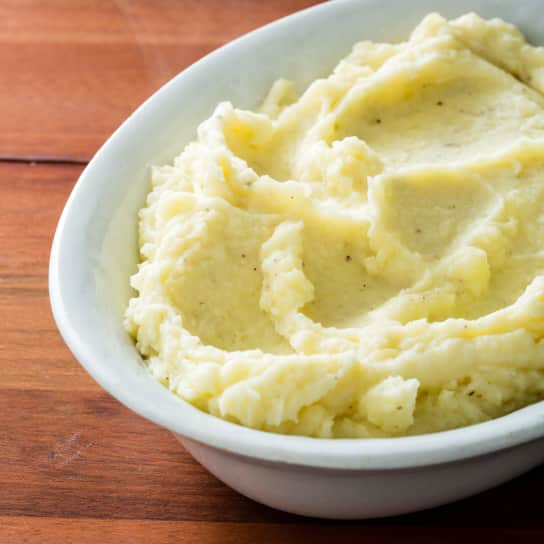
- In large saucepans, prepare Fastest, Easiest Mashed Potatoes
- In small saucepans, make Pickled Jalapeños
- In sauciers, prepare Pastry Cream
- In sauté pans, cook Swedish Meatballs
- In stockpots, cook angel hair pasta and Quick Beef Stew with Mushrooms and Dijon
- Task additional testers with making Pan-Roasted Asparagus in skillets and pouring boiling water from large saucepans
- Hand-wash pans after each test
- Examine heat distribution in skillets using an infrared camera
- Durability test (skillets only): Heat and then plunge pans into ice water and bang three times on cement, then check for damage and warping
How We Rated
- Performance: We evaluated whether the cookware produced well-cooked food, comparing each pan in a set against the same pan in the other sets and to our test kitchen winner in that category.
- Ease of Use: We noted if pans had design features, such as weight, balance, shape, and handles, that made them easy and comfortable to use.
- Cleanup/Durability: We considered how easy the pans were to clean and evaluated their construction, including how they held up to testing and to durability tests without warping or damage.