

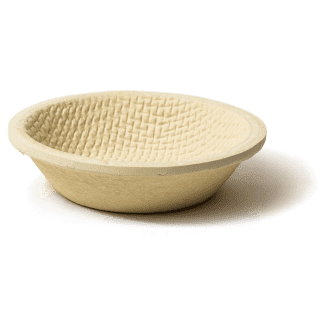

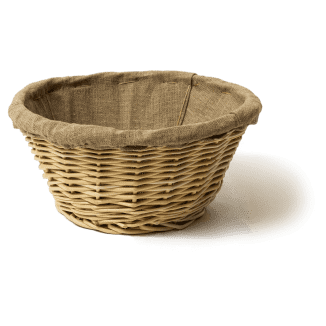
Our favorite round and oval bannetons and their corresponding round and oval liners are made by Breadtopia. These rattan bannetons and cotton liners sometimes take a few uses to acquire the “seasoning” that allows them to release dough easily, but we ultimately prefer them because they allow us to decorate the bread in different ways. If the Breadtopia models are out of stock, we also recommend the similar (albeit more expensive) round banneton and liner set by the King Arthur Baking Company. We also like the wood pulp bannetons from Flourside. You don’t need a liner to use these bannetons—the wettest doughs released effortlessly, even on the first use, making them especially easy to use. You'll still need to buy a liner if you want a blank canvas for scoring, though; without it, you’ll always see the imprint of the bannetons’ textured surface.

A banneton—sometimes called a proofing basket or brotform—is essentially a basket that holds bread dough and helps give it structure as it proofs. Technically, nobody needs a banneton. As we note in our Almost No-Knead Sourdough Bread 2.0 and Classic Sourdough Bread (Pain au Levain) recipes, you can simply proof bread in a colander lined with a dish towel. But if you’re baking a loaf a week, it might be time to free up that colander and invest in a banneton. A banneton also allows you to give your bread a wider variety of decorative looks.


We baked more than 50 loaves of bread to find the best bannetons.
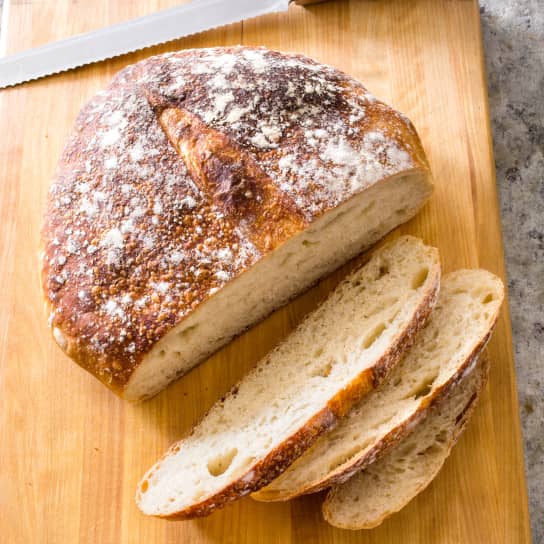
You can use a banneton on its own, dusted with flour to prevent the dough from sticking. When you do this, the weave or textured surface of the banneton will imprint upon the dough, leaving a decorative pattern when the loaf is baked.
You can also use most bannetons with a cloth liner, sold separately or sometimes sold in a set with the banneton. The liner helps prevent your dough from sticking to the basket when you turn it out for baking—a frustrating problem that can deform or flatten your painstakingly prepared bread. (“There’s nothing worse,” said Andrea Geary, deputy food editor at Cook’s Illustrated.) The liner isn’t just an insurance policy against sticking dough, either; it also keeps the surface of your dough smooth, allowing your scoring pattern to shine.


A banneton helps provide structure to the dough as it proofs (left) so that it emerges as a well-formed loaf (right).
For this testing, we started with round bannetons measuring about 9 inches in diameter. Bannetons of this shape and size are the most commonly available type, and they’re best for proofing loaves weighing up to a kilogram, which most of our recipes make. Where applicable, we also tested the manufacturers’ corresponding liners. The bannetons came in different materials (rattan, plastic, wood pulp, and wicker), as did the liners (cotton and linen). After we’d found our winners there, we turned to oval bannetons, testing two 10-inch models made by the manufacturers of our favorites; they can also accommodate 1-kilogram loaves.
What to Look For
Option 1: A Rattan Banneton and Cloth Liner

- A Rattan Banneton: Rattan (sometimes called cane) is the material most commonly used to make bannetons, and for good reason: It’s sturdy; lightweight; and slightly porous, absorbing some moisture from the dough. Used alone, dusted with a bit of flour to prevent sticking, it imprints a pretty coil-shaped pattern on the finished loaf. Rattan bannetons work best once they’ve built up a layer of flour and become “seasoned”; for the first few uses, you might experience some sticking, as we did. In general, we also don’t recommend proofing wet doughs (those with hydration levels of 80 percent or higher) in a bare rattan banneton—no matter how good the seasoning is, they might stick.


Intricate scoring shows up better on bread that has been proofed in a banneton with a liner (left); the coil pattern of the bare banneton makes it harder to see that scoring work (right).

- A Separate Cloth Liner: Cloth liners resemble shower caps that can be stretched to fit over and inside the banneton. They are essential if you plan on proofing high-hydration doughs with your rattan banneton, as the fabric does a better job of wicking moisture away from the dough than the banneton does on its own, drying out the outside of the dough so that it releases more easily and develops a crisp crust when baked. Floured before every use, a cloth liner will also become more seasoned and nonstick over time. Most of the professional bakers we talked to said that they prefer linen liners to cotton ones, finding them to be better at absorbing moisture from wet doughs and ensuring a particularly crisp crust. But in practice, we didn’t notice any significant differences between the two materials. We do prefer liners that can be removed for easy cleaning. One banneton set we tested had a permanently attached linen liner, which not only limited our decorating options but also proved harder to clean.
Option 2: A Wood Pulp Banneton

- A Wood Pulp Banneton: Wood pulp bannetons are popular in Europe and have recently become more readily available in the United States. The big advantage of these models is that they don’t require a liner. Made of thick spruce pulp, these bannetons do a stellar job of absorbing moisture from the outside of the dough all by themselves. As a result, they were the easiest bannetons to use. Dusted with just a little flour, they released even the highest-hydration doughs effortlessly—and from the very first use, unlike the rattan bannetons. One small downside? Because you use a wood pulp banneton without a liner, your finished bread will always be imprinted with the pattern on the inside of the banneton. Without the blank canvas that a liner would otherwise provide, any decorative scoring won’t show up quite as nicely. (You could always buy and season a separate liner to use with it, though it sort of defeats the purpose of the wood pulp’s excellent release.) As a result, we slightly preferred the decorative versatility of the cane bannetons with removable liners. That said, we think that wood pulp bannetons are an excellent alternative, especially for beginning bakers and those whose biggest concern is having dough stick—these afford nearly foolproof release, every time.
Other Considerations

It's important that your banneton or liner releases dough cleanly; if the dough sticks when you turn it out, your finished loaf can become deformed and flat (right) instead of tall and domed (left).

- What About a Plastic Banneton? Because they’re made of natural fibers, both rattan and wood pulp bannetons do require a little extra care to maintain and clean—you have to wash them by hand occasionally and dry them carefully to prevent mold from developing. By contrast, plastic bannetons are much easier to clean—you can even run them through the dishwasher. They’re also more durable; those plastic slats are far less likely to develop mold the way natural-fiber materials sometimes do. But plastic comes with a caveat: You'll always need to use these bannetons with a cloth liner—all but the lowest-hydration doughs we made stuck relentlessly to the plastic slats, no matter how aggressively we floured them. And because you'll need to use a liner, you won't get those attractive imprints that you get from the bottoms of other bannetons. (And of course, it’s difficult to get plain flour to stick to those slats in the first place.)
- Proof and bake five loaves of bread of different hydration levels (64 percent, 72 percent, and 80 percent) in each banneton without the liner inserted (where applicable)
- Proof and bake five loaves of bread of different hydration levels (64 percent, 72 percent, and 80 percent) in each banneton with the liner inserted (where applicable)
- Clean at the end of testing

 Buy at Amazon